

The Architecture of the Dark
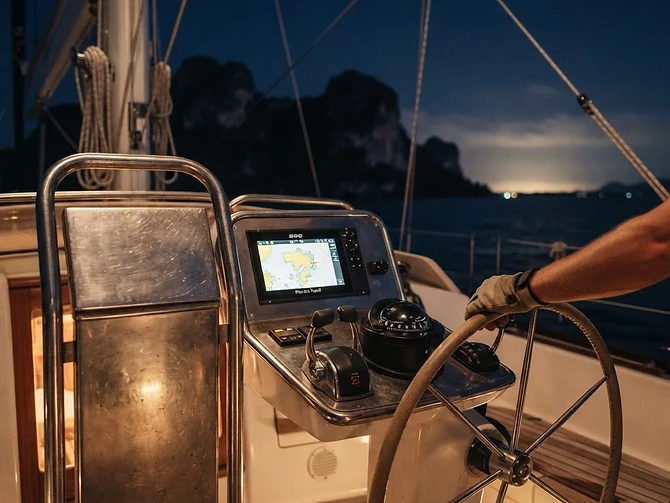
Steering a 45-meter Perini Navi through the Andaman Sea after the sun has dipped below the horizon is less about navigation by chart and more about a dialogue with the vessel's own skin. In the hours between midnight and the first grey light at the edge of the Pulau Dayang Bunting limestone cliffs, the yacht ceases to be a machine of white hull and chrome fittings. It transforms into a floating, habitable structure—a house adrift in a void. Here, the lighting design is not merely for utility; it is the bridge between the claustrophobic infinite of the sea and the ordered domesticity of the interior.
Standing on the bridge, the hum of the engines is replaced by the rhythmic slap of water against the hull. There is a specific, quiet tension to a night crossing. We rely on the navigation screens, but our eyes are drawn to the internal architecture. In the saloon, the recessed LEDs have been dimmed to a warm, 2700-Kelvin temperature, casting soft pools of illumination that define the grain of the American walnut bulkheads. The design team has placed lights with architectural precision, treating the vertical panels of the walls as screens for light to wash over, much like the cantilevered, cedar-slat overhangs of a contemporary villa on the Langkawi coast. It creates a sense of scale, reminding us that even in the middle of a vast, dark expanse, we are within a space that has been curated for comfort and protection.
The Threshold of the Cove
As we approach the sheltering arms of Telaga Harbour, the transition from open water to the coast requires a recalibration of senses. The external deck lighting, usually a hazard to night vision, is cut to a minimum to preserve the natural nocturnal rhythm of the coast. Only the low-slung, indirect deck lights remain, tracing the perimeter of the aft deck like the perimeter lighting of a private residence at Sunset Beach. It is a subtle architectural gesture: the boat feels grounded, no longer a transient object but a structure integrated into the geography of the shoreline.
There is a singular satisfaction in watching the silhouette of the yacht against the faint phosphorescence of the waves. I recall a night spent at anchor near the northern tip of the archipelago; the only other light was the distant, intermittent pulse of a headland beacon and the warm glow emanating from a nearby villa perched on the rock. Looking from our deck, the distinction between our interior lighting and the villa’s terrace was blurred. We were both houses, one moored to the seabed, one moored to a pier, both relying on the warmth of light to define our boundaries against the vast, salt-scented night. A bowl of local dragon fruit and a glass of chilled water on the teak table sat within a spill of warm light, a small island of order in the immense quiet of the Malay west coast.
As the anchor chain finally rattles through the hawsepipe—a metallic, purposeful sound that cuts through the silence—the urgency of the passage dissipates. The house afloat has found its address. In the stillness, the lights within seem to deepen, drawing the eye into the soft, honeyed tones of the salon, a final, glowing mark of human presence on the dark surface of the sea.






