
The Transition to the Oolite Shelf
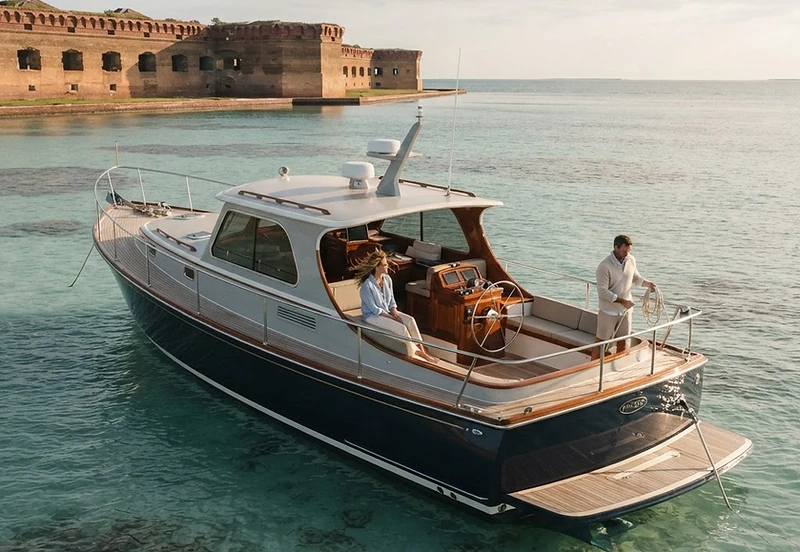
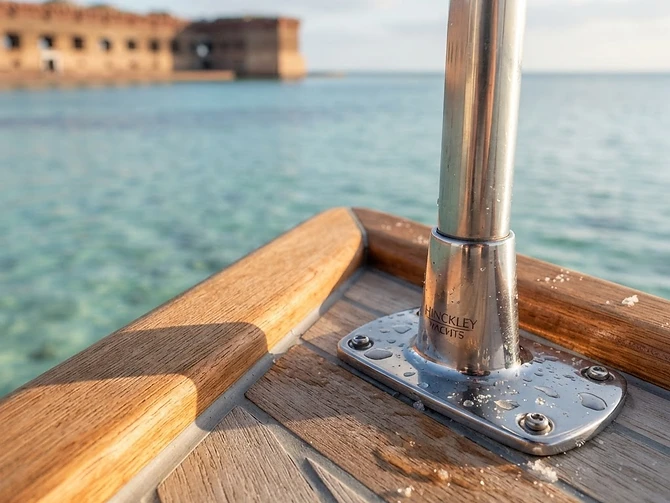
The transition from the deep-water transit of the Gulf Stream to the protected, shallow lagoons of the Dry Tortugas represents a profound shift in the vessel’s cadence. As the Hinckley Talaria leaves the bruising, cobalt depths of the Atlantic and crosses onto the shimmering oolite shelf, the water undergoes an alchemy of color—fading from an impenetrable indigo to a pale, electrifying turquoise that glows against the hull. The vessel, having spent hours contending with the erratic energy of the Stream, now finds itself in a state of suspended animation. Dropping the hook within the visual reach of Fort Jefferson’s massive, brick-hewn ramparts, one feels the immediate change: the mechanical tension of the passage dissolves, replaced by the rhythmic, percussive lap of water against the fiberglass and the high, mournful cry of a tern circling the bastion. This is the moment when the deck ceases to be a transit platform and becomes a stationary residence, the teak decking warming slowly under a low-slanting, winter-softened sun.
The Galley’s Measured Harvest
Life aboard in these remote, sun-bleached reaches is dictated by the intersection of oceanic scarcity and the precise craft of the galley. There is a singular, quiet discipline in working with the day’s provisions, sourced from a pre-dawn encounter with a local snapper fisherman near the docks of Key West or the preserved treasures brought aboard before the final crossing. On the galley counter, a heap of fresh-caught yellowtail snapper—flesh translucent and firm—waits to be transformed. The chef favors an austere approach: a high-heat sear in premium, peppery olive oil, finished with a bright, bracing splash of local Key lime juice and the saline crunch of wild-harvested sea purslane, foraged from the edge of the barrier islands. The meal is served on the aft deck, where the salt-heavy air provides a natural seasoning that no inland kitchen can replicate. Dining here is an exercise in profound intentionality; the clink of stainless steel against fine, weighted porcelain, set against a horizon that turns the Gulf of Mexico into a vast, hammered sheet of bronze, elevates the act of eating into a essential maritime ritual.
The Nocturnal Logic of the Saloon
As the sun retreats, the vastness of the Florida straits ceases to be a navigational challenge and becomes an enveloping asset. With the tenders securely lifted and the deck lights dimmed to a minimum to ensure the integrity of the star-dusted horizon, the vessel enters a period of profound quietude. Inside the saloon, the environment feels entirely recalibrated; the air holds the subtle, woody scent of cedar and the barely audible, steady hum of the climate control maintaining the cabin’s equilibrium. The true luxury of wintering in the Tortugas lies in this self-imposed isolation, where the only social currency is the day’s log, the atmospheric quality of the light, and a shared, silent respect for the charts spread across the settee. We spend our evenings tracing the complex lines of the submerged reef or reading under the soft, focused glow of a gimballed lamp, the yacht serving as a steady, beating heart amidst a desert of water. It is a fragile, beautiful state of being—a temporary, floating residency in a world defined by its own stillness, anchored by the quiet knowledge that, when the first light touches the water tomorrow, the anchor will break ground and the journey will begin again.
The anchor chain rattles in a rhythmic sequence that signals the end of the reverie, a metallic reminder of the mobility that defines our existence. We are merely guests of the current, bound to the tide, waiting for the precise moment the wind shifts to chart our next departure from the fort's shadow.






