
The Architecture of Autonomy
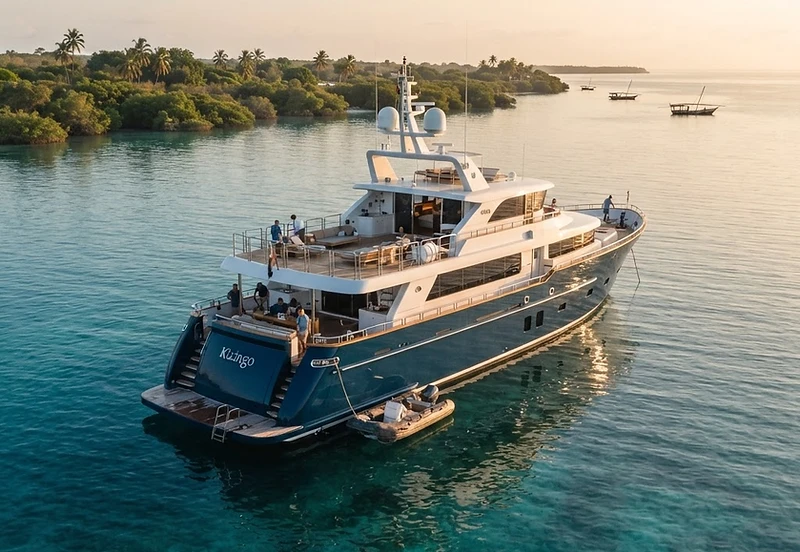
The dawn off the coast of Pemba does not announce itself with a roar, but with the rhythmic, percussive lap of the Indian Ocean against the hull of our 45-metre expedition yacht. Out here, deep in the lee of the island’s verdant, clove-forested ridges, the silence is profound, broken only by the occasional cry of a fish eagle. To maintain this serenity while remaining entirely detached from the shore for a week requires a precise, invisible choreography of engineering. The hum of the watermaker is the quiet heartbeat of the vessel, a constant, low-frequency assurance that the resources required for life at sea are being harvested directly from the surrounding salt. It is a modern alchemy: drawing in the crystalline, saline depths through the intake strainers and forcing them through high-pressure membranes, distilling the ocean into the soft, mineral-balanced water that fills our stainless tanks. This autonomy allows us to linger in these secluded coves, untethered from the municipal docks of Stone Town or the crowded quays of Dar es Salaam.
The Ritual of the Galley and the Sea
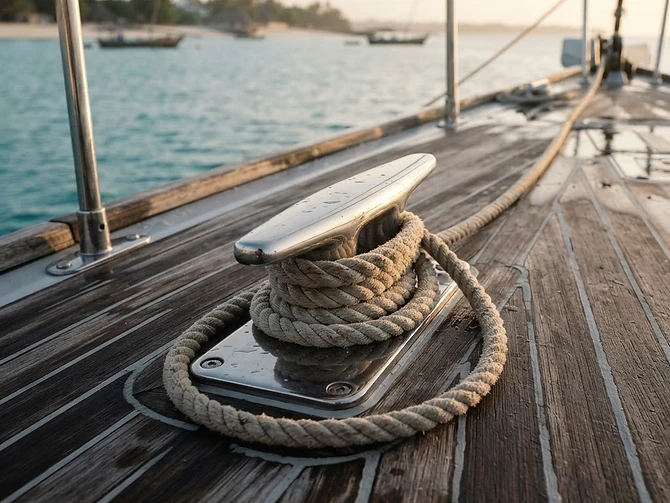
As the sun climbs, warming the weathered teak of the aft deck, our chef begins the morning routine—a dialogue between the vessel’s technical capabilities and the raw bounty of the Tanzanian coast. Our integrated waste management system, featuring a compact, silent hydraulic baler for aluminium and a meticulous organic sorting process, ensures that our presence in this fragile marine sanctuary remains invisible. Yesterday, we hailed a local fisherman in a narrow, outrigger ngalawa; he offered us a haul of changu (emperor snapper), its scales still iridescent with the morning’s catch. Back in the galley, the fish is treated with a reverence that honours the provenance of the ingredients: lightly seared in a cast-iron skillet with a crust of hand-harvested sea salt from the northern salt pans and a vibrant, acidic kick of kaffir lime from the island’s inland groves. We dine as the tide turns, the flavours of the archipelago—the heat of Zanzibar peppercorns and the sweetness of fresh coconut cream—defining the meal. Dining aboard here is not merely a service; it is an extension of the anchorage itself, a ritual that bridges the gap between the sophisticated, clean-running machinery of a modern yacht and the ancient, vibrant character of the Swahili coast.
The Weight of the Current
By mid-afternoon, the equatorial heat necessitates a retreat to the shade of the bridge deck, where the trade winds carry the faint, intoxicating scent of drying seaweed and distant spice warehouses from the Zanzibar mainland. We watch the tender weave its way toward the white-sand coves of Mnemba Atoll, a poignant reminder that true luxury in this region is defined by the capacity to navigate where the charts are thin and the infrastructure is non-existent. Our commitment to a closed-loop system—where water is distilled by the sun and the engine’s waste heat, and every byproduct of our consumption is processed to be carried back to port—is not merely an operational necessity. It is the very tool that permits us to remain in these sheltered, turquoise reaches without disturbing the delicate seagrass beds below our keel. There is a quiet, meditative dignity in knowing the vessel is a fully contained ecosystem, existing in total harmony with the stillness of the anchorage. As the light fades and the sky bruises into deep shades of violet and indigo, the anchor light flickers to life above the foredeck, a tiny, man-made star mirrored in the black, glass-like water, anchoring us firmly in the vast, breathing expanse of the Indian Ocean.






