
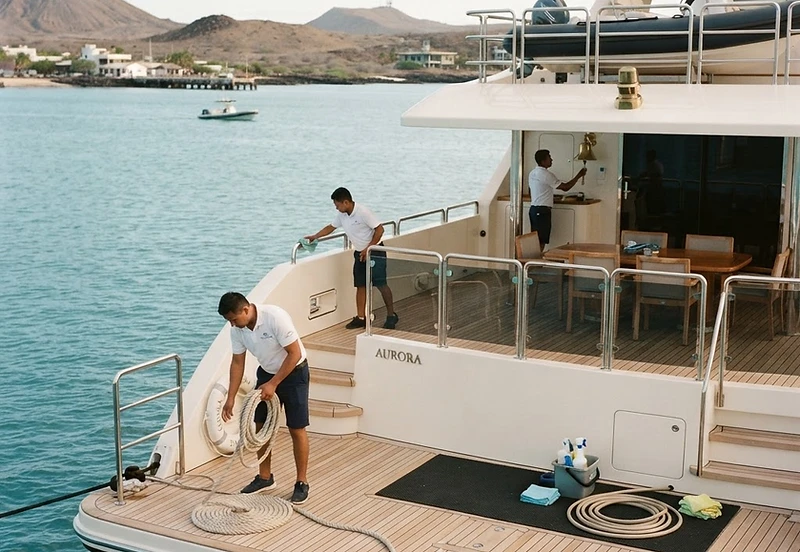
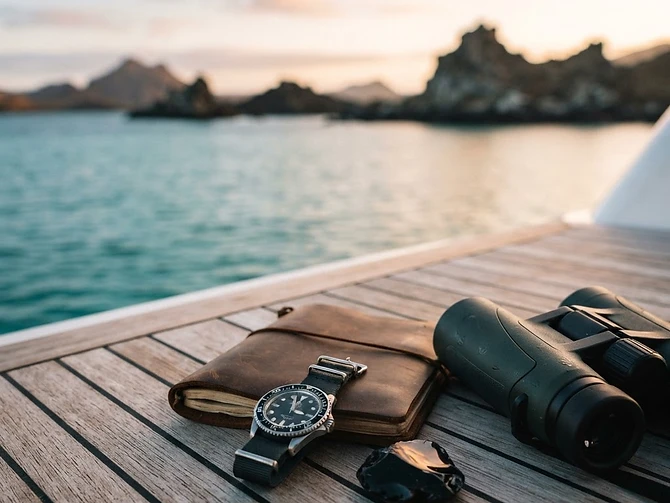
There is a singular, profound shift in the atmosphere of an 80-meter Oceanco when the final tender departs for the rugged shores of Santa Cruz Island. The frantic hum of the galley, which for days has been an intense, high-stakes orchestration of silver service and precisely timed courses, drops into a resonant, low-frequency idle. At anchor in the crystalline, cerulean waters off Puerto Ayora, the yacht transforms into a vessel suspended in absolute volcanic stillness. Here, in the heart of the Galapagos, the crew momentarily abandons the performative grace of the charter in favor of the rhythmic, almost meditative, labor of the turnover—a process that is as much about restoring the soul of the ship as it is about polishing its surfaces.
The Geometry of the Morning Watch
I found the first officer standing on the bridge during the quietude of the morning watch, his hands moving with a practiced, deliberate fluidity. There is a precise geometry to how the bridge is reset; the navigation charts for the upcoming transit toward the southern reaches of Española are squared away, and the touchscreens are wiped to a mirror finish, reflecting the harsh, brilliant equatorial light. In the silence, the distant, guttural bark of a sea lion near the Charles Darwin Research Station travels effortlessly across the water, a stark and grounding reminder that this 80-meter marvel of modern engineering is merely a transient guest in a fragile, evolutionary theater. The crew treats the vast teak decks with a reverence usually reserved for the restoration of fine, centuries-old architecture, moving in soft-soled shoes to avoid marring the grain that has been bleached to a pale, bone-white hue by the relentless sun.
Refining the Terroir of the Sea
By mid-afternoon, the internal life of the vessel centers on the galley and the refrigerated stores. Down in the climate-controlled depths, the head stewardess works through the inventory, checking the remnants of the voyage with an intensity one might apply to the structural analysis of a heritage building. We speak briefly of the stark juxtaposition: the raw, prehistoric basalt of the Galapagos landscape versus the sterile, highly engineered environment of the yacht. It is a strange, jarring comfort to stand on the aft deck, watching the jagged, black-lava shoreline through the floor-to-ceiling glass of the main salon, realizing the vessel feels less like a machine and more like a floating, climate-controlled observatory. We had shared a simple lunch of fresh ceviche earlier, prepared with local catch and lime, the acidity of the fruit cutting through the heavy, humid heat of the Pacific afternoon.
The Quietude of the Pacific
As the shadows stretch across the volcanic sands of Tortuga Bay, the crew pauses for a collective breath. They gather on the swim platform, their movements now devoid of the sharp-edged urgency that defines the charter experience. They are not waiting for guests to return; they are simply existing in the space they have so meticulously curated. For these few hours, the yacht is no longer a commercial entity—it is simply a vessel, anchored in the most isolated reaches of the Pacific, held together by the quiet, disciplined grace of those who call it home. The water laps against the steel hull, a gentle, percussive reminder of the vast, untamed ocean that stretches out in every direction, indifferent to our presence.






