
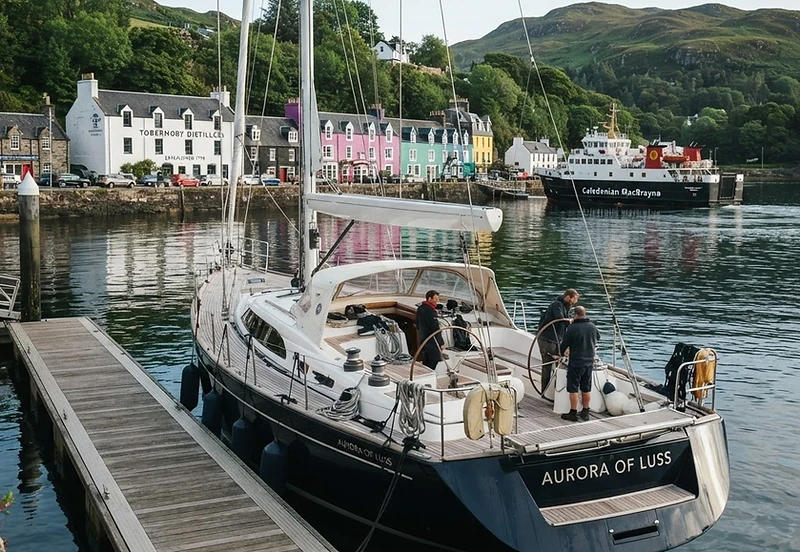
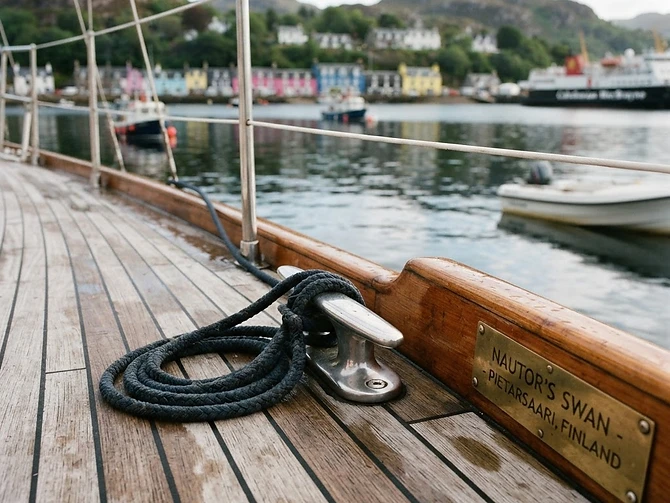
The morning light over the Sound of Mull is rarely yellow; it is silver, filtered through the low, bruising clouds that define the Scottish summer. We arrived aboard a Nautor's Swan, her teak decks slick with the constant, fine mist that seems to define the latitude. As we ghosted past the Calve Island lighthouse, the harbour at Tobermory revealed itself—a vibrant, curved amphitheater of brightly painted houses clinging to the hillside above the water. It is a port that demands a respectful approach, particularly when the south-westerlies funnel through the sound with a startling, compressed energy.
Refuge and Utility in the Sound
For a vessel of our displacement, the harbour presents a reliable, if compact, geometry. The primary berthing is managed by the Tobermory Harbour Association, who maintain the pontoons with a rigor that belies the remote location. Protection is excellent, though the holding in the outer reaches can be temperamental due to the mix of clay and large boulders. We tied up at the visitor pontoons, noting the deep water—sufficient for most deep-keel cruisers—though one must remain vigilant of the shallower patches near the old fishing pier at the southern end. The infrastructure is straightforward but essential: reliable shore power with 16-amp and 32-amp hookups and fresh water that tastes of the mountain runoff, clean and bracing.
The Rhythms of the Pier
Life in the harbour is dictated by the tide and the arrival of the Caledonian MacBrayne ferries, which demand a respectful clearance zone. On the pontoon, we encountered the crew of a nearby Oyster 56, their routine mirroring our own: a damp check of the lines and a quick assessment of the fuel situation. For those requiring more than a splash of diesel, the harbour office coordinates deliveries, though deep-draft vessels should monitor the tide charts if they intend to haul out or seek specific mechanical support at nearby Oban facilities. Security is informal but effective; the tight-knit nature of the quay ensures that an extra set of eyes is always on your vessel, a comforting reality in the variable Scottish climate.
The taste of a late-afternoon dram—a peated malt from the local distillery, served at the galley table while the rigging hums with the rising wind—is the quintessential reward for a day spent navigating the granite headlands of the Hebrides.
We spent the evening watching the light fade behind the hills, the water in the harbour turning to a dark, polished obsidian. Even at the height of summer, the temperature necessitates a heavy wool sweater—my vintage Omega Seamaster, with its robust Calibre 8900 movement, remained the only constant, tracking the passage of time against the creeping chill of the night. It is a place that strips away the performative excess of more southern ports, replacing it with the honest, salt-etched reality of life in the north.






