
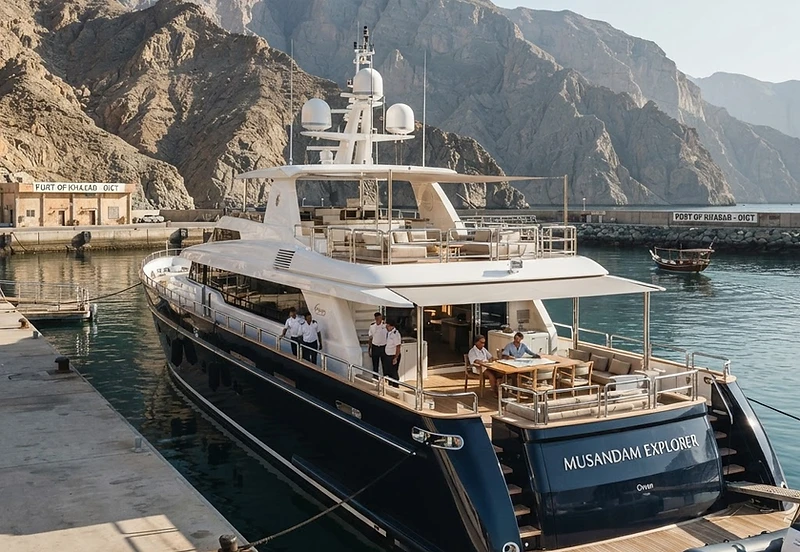
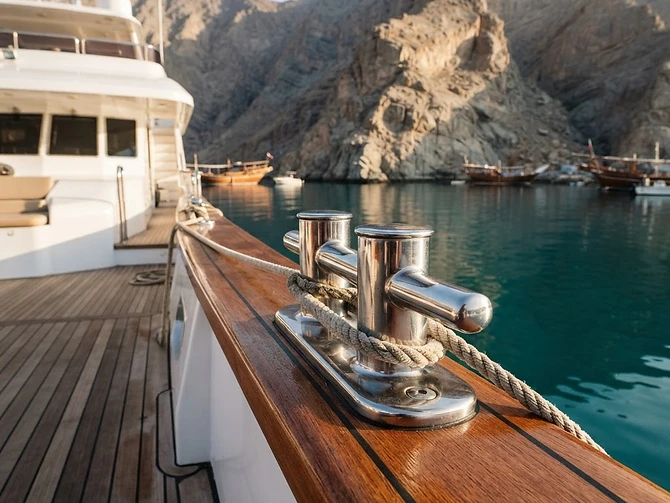
Approaching Khasab from the Strait of Hormuz, one is immediately struck by the sheer, imposing verticality of the Musandam Peninsula. The limestone cliffs plunge directly into the emerald depths, creating a dramatic, fjord-like topography that demands a steady hand on the helm. This is the 'Norway of Arabia,' where the geology is as severe as the sea is unforgiving. Unlike the manicured, manic-paced marinas of the Mediterranean, the harbour here at Khasab is a functional, authentic interface between the sea and the rugged Omani interior. The wind, often funneled through these ancient, barren ravines, requires careful attention to mooring lines and fender placement, yet the inner basin provides a profound, sheltered stillness that feels miles removed from the restless, merchant-heavy currents of the Gulf just a few nautical miles to the west.
The Practicality of the Quay
For the captain of a superyacht, the harbour infrastructure is defined by its raw utility and purposeful, unpretentious design. The main quay, managed by the local maritime authority, offers substantial depth—frequently exceeding 6 to 8 meters—accommodating deep-draft vessels with surprising ease. I spent an afternoon watching a 50-meter explorer vessel, a sturdy steel-hulled craft built for long-range autonomy, maneuvering alongside the outer concrete pier. The bollards are heavy-duty, industrial-grade iron, and well-spaced, though a skipper should always remain mindful of the tidal range, which can be significant in this corner of the peninsula. Protection from the prevailing north-westerlies is excellent within the main basin, though the wake from local dhows and the occasional transit of commercial traffic necessitates diligent watchfulness for any vessel tied to the quay wall. It is a place where you prioritize a sturdy fender board over aesthetics.
Infrastructure and Regional Rhythms
Shore power and fresh-water connections are available, though they lack the high-voltage standardization found in European ports; reliance on a ship's own power management system remains the standard operating procedure for most visiting yachts. Fueling is handled efficiently via road tanker access, a common rhythm in this region that allows for significant uplift without the congestion of a dedicated fuel dock. For provisioning, the local markets in Khasab are modest but reliable, offering sun-ripened produce and local, sticky dates that pair perfectly with an afternoon spent on the aft deck, watching the water turn the color of hammered copper as the light begins to fail. I recall a quiet moment last March, sitting with a glass of cool water, listening to the deckhands discuss the day's route toward Khor Ash Sham, their voices low against the backdrop of the flapping canvas of a passing dhow. Security is understated yet constant, with limited access to the commercial pier ensuring that the deck remains a private, quiet space throughout the evening, undisturbed by the tourist throngs of more commercialised ports.
As the sun dips behind the jagged, shadow-drenched horizon, the port undergoes a soft metamorphosis. The call to prayer drifts over the water, mingling with the soft, rhythmic lap of the tide against the hull, a sound that seems to vibrate through the very structure of the vessel. It is a moment of profound sensory clarity, grounded in the scent of dry, sun-baked earth and the pervasive, sharp salt air. Khasab is not a destination of polished teak and white-gloved service, but one of perspective, providing a secure, no-nonsense base from which to explore the untamed, lonely beauty of the Musandam coast. It is a port for those who seek the sea, not just the shore.






