
The Geometry of the Approach
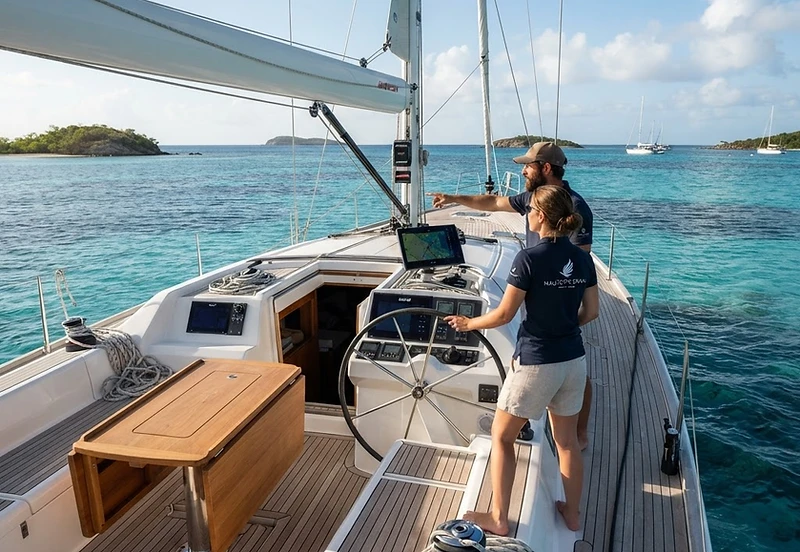
The transition from the open Atlantic swells into the crystalline shallows of the Tobago Cays is a study in precise navigation. Aboard our Nautor’s Swan, the helm communicates the seabed’s topography through the rudder with tactile clarity, responding to the shifting currents that funnel between Petit Rameau and Baradal. There is a singular, meditative focus required here; the depth sounder remains our most critical instrument, its readout fluctuating with nervous urgency as we skirt the outer reef. The trade winds, consistent and reliable, hold the canvas taut, allowing us to maintain a steady speed while the water beneath the keel transitions from a deep, bruised cobalt to an impossible, electric turquoise. It is a moment where the vessel feels less like a structure of fiberglass and steel and more like an extension of the current itself, cutting a path through the shallow sandbars that define this protected marine park.
The Rituals of the Afterdeck
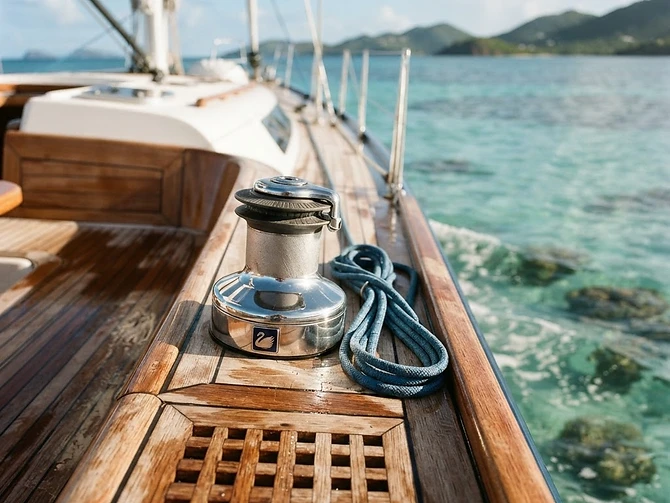
Once the anchor bites firmly into the fine, white sand of the anchorage, the vessel shifts from a machine of passage to a sanctuary of restoration. Life aboard during these mid-morning hours adheres to a deliberate, almost sacred cadence. We retreat to the shaded afterdeck, where the heat of the Caribbean sun is mitigated by the constant, rhythmic breeze sweeping off the windward side of the reef. Breakfast is an exercise in restraint: chilled papaya, local citrus, and cold-pressed juice served on heavy linen that echoes the bleached silver of the teak decking. There is no urgency to go ashore; the yacht serves as its own destination, a private platform from which we observe the gentle, ancient movement of green sea turtles surfacing near the hull. I recall the specific sound of the stainless-steel carafe clicking against the table—a sharp, clear ring that seemed to signal the absolute silence of the bay. We spend the hours between tides adjusting the awning, ensuring the transition between the cooling salt spray and the quiet, climate-controlled interior of the saloon remains seamless.
The Quietude of the Skerry
As the sun begins its slow, amber descent, the anchorage thins out, leaving only a handful of vessels silhouetted against the vast horizon. The sensory details of the day—the low, harmonic hum of the bilge pump, the persistent scent of brine on the warm air, the occasional, rhythmic slap of a halyard against the mast—seem to soften and blend into the evening. We take the tender into the lee of a nearby cay, not to explore the beach, but simply to witness our Swan from a distance. Anchored in the glass-calm water, she appears remarkably small against the deepening violet of the sky, yet perfectly composed. Returning to the vessel for the evening, the atmosphere is defined by the soft, diffused illumination of the cockpit lighting, a warm glow that mirrors the dying light reflecting off the water. We sit in silence, listening to the small, crystalline waves lapping against the hull, acutely aware that the vessel is not just a means of transport, but the very lens through which we experience the rhythm of the Grenadines.
By nightfall, the isolation is complete. The stars emerge with a brilliance rarely seen near civilization, casting a faint, silver luminescence across the deck. It is in this stillness that the true privilege of the yachting life reveals itself: the ability to exist within the landscape, rather than merely observing it from the periphery.






