
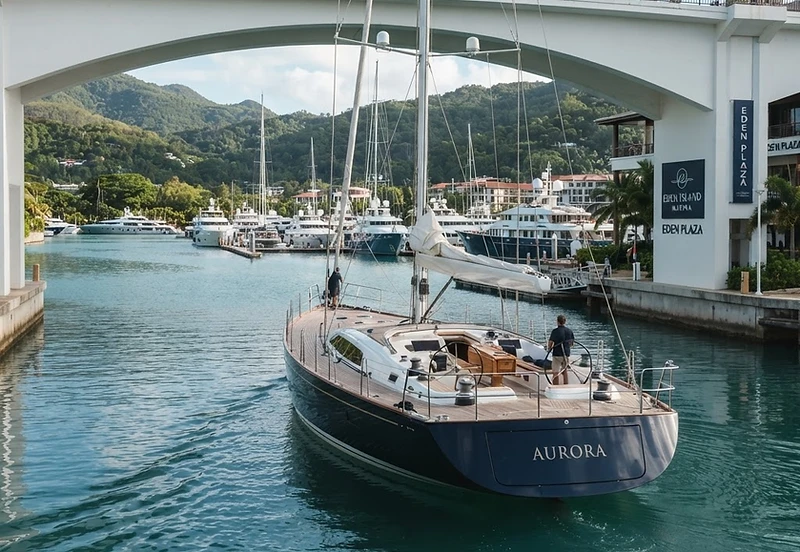
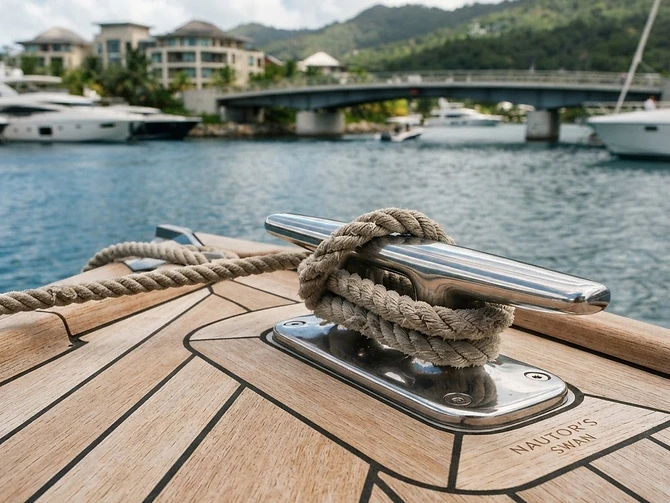
Approaching the inner reaches of Mahé, one becomes acutely aware of the transition between the expansive, wind-whipped currents of the Seychelles and the calibrated stillness of the Eden Island Marina. The bridge, a necessity of modern civil engineering, acts as the primary gatekeeper for the yachting community here. Standing on the flybridge of a Nautor's Swan as the hydraulic hum signals the rising span, there is a distinct shift in rhythm; the salt-crusted deck gear is left behind, replaced by the meticulous precision of entry protocols that dictate life in this purpose-built harbour. It is a moment of profound sensory contrast: the raw, indigo power of the Indian Ocean yielding to the manicured, calm basin of a world-class facility.
The Logistics of the Inner Passage
For the skipper, the Eden Island Bridge is a decision-point defined by draft and clearance. At high tide, the depth is sufficient for vessels with deep keels, but the channel demands respect, particularly during the transition of the monsoon seasons when silting can narrow the effective navigable width. I recall a Tuesday afternoon last season, waiting for the lift as a squall brushed the horizon; the air grew thick and heavy, the kind of humidity that clings to the teak long after the sun has dipped. When the gate finally rose, the passage into the basin felt like slipping into a velvet-lined chamber. The marina itself is operated with a clinical efficiency, offering a robust grid of shore power and high-speed water connections that are a relief after a week navigating the outer islands. Unlike the wilder, granite-strewn anchorages of Curieuse, here, the security is comprehensive, with 24-hour CCTV coverage and guarded pontoons that allow for the calm restoration of a vessel's systems.
The Ritual of the Quayside
Life inside the basin revolves around the proximity to the Eden Plaza, where provisioning shifts from the necessity of tinned stores to the luxury of fresh, local tropical fruit and regional catches. Dining here is not merely a meal; it is a ritual of cooling down after the glare of the open water. I found myself at a terrace table recently, the condensation on a glass of chilled water mirroring the mist rolling off the nearby mountains. As I tucked into a crisp coconut-infused ceviche, the last yachts of the day were finalizing their lines, their transoms glowing under the soft, ambient harbor lights.
There is a particular satisfaction in watching a boat go quiet, the hum of the engines replaced by the gentle lap of water against a stable, concrete dock.The physical comfort of the quay—where one can step directly from a polished deck onto a stable berth without the need for a bouncy tender run—creates a unique intersection of maritime duty and domestic ease.
Maintenance access is equally reliable, with access to competent marine technicians capable of handling complex mechanical or electrical faults that the harsh salt air of the Indian Ocean often precipitates. Whether it is a recalcitrant water-maker or a simple sail repair, the support network here is integrated and intuitive. It is a station of recovery, providing the essential infrastructure required to ensure that when the bridge lowers and the passage resumes, the yacht—and the crew—are ready for the deeper blue beyond.






