
The Weight of the Wind
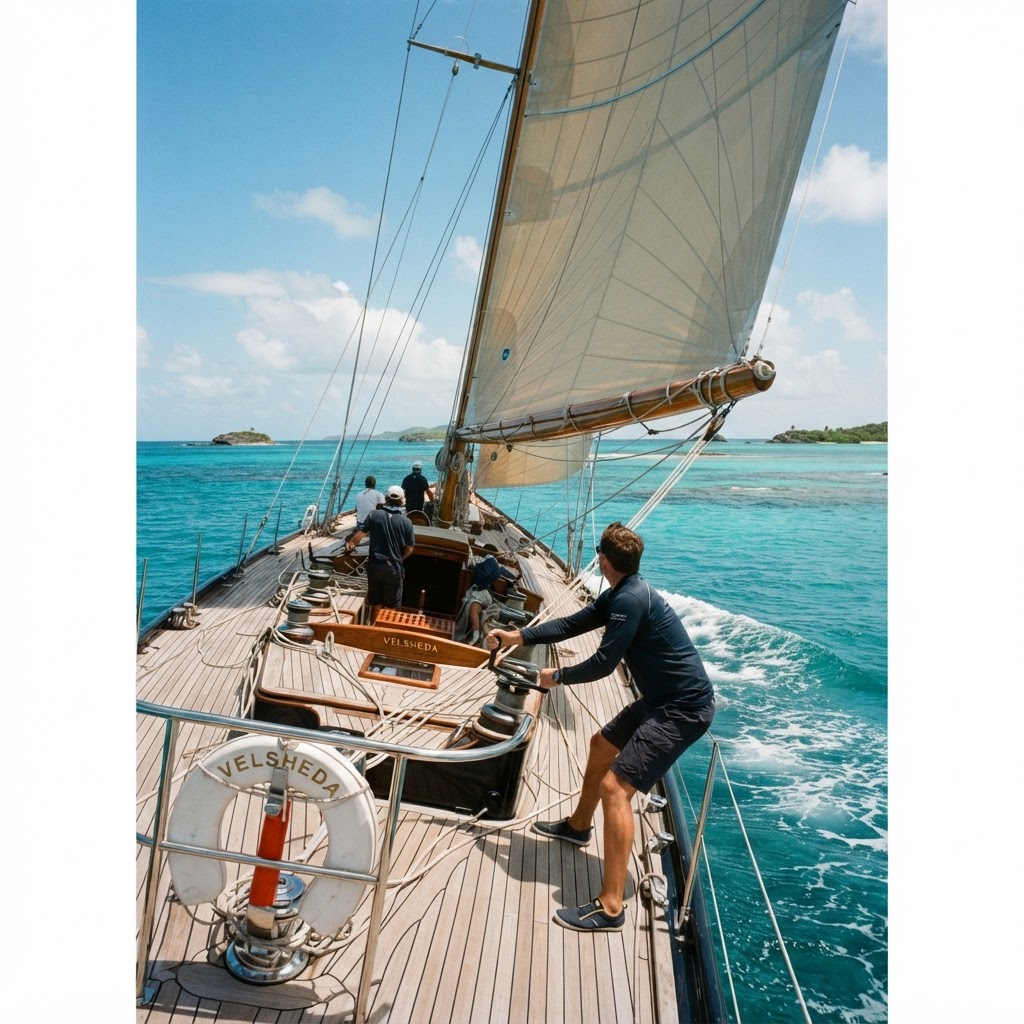
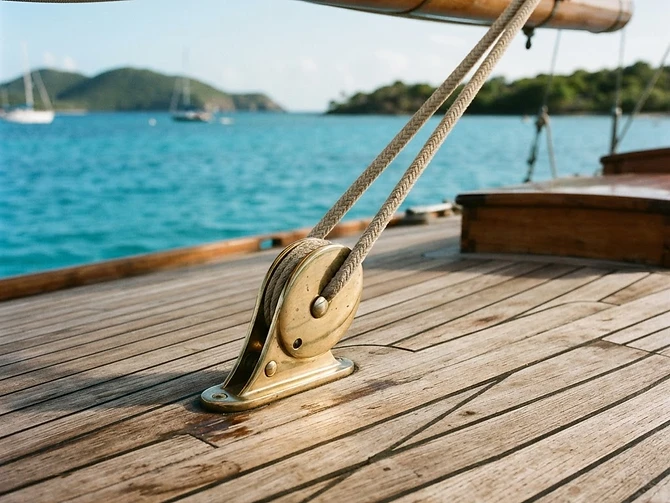
The dawn air in the Tobago Cays is not silent; it is a composition of water lapping against the hull and the rhythmic creak of standing rigging, a sound as organic as a heartbeat. Beneath us, the 1930s-era hull of the Velsheda—restored with a devotion that borders on the monastic—swings gently in the lee of Petit Rameau. To stand on the deck of a J-Class is to understand that you are not merely a passenger, but a custodian of a vanishing geometry. The sheerline, an aggressive, elegant curve that defied the naval architecture of its time, cuts through the Caribbean light with a precision that modern composite vessels rarely achieve. As the sun clears the horizon, painting the turquoise shallows in shades of electric blue and pale jade, the crew moves with a silent, practiced efficiency, checking the running backstays and coiling the massive, weathered halyards. There is no urgency here, only the necessity of the machine.
Life Between the Cays
Life aboard a vessel of this stature is an exercise in intentionality. With the anchor aweigh, we bear away toward Mayreau, the sails—vast acres of stitched canvas—filling with a snap that vibrates through the very timber of the ship. We lunch in the cockpit, shielded from the trade winds by the mahogany-capped coamings. The meal is simple and grounded: fresh snapper caught near the Horseshoe Reef, dressed in lime and local chili, served on plates that chime against the teak table. There is a profound honesty in this rhythm. We do not look for distraction; the act of tending to the helm, feeling the subtle resistance of the rudder against the current, and watching the islands slide past at six knots provides a sensory saturation that makes every other concern feel thin. It is the ritual of the sea: the midday cooling of the skin, the shared nod of acknowledgment with a deckhand, and the absolute focus required to keep such a powerful beast on its line.
The Evening Anchorage
As dusk settles over the Grenadines, the atmosphere shifts from the kinetic energy of the passage to the heavy, salt-sweet calm of the anchorage. We drop hook in a secluded bight off Canouan, the shadows of the hills stretching long across the water. The evening routine is unhurried. We clear the decks, stow the lines, and move to the aft deck as the sky, bruised with purple and gold, fades into a deep, impenetrable navy. A glass of chilled water, clear and sharp, provides a quiet punctuation to the day’s exertion. There is a profound sense of continuity in being here, suspended between the depth of the ocean and the height of the stars, resting upon a hull that has survived decades of Atlantic storms and restoration. When we finally retreat below to the warmth of the cabin, the faint, rhythmic motion of the yacht reminds us that we are guests of the water, bound to its pulse until the wind stirs again.
The anchor chain grumbles once against the roller, a final, metallic sigh before the yacht settles into the stillness of the Caribbean night.






