
The Quiet Swing of the Anchor
To reach the Mergui Archipelago is to surrender the ticking clock of modern navigation, replacing the frantic pace of the mainland with the rhythmic pulse of the Andaman Sea. On board the Nautor’s Swan, the gentle swing at anchor becomes our primary cadence. The water here is a mirror of deep, bruised indigo, broken only by the occasional limestone karst rising like a jagged tooth from the shallows. Our captain, a man who knows the temperament of these shifting currents better than the official charts, brought us into the protected lee of Lampi Island just as the midday heat began to press heavily against the teak and varnish. There is a profound, humming solitude in these waters; you do not hear the hum of the city, only the soft, percussive slap of water against the hull and the distant, rhythmic cry of a sea eagle circling the dense, impenetrable mangrove thickets.
The Midday Pour
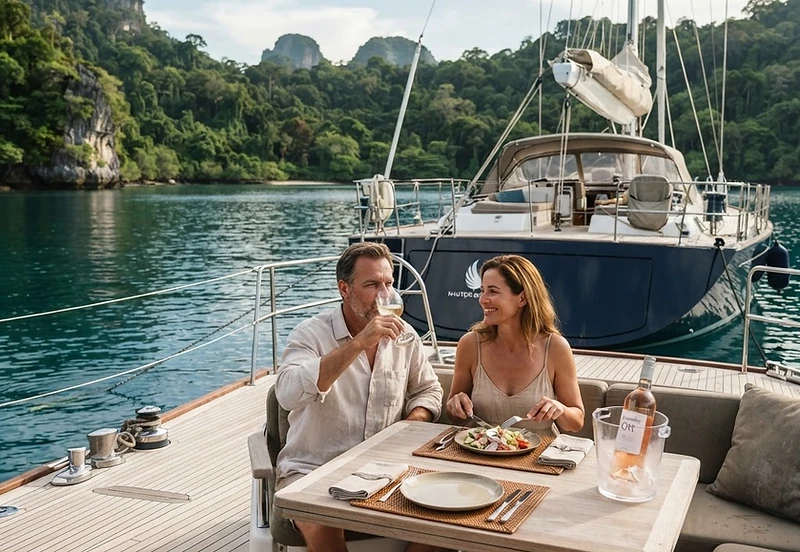
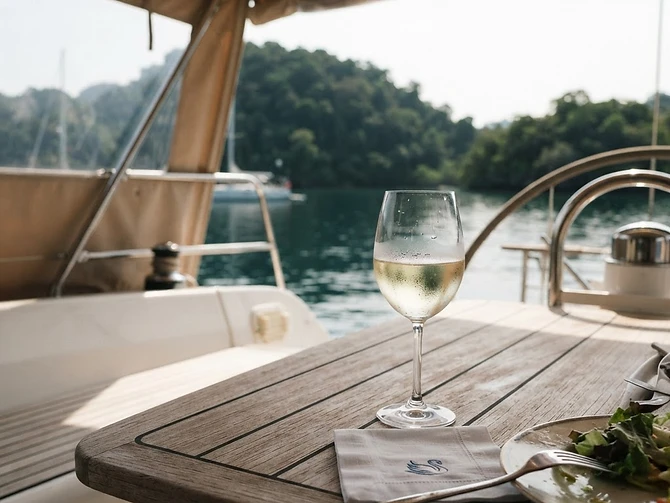
Lunch on the aft deck is a quiet ritual of balancing the environment. As the sun reaches its zenith, the steward arrives with a bottle of Domaine Vacheron. It is a selection that seems entirely incongruous with the dense, emerald jungle fringe, yet feels perfectly calibrated to the stifling humidity. We have spent the last three days navigating the intricacies of the archipelago, moving from the rhythmic, open swell of the Indian Ocean into the sheltered stillness of the bay. The palate craves the precision of a Sancerre; the wine, pulled from the refrigerated hold, arrives with its glass beaded in thick condensation. The terroir of the Loire Valley, with its flinty, limestone character, acts as a bracing, intellectual counterpoint to the sweltering, salt-saturated air of the tropics. It is the kind of deliberate contrast that defines life aboard: a bridge between the rigorous, refined discipline of European viticulture and the wild, unmapped edges of the Myanmar coastline.
The Persistence of Light
We eat slowly, the meal dictated by the humble harvest of the sea. There is local line-caught snapper, seared quickly over a clean flame and served with little more than hand-pressed lime juice and a pinch of sea salt harvested from the nearby coast. The conversation drifts, as it often does when the water is this glass-still, away from the technical mechanics of the yacht—the trim of the sails or the readout of the depth sounder—toward the horizon. There is no urgency to weigh anchor. The tender remains tethered to the swim platform, bobbing in the wash, while the afternoon light begins to shift from a harsh, bleaching white to a softer, amber glow that clings to the limestone cliffs.
As the wine warms slightly in the glass, it reveals notes of white currant and crushed stone, a phantom of a cooler climate clinging to the deck of a vessel five thousand miles from home. We sit in the welcome shade of the bimini, watching the tide begin its slow, inevitable retreat. It reveals the sandbars of Lampi, which glimmer like wet ivory in the shallows, a silent reminder that in the Mergui, time is measured not in hours, but in the slow, inevitable rotation of the sun across the masthead. Here, the act of being present is the only itinerary that matters.






