

The First Light on the Galley Bulkhead
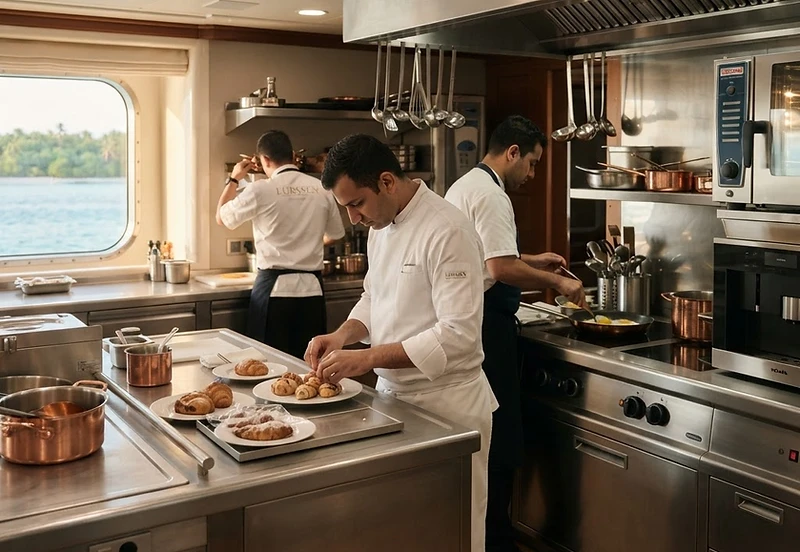
The transition from the deep, indigo silence of the night to the pale, electric blue of a Maldivian morning is not marked by the rumble of engines, but by the soft, rhythmic clicking of a gas burner ignition in the galley. On board a vessel of this scale—an expansive, custom Lürssen currently idling in the lee of Kunfunadhoo—the crew’s day begins long before the sun crests the horizon. As the ship swings gently on her mooring, the anchor chain murmurs against the fairlead, a rhythmic, metallic friction that underscores the low, constant hum of the ship’s electrical heart. Inside the galley, the climate control remains absolute, yet there is a perceptible shift in the air; it grows heavy with the scent of dark, roasted coffee beans, a sharp, earthy counterpoint to the salt-saturated breeze pouring through the partially opened portlight. This is the hour of the ghosts, where the ship breathes for herself before she must begin to perform for others.
Precision in the Maldivian Transit
In the close confines of the preparation area, the chef moves with a deliberate economy of motion, a dance learned over years of navigating confined quarters while the vessel pitches in the Indian Ocean swells. The galley is a cathedral of brushed stainless steel, induction surfaces, and industrial-grade efficiency, designed by the vessel's naval architects to remain inherently stable even when the Baa Atoll currents pull insistently at the hull. A steward prepares a platter of fresh papaya and dragon fruit, sourced from the small, vibrant markets in Eydhafushi just yesterday. There is no haste, yet there is a profound, kinetic sense of purpose. As they arrange the silver, the sound of the galley’s overhead ventilation system creates a soft, consistent white noise that masks the faint, rhythmic splashes of early-morning divers slipping from a nearby vessel into the lagoon. It is a moment of professional grace, where the logistical requirements of breakfast—the precise folding of linen napkins, the exacting temperature of the cold-pressed ginger and lime juices—are balanced against the vast, shifting horizon visible through the small service hatch.
The Quietude of the Morning Watch
By the time the first true light catches the brilliant, bleached white sandbanks of the surrounding islands, the crew has already navigated the silent, technical checklist of the early shift. The transition from the ship’s internal mechanics to the hospitality of the guest experience is seamless, yet it remains rooted in this private, shared labor. Outside, the lagoon has settled into an impossibly clear turquoise, a stillness that demands a certain level of reverence from the staff as they prepare to move toward the aft deck. A stewardess pauses for a heartbeat by the glass sliding doors, watching the dark silhouette of a local dhoani cutting a sharp, wake-less line through the glassy water. There are no grand pronouncements here; there is only the quiet, efficient assembly of the morning, a ritual that anchors the vessel to the beauty of the anchorage. As the warmth of fresh pastries begins to fill the main foyer, the yacht feels less like a machine of steel and teak, and more like a living, breathing participant in the slow, tide-driven life of the Maldives.
The Weight of the Stillness
Beyond the glass, the sun finally clears the eastern rim of the atoll, casting long, gilded shadows across the teak deck. The preparation is complete, the coffee is poured, and the ship holds her position with the quiet confidence of a well-found vessel. There is a singular satisfaction in this transition: a breakfast set in the absolute peace of the Indian Ocean, grounded by the steady, invisible pulse of a galley that has already done the hard work of the morning. The yacht remains a sentinel in the blue, and as the first guest footsteps sound from the staterooms above, the crew steps back, leaving behind only the scent of warm butter and the soft, rhythmic sway of the tide against the hull.






