
The Architecture of the Void
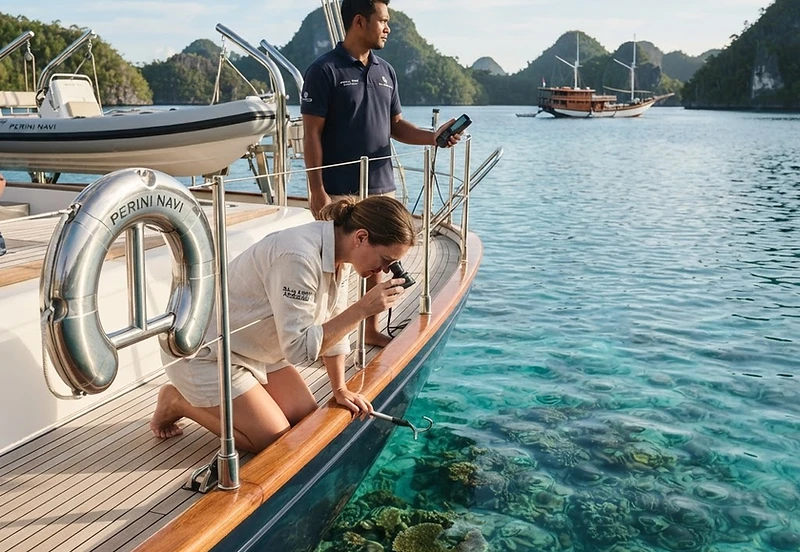
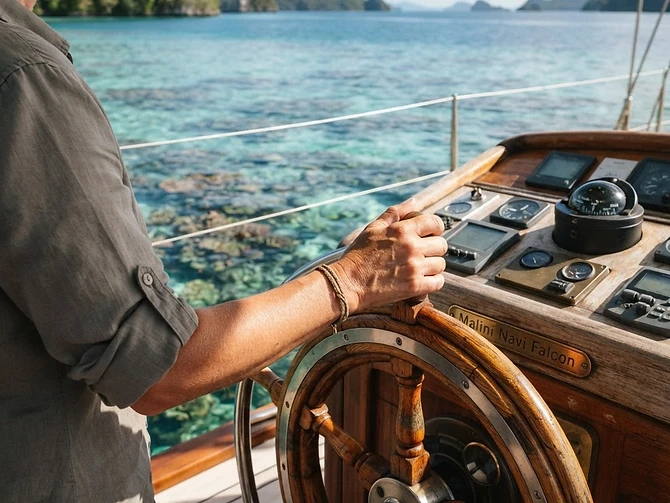
The dawn in Raja Ampat arrives not with a shout, but with the slow, violet dissolution of the night. From the bridge of a 45-meter Perini Navi, the water appears as a seamless sheet of obsidian, betraying nothing of the labyrinthine architecture of the reef systems below. Anchoring here, in one of the world's most sensitive marine sanctuaries, is an exercise in profound restraint. The captain’s command is not merely to find holding ground, but to seek the barren sand patches—the intentional clearings between the sprawling, kaleidoscopic gardens of staghorn and brain coral. We rely on high-definition multibeam sonar, but more importantly, the practiced, squinting eye of a seasoned local pilot. It is a slow, methodical dance of electronics and intuition, ensuring the heavy fluke of the anchor finds purchase in firm sediment, never grazing the fragile, calcified lungs of the archipelago. To drop the hook here is to understand that we are guests in a living house; the seabed is the foundation, and it must remain undisturbed by our arrival.
The Ritual of the Reef
Life aboard during these weeks follows the cadence of the tides rather than the clock. Once the hook is set and the chain tensioned, the transition from the focus of bridge duty to the serenity of the aft deck is absolute. There is a distinct, understated luxury in the rhythmic sound of a tender lowering into the water, its engine cutting early to coast the final fifty meters toward a remote, unnamed beach on the periphery of Mansuar. We are here not just to traverse these waters, but to engage with the bounty they provide through the lens of local tradition. Our chef, having spent the early hours at a floating market near Sorong, returns with a haul of ikan kuwe—giant trevally—and a handful of wild bird’s eye chilies plucked from the jungle edge. The connection between the sea we protect and the meal we prepare is visceral; there is no dissonance between the careful stewardship of the anchorage and the reverence required to handle such pristine, wild ingredients.
A Culinary Dialogue
By late afternoon, the deck is set for the evening’s transition. We dine on the trevally, grilled simply over wood embers sourced from the island’s driftwood, and finished with a bright, stinging sambal matah—a mortar-and-pestle emulsion of local shallots, bruised lemongrass, and the sharp, floral notes of kaffir lime leaves. Eating this way, tasting the very ecosystem we navigated with such technical care just hours before, brings a profound clarity to the purpose of our voyage. We have ventured to the far edges of the Dampier Strait to witness beauty, and in return, we practice the art of leaving no trace. As the sun dips behind the limestone karsts, painting the sky in violent, fleeting shades of ochre and indigo, the anchor chain goes silent. The boat sits motionless, a guest in a realm where the oldest inhabitants are the corals themselves, shifting in the dark, rhythmic pulse of the tide, undisturbed by our passing.






