
The Quiet Approach
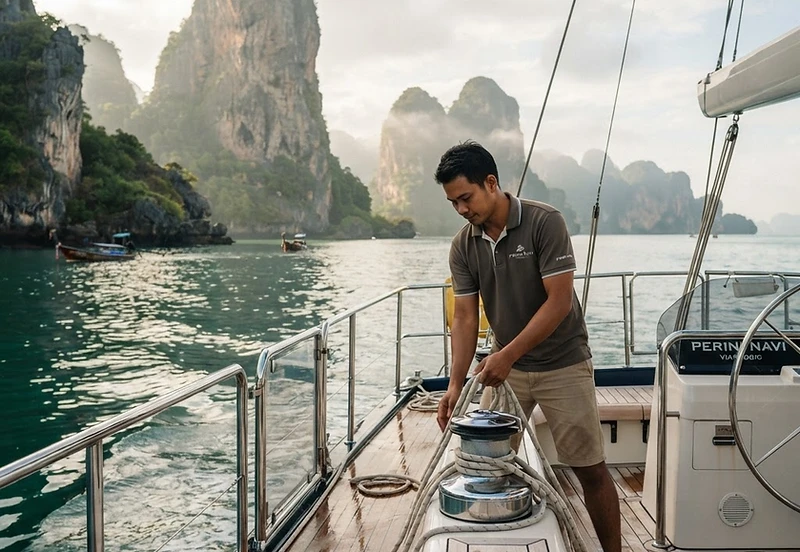
The transition from the open Andaman Sea into the sheltered waters of Ao Po is a lesson in patience and precise navigation. As we rounded the northern tip of Koh Phanak, the breeze dropped to a whisper, leaving our 40-meter Perini Navi to slide through the jade-tinted shallows on a glassy wake. Here, the landscape is defined by the verticality of karst cliffs, their roots submerged in the warm, saline reaches of Phang Nga Bay. Reaching Ao Po Grand Marina is less about docking in a bustling commercial hub and more about finding a terrestrial anchor in a world that feels permanently suspended in its own humid, verdant myth. The silence of the bay is absolute, broken only by the rhythmic slap of water against the waterline and the distant call of a sea eagle circling the limestone spires.
Tactical Realities and the Quay Wall
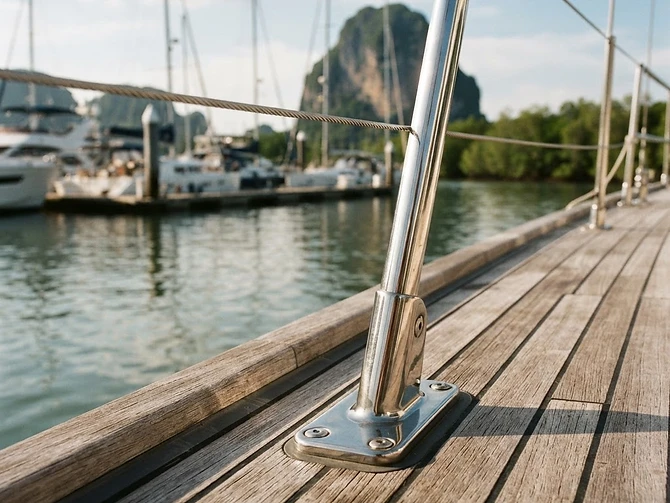
For a captain, Ao Po is a strategic necessity rather than a mere stopover. The marina, engineered with meticulous attention to the local hydrological environment, offers deep-water access that allows vessels drawing up to seven meters to approach the pontoons even during the lowest spring tides. The berthing architecture is robust, utilizing reinforced concrete pontoons designed to absorb the subtle, rhythmic surge of the bay without the undue stress often found in more exposed moorings. One must remain cognizant of the tidal flow, which can run with surprising velocity through the narrow channels between nearby islets; however, the docking sequence is simplified by the wide, well-marked fairway. Regarding technical support, the facility provides consistent shore power via reliable 63-amp and 125-amp connections, while the high-pressure water supply is sufficient to manage the essential rinsing rituals that salt-crusted teak and stainless steel require after a long passage through the southern Andaman reaches.
Life at the Edge of the Bay
Life aboard at the pier assumes a deliberate, unhurried cadence. The atmosphere is devoid of the frenetic energy found in Mediterranean hubs, replaced instead by the scent of night-blooming jasmine carried on the evening breeze and the soft clatter of lines as the local fleet settles for the night. We spent our final evening on the aft deck, enjoying a dinner of fresh sea bass sourced from the markets of Phuket, prepared with the sharp, acidic zest of local pomelo and finished with a dash of bird’s eye chili. Security is unobtrusive yet total, with twenty-four-hour monitoring and strictly controlled gated access points that ensure the seclusion of the deck remains entirely undisturbed. Provisions are handled by local concierge services that understand the necessity of sourcing high-quality ingredients, often delivering them directly to the gangway with an efficiency that belies the relaxed nature of the coast.
As the sun dipped behind the limestone pillars, casting long, violet shadows across the polished deck, the mechanical hum of the yacht softened into the ambient drone of the night. There is a profound finality to securing a vessel in a harbour that feels so completely at peace with its surroundings, a reminder that the true mastery of yachting lies not in the specifications of the hull, but in the certainty of a safe, quiet berth at the end of a long, salt-strewn day.






