
The Granite Threshold
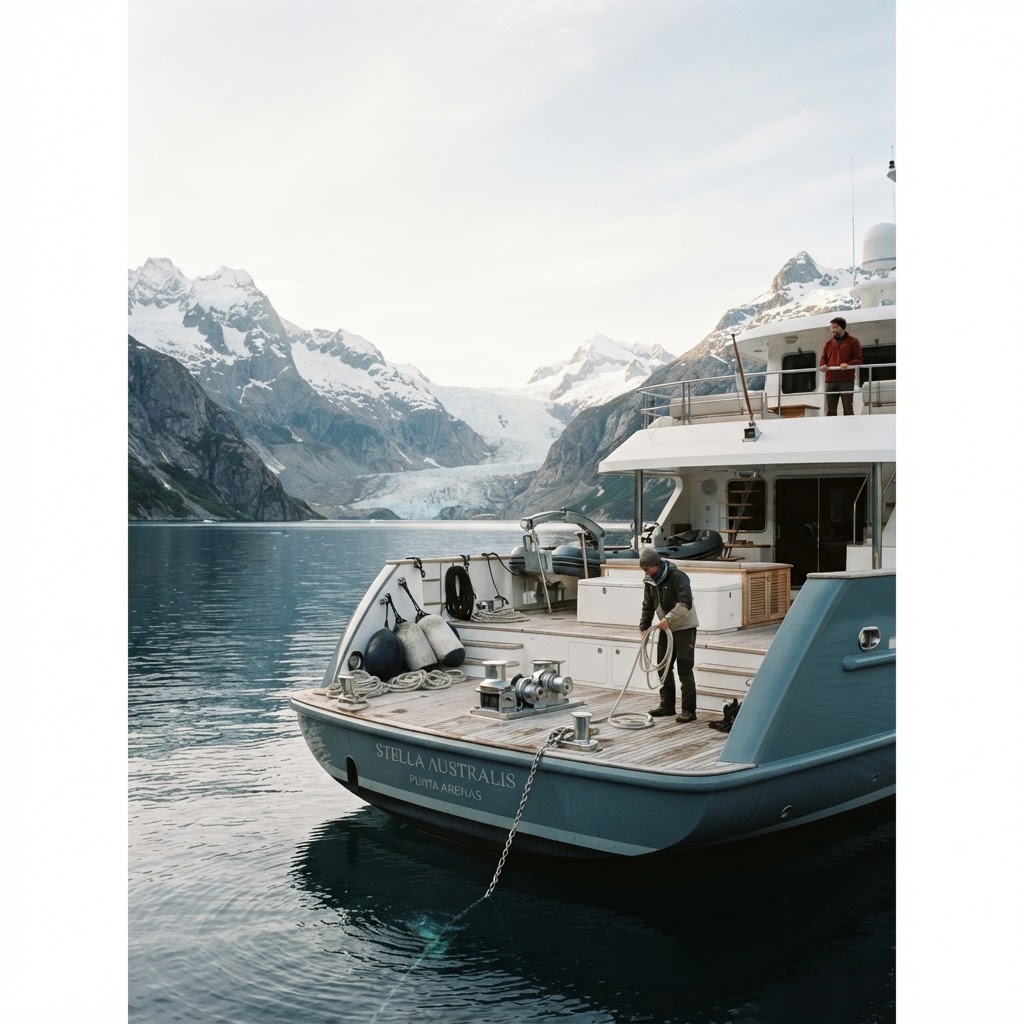
The transition from the open, bruising swells of the Drake Passage into the Beagle Channel is less a turn of the helm and more a shift in the soul. As our vessel, a sturdy, deep-keeled custom expedition cruiser, slipped past the wind-whipped headlands of Cape San Pio, the violent chaos of the Southern Ocean surrendered to the profound, obsidian stillness of the channel. Behind us, the world seemed to unravel; ahead, the mountains of Tierra del Fuego rose like cathedral spires, dusted with permanent snow and shrouded in low-hanging mist. There is no urgency here, only the deep, geological patience of the southernmost tip of the Americas.
Anchoring in the lee of Isla Gable, the water is so perfectly still it mirrors the glaciers above, creating a disorienting symmetry. We are the only human presence for forty miles, save for a lone Chilean crabber silhouetted against the gray horizon. On board, the silence is not empty; it is textured by the faint creak of the hull against the fenders and the rhythmic, guttural call of Magellanic penguins echoing from the rocky shore. This is the ultimate luxury: the deliberate removal of the digital clamor, leaving only the sound of a falling anchor chain and the crisp, biting scent of brine and ancient ice.
The Cold Harvest
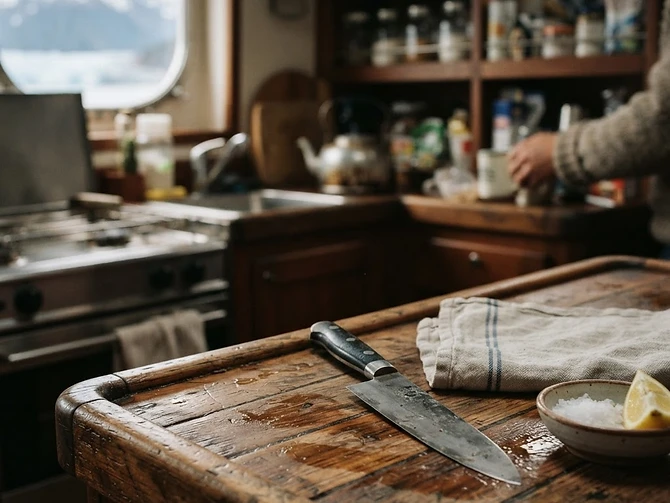
Life aboard, when stripped of the reach of cell towers and the distraction of schedules, gravitates naturally to the galley. There is a primal satisfaction in observing our chef work with the morning’s acquisition: a haul of centolla, the prized Southern King Crab, sourced directly from a local fisherman encountered near the port of Ushuaia. These crustaceans, with their heavy, spiked shells and dense, sweet meat, are the culinary heartbeat of the Beagle Channel.
We prepare the centolla simply, respecting the integrity of the ingredient. The meat is gently steamed, then finished with a drizzle of cold-pressed oil and a squeeze of the sharp, acidic calafate berry, which grows in tangled, resilient bushes along the shoreline. We dine on the aft deck, wrapped in heavy wool sweaters, watching the light fade behind the jagged silhouettes of the Darwin Range. The dish is accompanied by a rustic, dark-crusted sourdough bread baked in the ship's oven that morning. There is an undeniable dialogue here—the proximity of the kitchen to the wild, rugged terroir of the channel makes every meal feel like a communion with the landscape.
The Evening Watch
As the southern dusk bleeds into an indelible indigo, the ritual of the evening watch begins. We do not look for lights on the shore, for there are none. Instead, we watch the shadows lengthen over the glacial valleys and the way the anchor light casts a lonely, brilliant orb upon the dark surface of the channel. The yacht acts as a floating sanctuary, a small, warm knot of humanity held in the palm of a vast and indifferent wilderness.
We linger on the bridge deck, the cold air stinging our lungs, sipping a local herbal infusion of paramela, a fragrant, resilient shrub that offers notes of citrus and earth. There is no conversation needed when the environment demands such total attention. One feels, quite suddenly, the immense scale of the geography and the fragile, precious architecture of the boat beneath our feet. When the moon eventually rises, cutting a jagged path of silver across the black water, it illuminates the bow pulpit—a singular, quiet anchor point in the infinite blue.






