
The Geometry of the Morning Tide
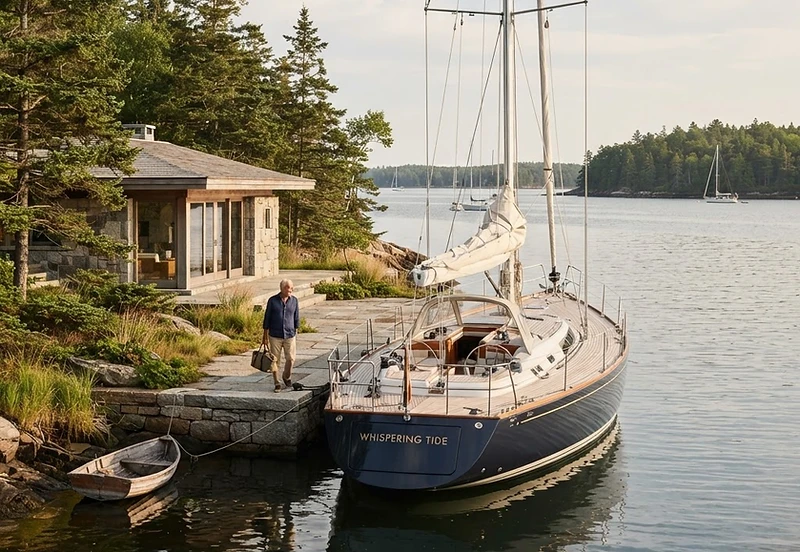
The dawn off Mahone Bay does not break so much as it bruises the horizon, a slow, deep-water wash of indigo giving way to the cold, silver light characteristic of the North Atlantic. Onboard Whispering Tide, a classic 47-foot Nautor's Swan, the morning begins with the familiar, rhythmic slap of localized chop against the hull—a sound that, for any sailor, is the true opening bell of the day. There is a profound, bracing sanity to a teak deck at this hour, slick with condensation and smelling faintly of brine, spruce, and the damp earth of the surrounding islands. One learns quickly in these Nova Scotian waters that the sea is not merely a path to be traversed; it is an interlocutor. You adjust your lines, double-check the swing of the mooring, and wait for the turn of the tide that will finally allow a deep-draught keel to sit comfortably alongside the private quay.
A Permanent Anchorage in Stone
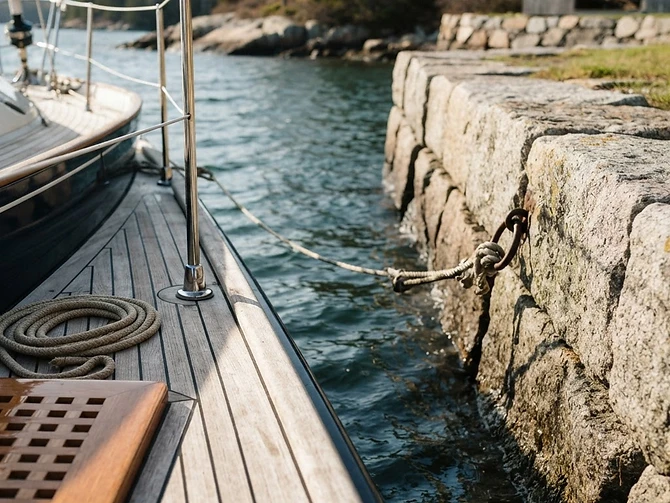
The quay itself is a masterwork of patience, engineered not to dominate the craggy shoreline but to settle into it with the inevitability of the landscape. Constructed from local, salt-weathered granite, its rugged, moss-speckled face echoes the surrounding headlands, effectively blurring the distinction between man-made utility and the wild, jagged character of the South Shore. When we finally nudged the Swan’s primary fender against the pier, the sensation was less like docking and more like arriving at a long-awaited point of equilibrium. The adjacent pavilion, a low-slung structure clad in silvered cedar shingles with expansive, floor-to-ceiling glass panels, sits flush with the pier's end. Its architectural intent is clear: it serves as a land-based companion to the yacht. The interior geometry—defined by clean, functional lines and a lack of ornamental distraction—mirrors the efficient, ergonomic layout of a well-appointed galley. Inside, the heavy, tactile presence of honed slate floors and the sharp, elemental crackle of a hearth burning dried driftwood provide a domestic counterpoint to the complexities of the rigging outside.
Life Between the Deck and the Hearth
Breakfast is a deliberate, simple affair—crusty, warm sourdough from a small bakery in Lunenburg, a pot of strong black coffee, and the absolute, heavy silence that only a maritime morning can provide. Standing on the pavilion’s transition deck, watching the distant, swaying masts of the local schooners anchored further out in the bay, you realize that the architecture serves the yachting life, not the other way around. The pavilion functions effectively as a decompression chamber, a place to leave behind the strict discipline of the watch and the physical rigours of the open-water passage. We spent the better part of the afternoon hunched over paper charts, plotting a reach up toward St. Margaret’s Bay, the light shifting across the water’s surface and turning the deep, frigid blue into a fractured mirror of shifting pewter. By late afternoon, the wind had stiffened, and the Whispering Tide tugged gently at her lines, the vibration of the shroud tension singing a low-frequency song that reminded us she was never truly meant to be idle.
As the sun dipped behind the dark, impenetrable treeline, casting long, lean shadows across the granite apron, the distinction between being at sea and being on land finally dissolved. There remained only the metallic hum of the halyards vibrating in the strengthening breeze and the steady, pulse-like surge of the Atlantic tide against the quay's stones. The charts are packed, the keel is ready, and the voyage continues with the turning of the tide at dawn, but for tonight, the boat and the house are reconciled, held fast in the quiet, immense gravity of the Nova Scotian night.






