
The Geometry of Arrival
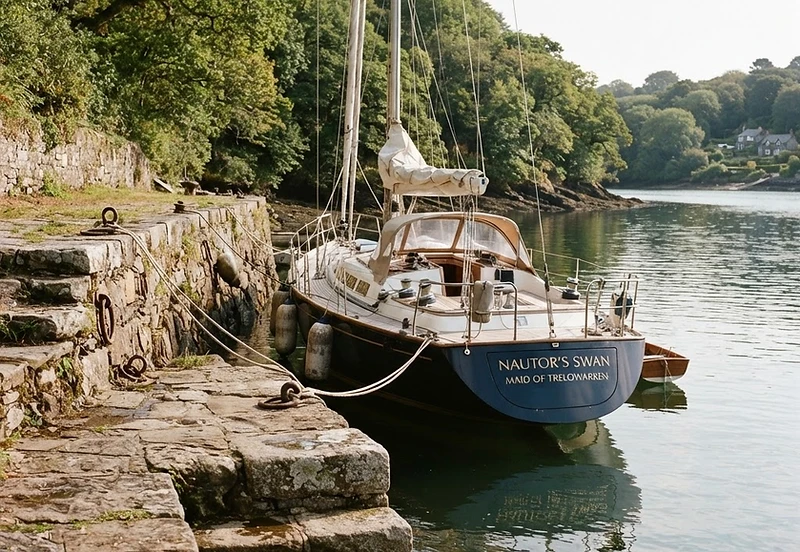
The transition from the open, unpredictable swell of the English Channel into the sheltered reach of the Helford River is a study in narrowing focus. As our Nautor’s Swan cleared the treacherous, kelp-darkened reefs of the Manacles, the sharp, grey teeth of the Cornish coast softened into the deep, oak-lined serenity of the estuary. We were bound for a private landing, a sliver of hand-dressed local granite cut into the hillside, designed specifically to cradle the yacht’s precise beam. There is a singular, quiet tension in bringing a vessel home to a berth that feels less like a temporary mooring and more like an extension of the dwelling itself. The quay, constructed from weathered, reclaimed Cornish stone, curves in a subtle, calculated arc, mimicking the tumblehome of the Swan’s hull. It is a gesture of architectural empathy that ensures the boat never feels like a foreign object, but rather a final, elegant, and necessary furnishing of the coastal landscape.
Living at the Water’s Threshold
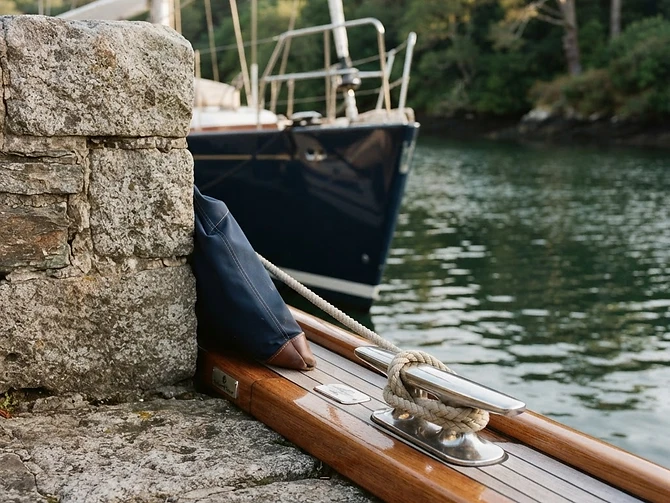
Stepping off the passerelle onto the cool, lichen-dusted stone of the pavilion, the world shifts from the mechanical cadence of the engine to the low, rhythmic hum of the tide against the quay wall. The pavilion, designed by a practice that intimately understands the seasonal volatility of the Atlantic, sits low against the slope, its expansive, steel-framed glass facade allowing the shifting, silver light of the estuary to penetrate deep into the interior. It is here that the boundary between life aboard and life on shore dissolves entirely. We sat on the slate terrace as the evening mist began to roll off the ancient timber of the Trelowarren estate, sipping chilled water while watching the yacht settle in the slack water. The mooring lines were dressed with practiced precision, the fenders adjusted to the encroaching tide, and the silhouette of the mast against the violet, darkening sky seemed to anchor the entire property to the water. In the silence, broken only by the distant, haunting cry of a curlew, the architecture of the quay and the refined engineering of the vessel spoke the same language of displacement and eventual rest.
The Tide’s Unspoken Accord
Morning in the Helford is rarely about the sun; it is about the slow, tidal reveal. Waking to the sight of the lead keel hovering just inches above the silty, nutrient-rich bottom at low water, one gains a renewed, visceral appreciation for the depth gauges we spend our navigation hours monitoring. The quay is engineered to accommodate this dramatic vertical fluctuation, its heavy oak pilings weathered to a soft, silver grey, stained by the persistent tannin of the river. We spent the morning readying the sail locker, the proximity of the house making the usual, often laborious rigors of maintenance feel almost domestic. There is a profound, grounded quiet in being able to step directly from the cockpit into a kitchen that smells faintly of sea salt and pine resin. As we prepared to cast off for a crossing to the Isles of Scilly, the boat felt refreshed, held in the cradle of the shore, a symbiotic relationship between a piece of fine naval craft and the stone that provides its sanctuary. We slipped our lines in the muted, grey light of dawn, leaving the quay to wait for our return, a silent, enduring sentinel carved into the very edge of the sea.






