
The Geometry of Isolation
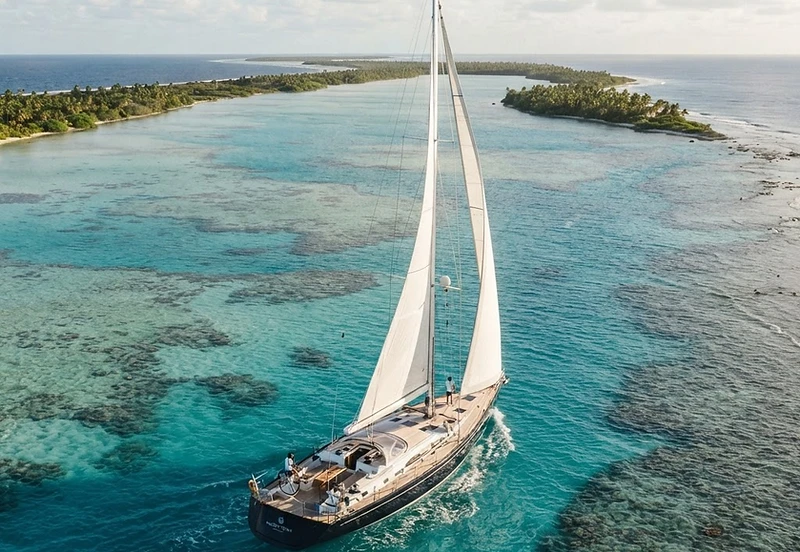
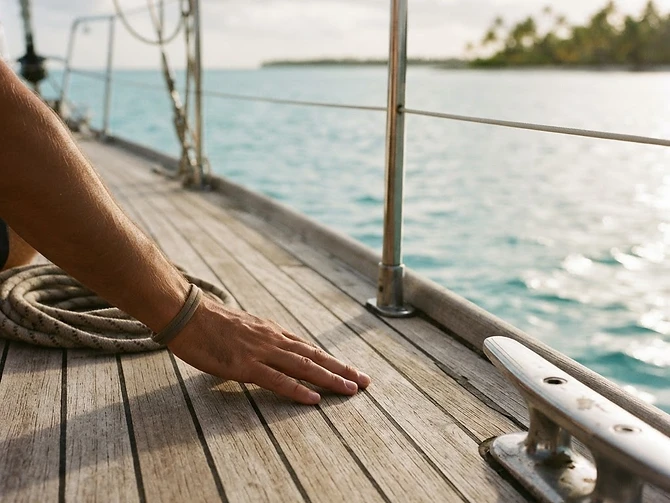
Steering the 45-meter Nautor’s Swan through the narrow, treacherous pass at Faaite requires a navigator’s intuition rather than a reliance on screens. The current here is a living, breathing entity, a hydraulic force that pulses with the lunar cycle, forcing the yacht to dance between jagged coral heads that have claimed many a hull before ours. When the engine finally cuts, the silence is not merely an absence of noise; it is a weight. We are anchored in a lagoon so clear the yacht’s shadow rests sharply on the white sand floor, twenty meters down. Beyond our teak-laid decks, there is nothing but the emerald curve of the motu and the endless, bruising blue of the Pacific. To be the only neighbor in this immense expanse is to experience a rare form of autonomy, one that demands a heightened awareness of the wind’s temperament and the sea’s shifting moods.
The Galley and the Lagoon
Life aboard, when stripped of the constant tether to port-side convenience, refines itself into a dialogue between the sea and the stove. Our mornings begin with the rhythmic slap of water against the transom, followed by the exchange of goods with the local fishermen who appear, as if by magic, in their small, wooden skiffs. They bring us the day’s bounty: mahi-mahi with skin still iridescent, and the prized pahua—giant clam—harvested from the reef’s edge. In our galley, the chef works with a minimalist precision that honors the raw ingredients. We cure the mahi-mahi in a quick lime and sea salt marinade, tossing it with fresh coconut milk grated moments prior and wild-foraged sea asparagus gathered from the tidal flats of the nearby reef. This is a cuisine of immediacy, where the distance from the water to the plate is measured in footsteps rather than shipping miles. The meal is served on the aft deck as the sun bleeds into the horizon, leaving the air thick with the scent of brine and the cooling earth of the atoll.
The Anchor’s Vigil
As the Southern Cross emerges with a brilliance impossible to replicate in the light-polluted skies of the Mediterranean or the Caribbean, the yacht settles into its night-time vigil. There is a distinct ritual to the evening; the lines are inspected for tension, the anchor watch is set, and the hum of the onboard systems softens to a barely audible whisper. To sit on the flybridge with nothing but the soft rustle of palm fronds drifting across the lagoon is to realize that the vessel is not just a mode of transport, but a self-contained world. In these remote reaches, the hull’s steel feels like a shield against the vastness, a warm, lit sanctuary in the middle of a primordial sea. We do not look for the bustle of a harbor like Gustavia; instead, we find ourselves watching the bioluminescent shimmer in our wake, waiting for the dawn to bring the next shift of the tide and another day of unscripted exploration.






