
The Weight of the Watch
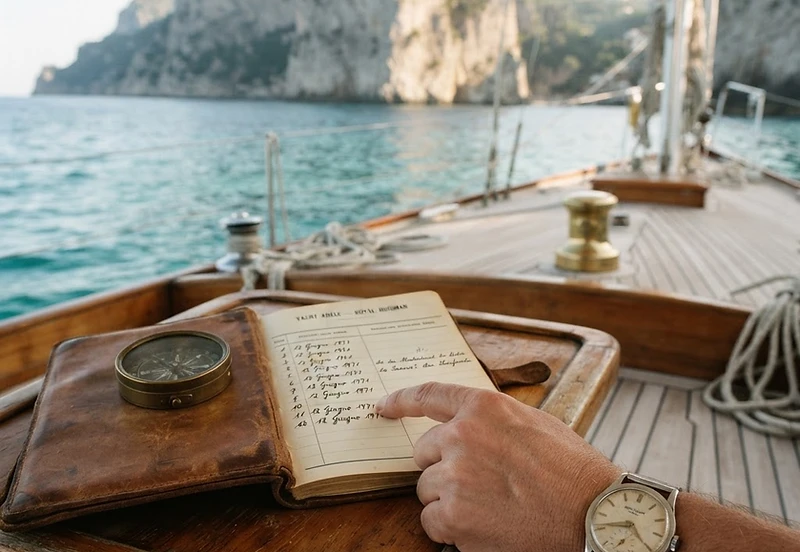
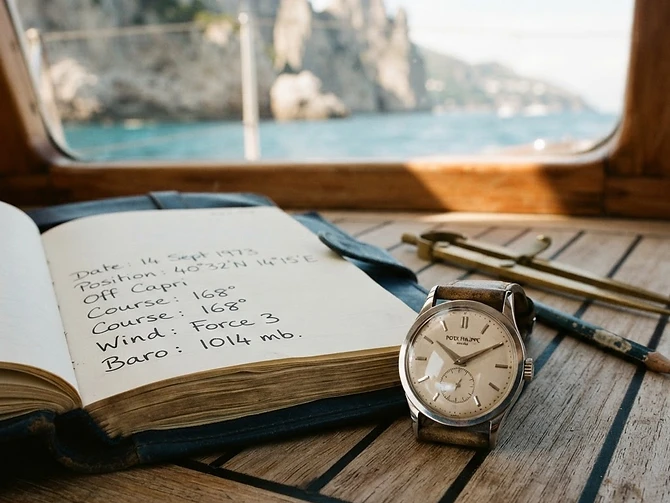
The dawn off Positano possesses a specific, hushed gravity. As the sun begins to bleed over the Lattari Mountains, the light does not so much illuminate the water as it does clarify the geometry of the coastline, turning the terraced houses into a pale, stacked mosaic. On the teak deck of the Royal Huisman schooner, the air is thick with the scent of salt spray and the faint, bitter promise of an espresso brewing in the galley. My hand goes, as it does every morning before the anchor is weighed, to the winding crown of a 1960s Patek Philippe chronograph. It is a tool of startling permanence, its steel casing marked by decades of use, its dial having weathered the salt-thickened air of a dozen seasons. It is not merely a timepiece; it is a mechanical anchor, providing a steady cadence to a life that otherwise drifts with the currents.
Provenance and the Written Course
Between the chronograph’s ticking and the boat’s logbook, there exists a profound, shared language of accountability. The logbook, a leather-bound relic resting on the chart table in the pilothouse, records more than just coordinates and barometric readings. It captures the spirit of the vessel. Beside the formal entries detailing the engine hours or the knot speed maintained during the reach from Ischia to the Faraglioni, there are scrawled notes on the wind shifts near the Punta Campanella and the memory of a lunch served on the aft deck—a simple scialatielli ai frutti di mare prepared with the morning’s catch from a local fisherman. Just as the chronograph keeps the mechanical pulse of the crew in sync with the celestial clock, the logbook preserves the narrative texture of the journey. To compare the two is to understand the yachtsman’s paradox: we are always chasing the next horizon, yet we are obsessed with documenting every second of the current one.
The Anchorage at Marina Grande
By midday, the tender is lowered, and we skirt the base of the Faraglioni, the water shifting from a dark, brooding indigo to an impossibly clear turquoise as we approach the shallows. The harbor at Capri is a theatre of movement—Riva tenders weaving between the superyachts, the persistent thrum of boat engines competing with the distant tolling of bells from the town above. I catch a glimpse of a fellow sailor at a nearby table in the Da Paolino garden, his own vintage timepiece catching the sun as he gestures toward a map. It is a silent recognition, the shared knowledge that a properly kept log and a reliable movement are the only true luxuries on the water. They are the artifacts of a life lived in motion, keeping us tethered when the horizon threatens to swallow the distance entirely.
As the sun dips low, casting long, bruised shadows across the deck, the chronograph’s sub-dials register the hours passed since we weighed anchor. The logbook remains open, the ink drying on the final entry of the day, marking the precise moment of our arrival. There is a deep, quiet satisfaction in closing the heavy cover, the snap of leather signaling that the passage is secure, the time held, and the sea once again settled into its own rhythm.






