
The Geometry of the Heave
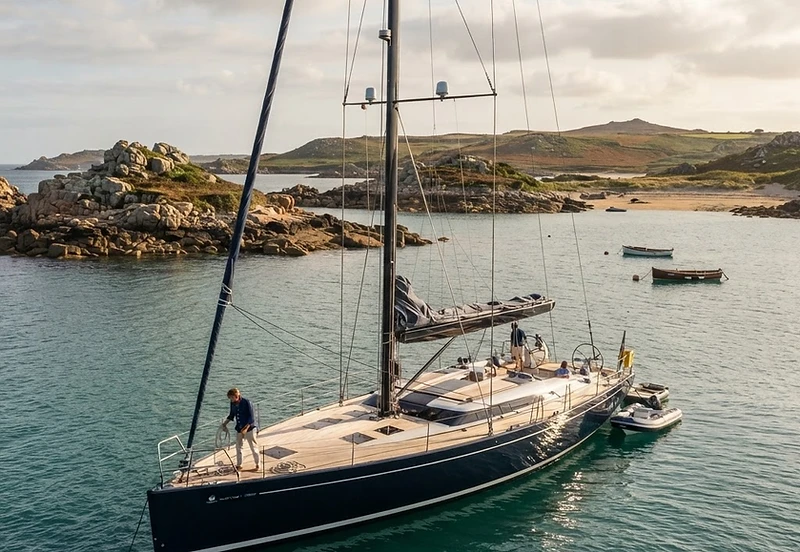
The morning light in the Isles of Scilly does not simply fall; it refracts through the Atlantic spray, turning the water into a vast, shifting prism of bruised teal and liquid silver. Standing on the aft deck of a 45-metre custom build, anchored in the sheltered lee of St. Mary’s, the air tastes of salt-crushed samphire and the cold, mineral sharpness of the granite shelves that define this archipelago. A yacht’s exterior profile is too often reduced to the vanity of the sketchpad, yet here, those lines serve as a rigorous survival strategy. Watching the vessel settle into the rhythmic pulse of the swell, one observes how the naval architect has calculated the hull’s sheer line to echo the dramatic, wind-battered descent of the nearby Cornish cliffs. It is a deliberate, structural choice: to ensure the yacht does not sit as an intrusion upon the water, but as a deliberate, floating extension of the geological history that anchors this rugged maritime outpost.
Living in the Static Wake
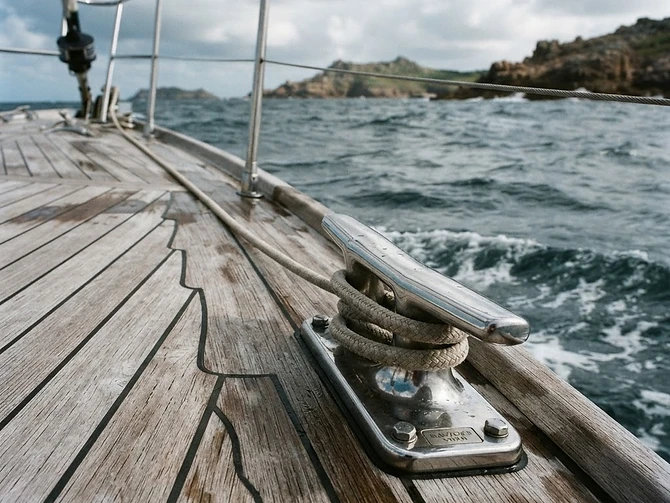
Stepping off the tender and onto the bleached sands of Tresco, the contrast between the vessel’s engineered permanence and the fluid, shifting landscape becomes profound. If a superyacht is truly a house afloat, then its exterior styling functions as the garden wall—a boundary that simultaneously separates the private sanctuary from the wild ocean and bridges the two. We spent the afternoon at a remote coastal residence near the Abbey Gardens, where the local vernacular architecture mirrors the yacht’s own interplay of glass and steel. Both structures share a common, disciplined language: wide, cantilevered overhangs that provide respite from the mid-afternoon glare while framing the horizon like a gallery print. The naval architect had designed the vessel's superstructure to shed wind, much like the traditional, low-slung granite cottages of the Scillies are built to shed rain and gale. Each refined detail—from the flush-mounted fairleads that vanish into the bulwarks to the recessed lighting that preserves the silhouette at night—serves to maintain the vessel's structural integrity against the Atlantic’s relentless, crushing atmospheric pressure.
A Dialogue of Form and Salt
As the tide pulled back to reveal the barnacled teeth of the rocks, the yacht appeared to contract, its metallic flanks catching the deepening amber hues of a dying sun. There is a specific, tactile satisfaction in running one’s hand along a warm, hand-oiled teak caprail while the wind whistles through the carbon rigging of a Nautor's Swan anchored nearby. It serves as a necessary reminder that even the most ambitious naval design must ultimately bow to the sea. Our conversations on the deck were quiet, punctuated only by the clinking of thin porcelain and the distant, rhythmic thrum of the tide against the hull. We spoke of the almost impossible balance required to house such immense internal volume within a frame that must remain buoyant, agile, and poised for the open passage. To build a superyacht for these waters is to build a vessel that knows exactly when to dominate the view and when to surrender gracefully to the horizon.
By midnight, the anchor light flickered in the distance, a solitary star grounded against the ink-black expanse of the Atlantic. The yacht sat motionless, a masterpiece of naval geometry perfectly at ease within the jagged, dark embrace of the granite islands, waiting in the silence for the tide to turn.






