
The Obsidian Silhouette of Alaid
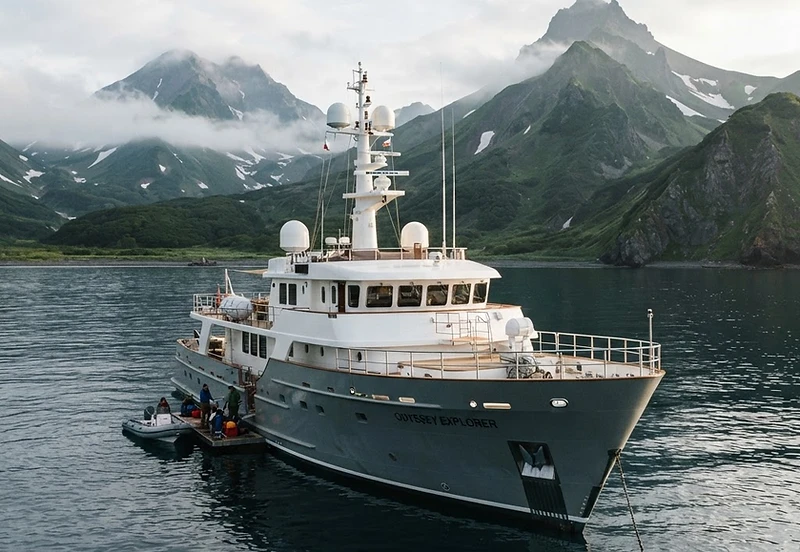
The dawn air in the Sea of Okhotsk carries a distinct, crystalline weight that is entirely absent from the humid, tropical latitudes. As our vessel—a rugged, 45-metre expedition yacht designed for long-range autonomy—rounded the northern tip of Paramushir, the volcanic peak of Alaid pierced the low-hanging stratus like a jagged, obsidian tooth. There is a specific, bracing clarity to the light at these latitudes; it does not warm the teak decks so much as it reveals the raw, iron-rich geology of the Kuril chain. We had spent the night anchored in a deep-water bay, shielded from the relentless Pacific swells by a formidable crescent of basalt cliffs. The rhythm of the wind humming through the rigging provided a constant, low-frequency soundtrack, a reminder of the isolation inherent in this remote maritime theatre. On the bridge, the silence was broken only by the hum of the Furuno radar and the occasional flick of a chart plotter, grounding our passage through waters that remain largely uncharted on the mental maps of most sailors.
The Cold-Water Harvest
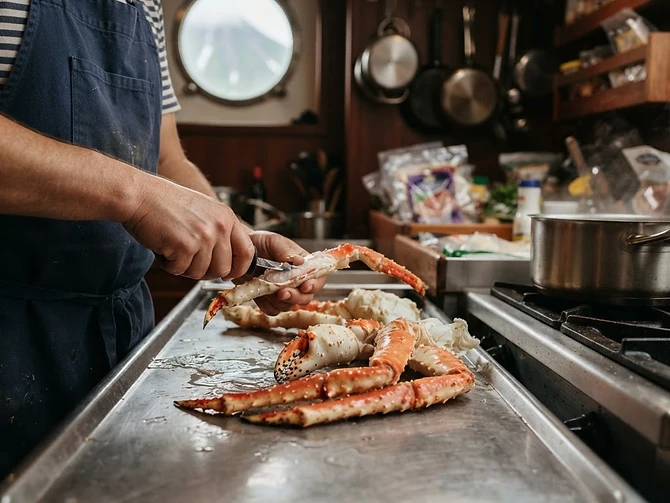
By mid-morning, the tender was lowered, its outboard engine cutting a stark white ribbon across the slate-grey water. We were headed to meet a small, weather-beaten fishing vessel near the harbour of Severo-Kurilsk, the captain having arranged a trade for the region’s most prized inhabitant: the Kamchatka king crab. The exchange took place in the lee of a jagged rocky outcrop, the smell of sharp brine, diesel, and wet stone filling the lungs. Back aboard, the galley became the immediate heart of the vessel, a warm sanctuary against the biting northern drafts. Our chef worked with a surgical precision that bordered on the reverent, treating the massive, spiny crustaceans not as mere ingredients, but as the essential evidence of the ecosystem we were traversing. The crab, remarkably succulent and sweet, was served with stripped-back simplicity—steamed briefly over a broth infused with locally harvested sea kelp and a garnish of wild chives, foraged by the crew from the desolate headlands of the nearby Shumshu shoreline. To eat this, staring out at the mist-shrouded coast, is to taste the very geography of the Kurils, a visceral reminder of the deep, cold bounty that flourishes beneath the surface.
The Quiet Ritual of the Anchorage
Life in this archipelago demands a deliberate, almost meditative pace. There are no manicured quays or crowded beach clubs here; the only rituals are the consistent checking of the barometer and the careful adjustment of the mooring lines as the tides turn through the passes. As the afternoon current began to pull, the yacht swung slowly on her anchor, the chain rattling through the hawse pipe with a heavy, rhythmic resonance that felt like geological time unfolding. We spent the long, lingering afternoon on the observation deck, watching sea otters navigate the dense, swaying kelp forests that hug the island’s edge, their playful arcs a stark contrast to the immovable weight of the volcanic slopes above. There is a profound, quiet luxury in this isolation—the total absence of the modern world’s frantic cadence, replaced entirely by the elemental motion of the sea. As the sun finally dipped behind the western ridges, casting a long, violet shadow across the water, the yacht settled into the profound silence of the anchorage, a temporary, humble guest in a landscape that has remained largely indifferent to the passing of human centuries. We watched the last of the light fade, the anchor light reflecting off the dark, churning surface, marking our small, illuminated footprint in the vastness of the Okhotsk night.






