
The Anchor’s Release
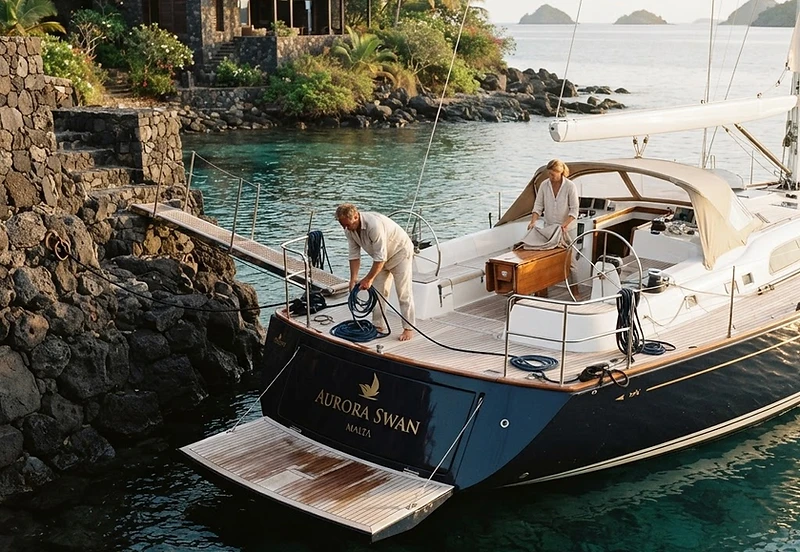
The dawn air off Nosy Be does not merely stir; it carries the heavy, sweet scent of drying vanilla, mingling with the sharp, salt-crusted tang of the Mozambique Channel. For the past six months, our Nautor’s Swan has been a kinetic island, a vessel defined by the shifting, unpredictable rhythms of this archipelago. Now, as the southern monsoon begins its final, hesitant retreat, the heavy work of the haul-out is upon us. There is a specific, bracing melancholy to this final watch—a sensory inventory of the deck that borders on the sacred. I run my hand over the teak, now bleached to a pale, bone-like grey by the relentless equatorial sun, and listen to the familiar, low-frequency hum of the rigging against the mast. The hull groans, a gentle, resonant protest against the subtle swell of the bay, as we navigate the shallow approach toward the private jetty of Villa des Palmes. It is an architectural marvel of local laterite stone and open-air cedar timber that appears, from the water, to be growing organically from the black volcanic shore, a fortress of permanence waiting to receive our wandering craft.
The Symmetry of Shore and Sea
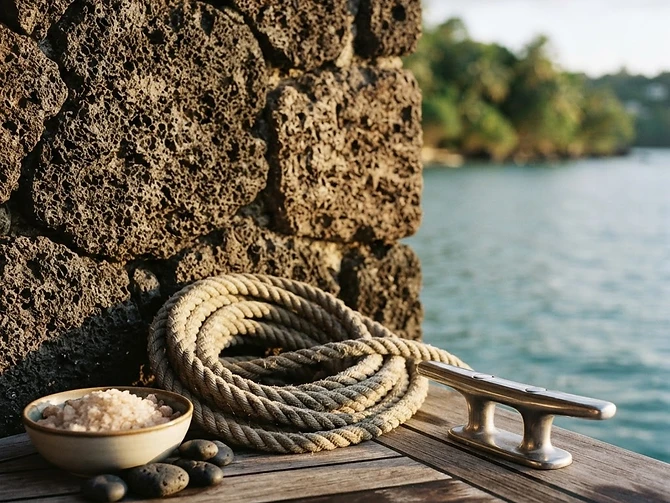
The house, designed by architects who understood that the boundary between dwelling and drifting should be fluid, features a cantilevered terrace that hangs suspended over the turquoise shallows. As we secure our lines to the heavy, salt-pitted iron rings on the private pier, the yacht and the residence share the same fragile, shimmering horizon line. The villa’s roof, a sweeping, sail-like structure composed of woven rafia and tensioned steel, mimics the exact, gentle curvature of our mainsail as it is dropped and flaked for the last time. Sitting on the terrace with a glass of chilled, locally sourced lime infusion, the distinction between the built environment and the floating one begins to blur in the shimmering heat. The residence is a sedentary vessel, anchored deeply in stone; the Swan is a nomadic home, temporarily finding stability. Both are machines for experiencing the sea, engineered to withstand the corrosive salt air and the heavy, humid weight of the Malagasy transition, yet both now carry the gravity of an approaching silence.
The Ritual of the Hard
Laying up is not merely an act of storage; it is a period of deep, forensic observation. The transition from the buoyant support of the water to the rigid cradle of the travel-lift is the most intimate moment of the season. As the webbing slings take the weight, there is a collective, held breath aboard—the yacht emerges, streaming water and suddenly exposed, revealing the ephemeral traces of marine growth and the clean, hard geometry of the lead keel. We move with the deliberate, unhurried pace of those who know that every bolt, every through-hull valve, and every varnished surface requires a human witness before the shutters are drawn. We will spend the next two weeks in the humid, dappled shade of the yard, stripping the winches and flushing the freshwater systems, leaving the vessel in a state of carefully calibrated suspended animation. Watching the sun drop behind the jagged silhouette of the house on the hill, the villa’s lights flickering to life like shore-side navigation markers, one realizes that the season never truly ends; it simply finds a new, fixed latitude. The quiet that follows the final silencing of the engine is the true signature of the voyage, a promise written in the stillness that the Mozambique Channel will be waiting for us when the winds eventually shift.






