
The Weight of the Second
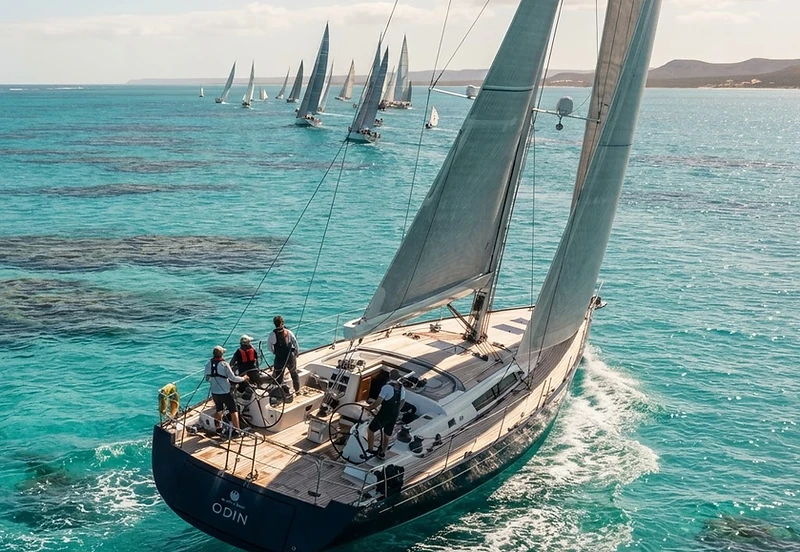
The dawn over the Exmouth Gulf does not break so much as it dissolves, turning the deep indigo of the Indian Ocean into a translucent, shimmering turquoise. We are anchored aboard a Nautor's Swan, her teak decks still cool from the night, the faint scent of salt spray and the dark, bitter aroma of morning coffee clinging to the rigging. Beyond the cockpit, the Ningaloo Reef lies like a submerged fortress, its presence marked only by the sudden, violent shift in the water’s temperament from deep cobalt to a pale, crystalline glass. Today is the final leg of the local regatta, and the atmosphere on board is marked by a deliberate, low-voiced focus. The crew moves with the economy of long practice, checking the tension on the stainless-steel forestay and ensuring the telltales on the jib are dancing, perfectly responsive to the lightest shift in the early breeze.
Calibration on the Line
In the silence between the gusts, the mechanical reality of the race takes hold. I catch myself glancing at my wrist, where the oversized dial of a mechanical regatta chronograph—a piece designed specifically for this high-stakes choreography—acts as a tether to the coming start. It is a tool of precise, tactile intent, its five-minute countdown sequence calibrated to the second. To operate it is to engage in a physical dialogue with the race committee’s visual signals. Watching the sweep of the hand, one feels the compression of time; those five minutes are an eternity of mental rehearsal, a meditation on the tide, the current pushing against our keel, and the proximity of the other yachts jostling for the weather side of the line. The watch is not a piece of vanity here; it is the heartbeat of our strategy, a rhythmic anchor against the rising adrenaline of the start.
The Surge of the Start
When the final signal sounds, the transition is sudden and kinetic. The yacht lunges forward, her hull slicing through the chop as we find our groove toward the northern headland. The shore, a tapestry of red ochre earth and scrub, blurs into a backdrop as the focus narrows entirely to the sail trim and the angle of the wind. There is no room for hesitation, only the immediate correction of the helm and the collective awareness of the water beneath us. We are not just racing; we are testing the limits of the vessel against the unforgiving shallows of the coast, navigating the narrow channel with the expertise required by these uncharted waters. For a few brief, glorious miles, the world outside this cockpit ceases to exist, leaving only the sound of the wind in the luff, the vibration of the rudder, and the relentless, measured progress of the seconds ticking away toward the mark.
As the afternoon wanes and the fleet separates, the intensity slowly gives way to the vast, quiet expanse of the Coral Coast. We ease the main, feeling the vessel settle back into her natural rhythm, a gentle lean that speaks of a day well spent under sail. The chronograph stops, its purpose fulfilled, leaving behind only the distant, rhythmic slap of water against the hull as we turn back toward the anchorage at Coral Bay, the sun dipping behind the dunes in a final, quiet display of burnt orange and gold.






