
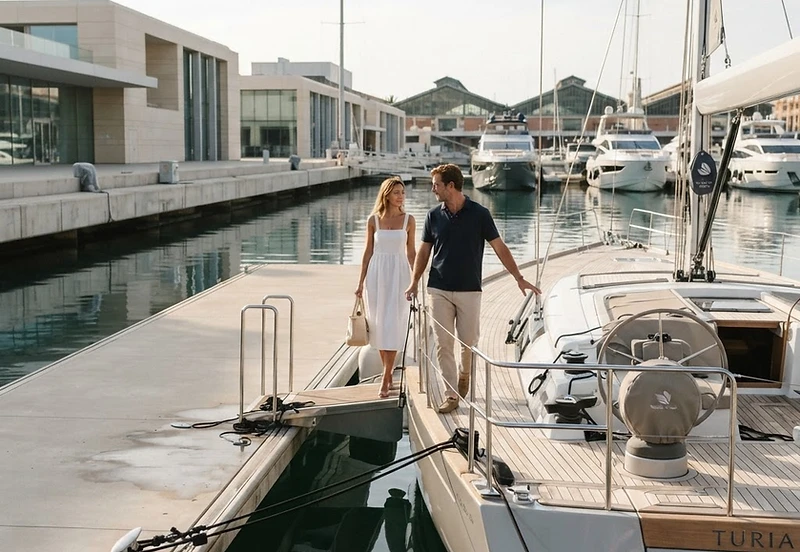
There is a particular, amber-hued quality to the light as it catches the carbon-fiber rigging of the yachts moored in the Marina de València at dusk. Standing on the southern mole, one quickly realizes that the America's Cup basin is far more than a collection of slips; it is an expansive, purpose-built arena that feels uniquely calibrated for those who measure existence in knots and tidal intervals. The scale here is immense, yet it holds a quiet composure, reflecting a pedigree of design intended to host the most demanding regattas in the world.
The Engineering of a Modern Haven
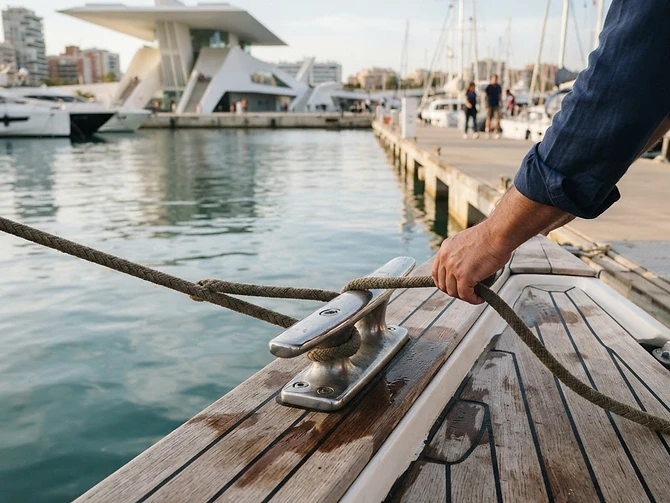
For the skipper of a displacement motor yacht or a high-performance sailing vessel, the true value of Valencia lies in its uncompromising security. The basin is shielded by massive, engineered breakwaters that effectively neutralize the Mediterranean chop, even when the Levante wind surges from the east. With charted depths reaching 5 to 10 meters, deep-keel vessels navigate the main channels with absolute confidence. While one must remain mindful of minor siltation near the inner edges of the northern basin, the berthing experience—predominantly along robust, well-fendered concrete quays—is exceptional. The bollards are substantial, thoughtfully placed to accommodate everything from classic schooners to 80-meter superyachts.
The infrastructure is as reliable as the charts suggest. We found the shore power pedestals, which feature 125A connections in the superyacht berths, to be consistently maintained—a quiet relief for those accustomed to the voltage fluctuations found in smaller, less commercial ports. Fresh water is delivered through high-pressure outlets that render the daily maintenance ritual far less arduous. Should your vessel require professional attention, the port's proximity to specialized marine contractors and comprehensive lift-out facilities ensures that everything from zinc replacements to complex sensor calibrations can be managed without the need to steam further north to the yards in Barcelona.
The Rhythms of the Basin
Beyond the technical merits, there is a distinct, understated lifestyle that permeates the basin once the engines have settled into their cooling cycles. The evening ritual is beautifully simple: a short walk to one of the dockside cafes where a café solo or a chilled glass of local white wine serves as the bridge between the rigours of the deck watch and the stillness of the port. There is no frantic, artificial pace here; the atmosphere is dictated by the slow, rhythmic drift of the sea and the gentle hum of stays in a light breeze.
Provisioning is exceptionally straightforward, grounding the vessel in the local terroir. A short trip to the Mercado del Cabañal yields the freshest catch—prized red prawns from local waters—and seasonal produce that seems to capture the essence of the surrounding soil. Life aboard feels anchored yet connected, as the city’s historic architecture looms just beyond the mastheads, a constant reminder of the culture waiting just steps from the pontoon.
As the final light fades, the basin glimmers with the reflected glow of the city’s skyline. Watching the last of the local sailors stow their jibs from the comfort of the aft deck, there is a profound sense of having arrived at a rare intersection of utility and elegance. The sea remains the ultimate master, but here, in the organized silence of the basin, the transition between the wild blue of the open passage and the calm of the harbour is handled with a grace that is increasingly rare in the modern age.






