
The Geometry of the Morning Watch
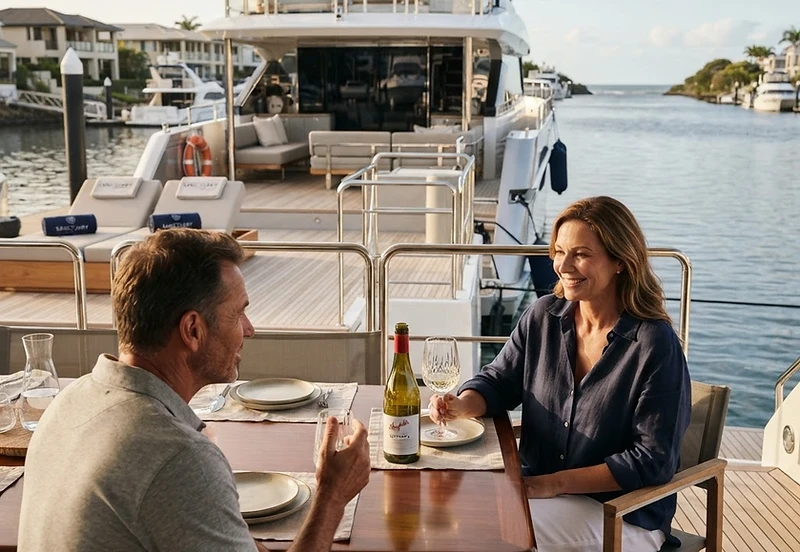
The dawn light across the Southport Broadwater possesses a specific, pearlescent quality, reflecting off the glass-calm surface before the prevailing sea breeze begins its daily migration from the Pacific. Aboard the 45-meter alloy yacht—a masterclass in fluid dynamics currently held by its anchor near the pristine, shifting sandbars of South Stradbroke Island—the day begins not with fanfare, but with the rhythmic tapping of halyards against masts and the low, resonant hum of the ship’s electrical systems cycling through their startup sequence. There is a profound, meditative stillness here, a brief, hallowed window where the vessel feels less like a platform of status and more like an extension of the littoral fringe itself. As the deck crew moves with practiced efficiency, prepping the tender for a morning run into the sheltered reaches of Sanctuary Cove, the stewardess emerges onto the teak-laid aft deck with a chilled tray of glassware. It is a silent reminder that, while the navigator calculates the depths and the drift, there is an equally nuanced navigation required to calibrate the afternoon’s repose to the horizon.
Curation Amidst the Current
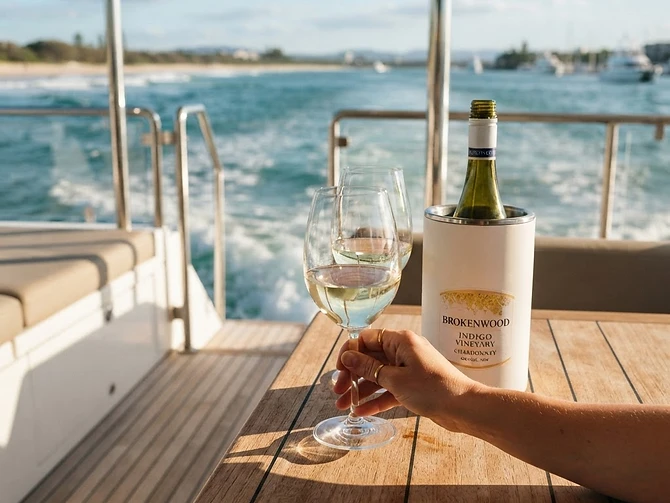
Maintaining a sophisticated cellar on a vessel constantly interacting with the dynamic currents of the Coral Sea requires a level of logistical foresight that rivals the chief engineer’s rigorous maintenance schedules. Space aboard is a finite, precious commodity, and the pervasive maritime humidity remains the eternal adversary of the cork. We have discovered that the selection must be as resilient as the vessel’s hull, capable of withstanding the subtle vibrations of the stabilization systems while awaiting the perfect moment of arrival. When selecting a bottle for a quiet sundowner while sheltered behind the lee of a rocky headland, one seeks producers who demonstrate a deep reverence for their soil, echoing the captain’s own respect for the charted shoals. Whether it is a crisp, mineral-forward Vermentino sourced from the rugged coastal vineyards of the Margaret River region or a delicate, lees-aged sparkling wine from the cool-climate slopes of Tasmania, the liquid must converse with the setting. It is the art of honoring the terroir of the land left behind, all while standing on the deck of a machine meticulously engineered to conquer the surrounding water.
The Final Descent
By late afternoon, the tide begins its slow, inexorable turn, pulling the yacht gently on its bridle as the shadows stretch long and thin across the dunes of the Gold Coast Spit. This transition from the active, engine-driven intensity of passage-making to the hushed, static peace of an anchorage is a ritual of deceleration. We move from the focused intensity of the helm to the soft, weathered warmth of the sundeck, where the day’s exertion is distilled into the exact temperature of a glass and the shifting, bruised violet hues of the sky. As the sun dips below the distant, jagged silhouette of the hinterland, the wine—a vibrant, saline-touched Riesling—seems to capture the very essence of the surrounding saltwater. There is no urgency to return to the bustling marina at Main Beach or the crowded quay of the Yacht Club. Here, in the small, shifting geography of our own making, the anchor holds fast into the dark silt, and the world is defined entirely by the gentle, hypnotic rise and fall of the swell against the hull, leaving us to watch the first stars emerge over the restless, infinite expanse of the Pacific.






