
The Submerged Threshold
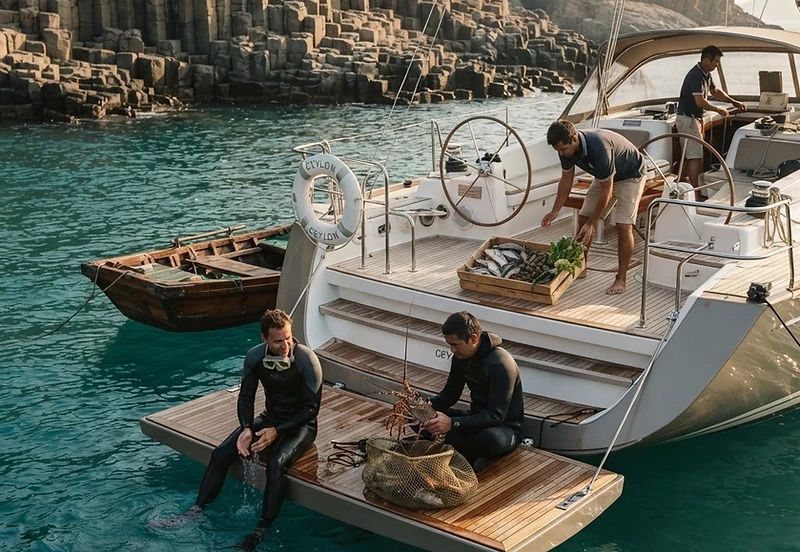
The morning light over the South China Sea does not merely shine; it refracts through the salt-heavy air until the horizon dissolves into a singular, brilliant indigo. We stood on the foredeck of our Nautor’s Swan, watching the silhouette of the Ninepin Islands rise like jagged, prehistoric teeth from the chop. There is a particular focus required when navigating these waters off the Sai Kung Peninsula, where the swell pushes against the volcanic columns with a rhythmic, percussive force. Anchoring here is an exercise in trust—trust in the ground tackle, in the depth sounder’s persistent hum, and in the sheer ability of the hull to hold its own against the unpredictable currents of the Pacific rim.
The dive plan was precise: a swim-through arch submerged thirty feet beneath the surface, where the tide creates a natural tunnel through the columnar basalt. Descending into the blue, the surface noise of the rigging and the gentle slap of the hull against the fenders vanished, replaced by the deep, muffled thrum of the current. Inside the cavern, the light played tricks on the limestone walls, filtering down in shimmering curtains of jade and slate. We drifted through the archway, feeling the temperature drop sharply as the shadow of the rock closed over us. It was a moment of absolute stillness, a reminder that the yacht is merely a guest in a liquid architecture that has stood long before our masts were stepped and will remain long after we have weighed anchor.
The Ritual of the Galley
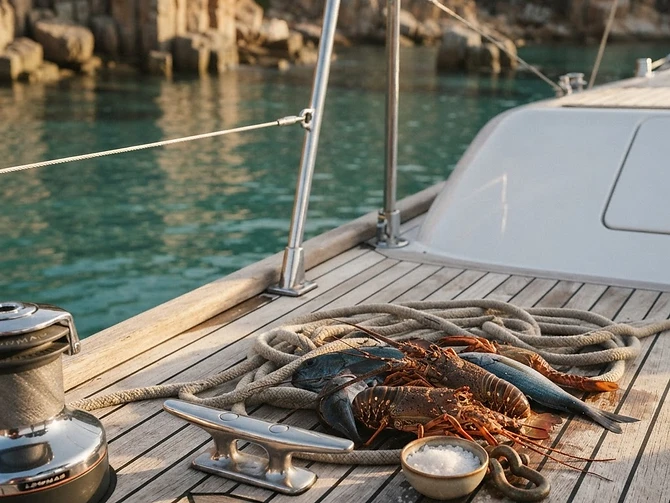
Returning to the deck, the transition from the weightless quiet of the deep to the vibrant, salt-stung reality of the cockpit was immediate. The scent of the sea was already mingling with the sharp, aromatic promise of the galley’s preparations. We had spent the morning’s early hours at the Sai Kung fish market, securing a haul of mantis shrimp still pulsing with the vitality of the local catch, alongside bundles of fresh choy sum and thick, gnarled knobs of mountain ginger. There is a profound honesty in the way the local kitchen handles such ingredients—a respect for the integrity of the sea life that requires little more than a quick flash of high heat and a splash of Shaoxing wine.
Lunch was laid out on the aft deck, under the expansive shade of the bimini. We sat with bowls of steaming jasmine rice topped with the mantis shrimp, their shells cracked to reveal the sweet, translucent meat, seasoned simply with a reduction of soy, crushed garlic, and the bright, biting heat of birds-eye chilies gathered from the hillsides of Lantau. We ate slowly, watching the local sampans navigate the narrow channels between the sea stacks, their engines humming a low, steady bass note against the wind. It was a meal that demanded a pause, where the conversation between bites drifted toward the navigation of the afternoon tide, the subtle shift in the wind’s angle, and the simple, enduring joy of being anchored in a place that has not yet been refined into a mere waypoint.
As the shadows of the cliffs began to lengthen across the water, the yacht swung gently on her chain, her teak decks cooling under the encroaching dusk. We watched a single distant tanker ghosting toward the shipping lanes, its lights starting to twinkle like fallen stars. The day’s adventure in the deep was settling into the quiet, rhythmic contentment of life aboard, leaving us with nothing more to do than listen to the water lapping against the hull as the moon rose over the Ninepins.






