
The Obsidian Threshold
The approach to the island of Lipari from the north, particularly when the wind is funneling through the Strait of Messina, is a lesson in respect for Aeolian volatility. As we rounded the headland of Monte Rosa, the silhouette of the town gave way to the deep, protected basin of Pignataro. It is a harbour defined by its geography; the jagged, volcanic cliffs of the Lipari massif provide a natural rampart against the prevailing mistral, creating a sanctuary that feels miles removed from the exposed, deep-water anchorages that dominate the rest of the archipelago. Dropping the hook here isn't merely a navigational decision; it is a transition into a quieter, slower life aboard.
Tactical Berthing and Shore Rhythms
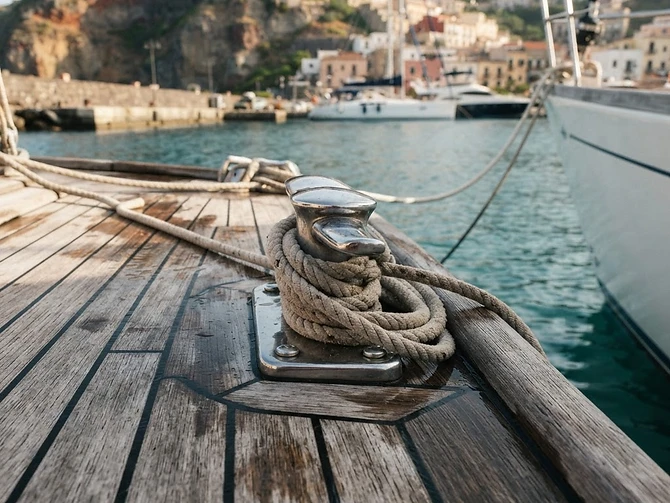
For a vessel drawing two and a half meters, the primary concern in Pignataro is the intermittent siltation near the outer berths. The harbour, operated by the local authority, is well-protected, but one must be mindful of the steady southerly swells that can occasionally sneak into the mouth, creating a gentle harmonic motion that demands well-fendered, secure lines. The pontoons are constructed for durability rather than finesse, but they provide the essential utility infrastructure necessary for an extended stay. Shore power is generally stable, provided one has the appropriate adapters for the local multi-pin configuration, and the fresh-water supply is reliable, drawn from the island's own desalination systems.
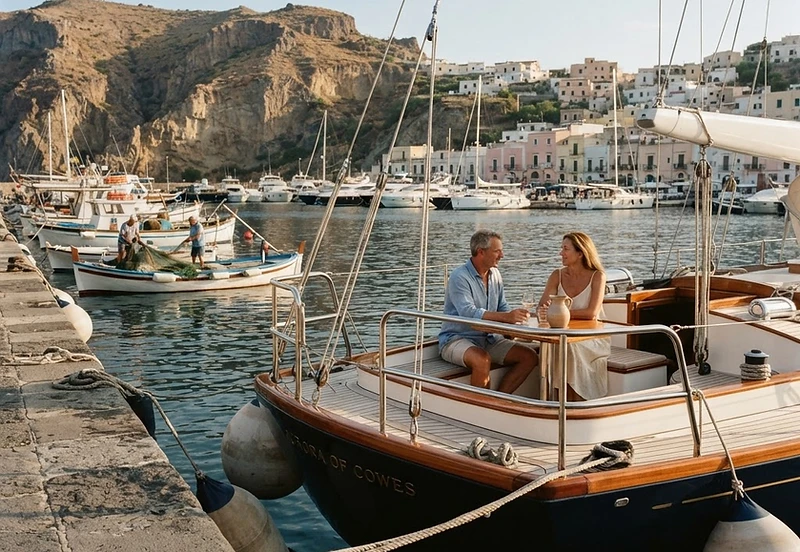
Life at Pignataro is dictated by the rhythm of the catch. On a Tuesday morning, the quay was alive with the scent of salt and freshly netted sardines. Watching the local fishermen mend their gear while our engineer checked the fuel levels at the nearby pump station offered a rare sense of groundedness. Provisioning is an intimate, iterative process here; a short walk toward the town center leads to family-run markets where the produce is not curated for global convenience, but for local consumption. We picked up pungent volcanic capers and sun-ripened tomatoes, the quintessential ingredients for a lunch served on the aft deck, shielded from the midday heat by the overhang of the hardtop.
Security and Sustenance
Security in Pignataro is informal but effective; the harbour is a community, and there is a tacit understanding that the vessels are under the collective watch of those who live and work along the stone walls. While one won't find the sophisticated concierge services of a larger Mediterranean hub, the lack of pretension is its own form of luxury. Maintenance is handled by local mechanics who understand the specific demands of the corrosive, mineral-rich air of the islands. For a skipper, the necessity of having a reliable chandlery—the small shop near the breakwater is surprisingly well-stocked with basic hardware and emergency spares—is paramount to the peace of mind required for island hopping. As the sun dipped behind the volcanic ridge, the harbour fell into a hushed stillness, the water reflecting the lights of the distant village, leaving us to contemplate the next day’s passage toward the smoking peaks of Vulcano.






