
The Quiet Threshold of the Seto Inland Sea
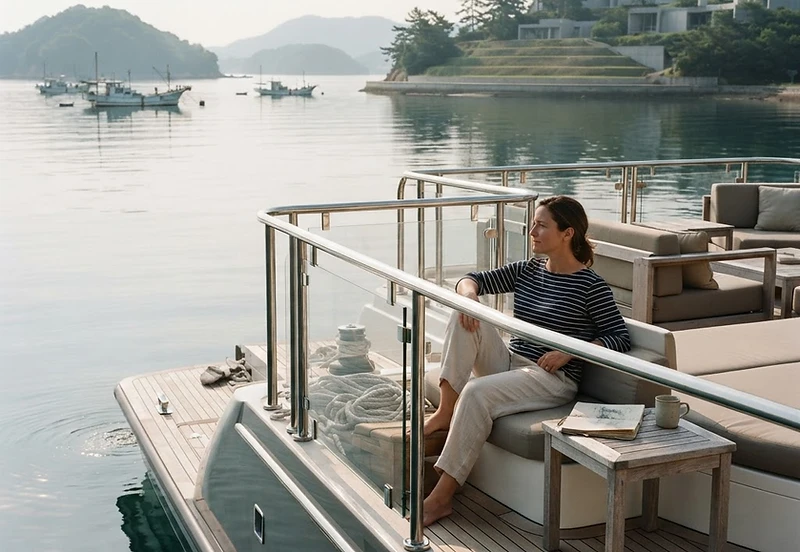
The transition from the open, unpredictable currents of the Kii Channel into the mirror-still embrace of the Seto Inland Sea is a sensory shift that every mariner registers as a profound lowering of the pulse. As we rounded the jagged headlands near Uno Port, the steel hull of our vessel seemed to soften its wake, sliding into the pale, opalescent waters that separate Honshu from Shikoku. There is a specific quality to the light here—diffused by the mist that clings to the pine-studded islets—that turns the act of anchoring into a meditative ritual. We dropped the hook in the lee of a small, nameless island off the coast of Naoshima, the water so translucent that the rhythmic swaying of the kelp forests below was visible from the bridge. Being the only vessel within sight, the yacht became less of a machine and more of a stationary island, a quiet platform from which to observe the archipelago’s ancient, deliberate pace.
Culinary Cartography and the Morning Market
Life aboard in these waters demands an appreciation for the local harvest, one that is as tethered to the sea as our own transit. Before the morning heat could settle on the decks, we took the tender into the small harbour at Honmura, where the scent of salt spray mingled with the earthy aroma of roasted buckwheat. Our galley team had spent the prior evening consulting with a local fisherman who operates out of the nearby port of Tamano, securing a haul of mebaru, or rockfish, known for its firm, translucent flesh. Back in the galley, the chef prepared the fish simply, searing it on a hot stone and finishing it with a drizzle of citrus-forward yuzu-kosho and a pinch of hand-harvested sea salt from the Inland Sea’s northern reaches. This was not a meal of artifice, but an essential expression of the shoreline—clean, sharp, and deeply rooted in the seasonal availability of the Seto waters.
The Symmetry of Shore and Ship
The afternoon was spent navigating the tender between the floating art installations and the silent, stone-walled quays of the islands, a stark contrast to the modern lines of our yacht. We eventually docked at a small, weathered pier near the Benesse House, where the architecture of Tadao Ando emerges from the landscape with the same precision as a well-engineered teak deck. The contrast between the rigid, concrete geometries of the galleries and the soft, organic swell of the sea creates a unique tension, one that reminds you that both the boat and the land are merely vessels for experience. Returning to the yacht as the sun dipped behind the silhouettes of distant islands, the ritual of the evening deck wash began—the hiss of seawater on fiberglass a grounding, familiar sound. We sat on the aft deck, watching the local ferry lights flicker like fireflies across the sound, realizing that in this corner of Japan, the true luxury is the simple, unhurried permission to exist in the silence between the tides.






