
The Vertical Silence of the Fjord
To navigate the Beagle Channel is to measure one's vessel against the sheer, unyielding scale of the Andes. Our transit through these waters, aboard a custom 45-meter explorer, had been a masterclass in grey-scale palettes—the steel of the hull, the slate of the mountains, and the charcoal depths of the water. As the sun began its slow, angular descent, it did not set so much as it bruised the sky, casting a long, amber glow that turned the glaciers of the Darwin Range into burning, translucent copper. The air here carries a crystalline sharpness that demands attention; it is a sensory reminder of how far we have drifted from the familiar latitudes of the north.
By the time we dropped anchor in a secluded cove near the Pía Glacier, the wind had died to a whisper. The silence in these southern anchorages is absolute, broken only by the occasional sharp report of ice shifting miles away—a sound like a distant cannon shot. This is the moment, the quiet intersection of navigation and leisure, where the crew prepares the tender for the final ritual of the day. To swim in these waters is not an act of recreation, but an act of engagement with the geography itself.
The Last Plunge
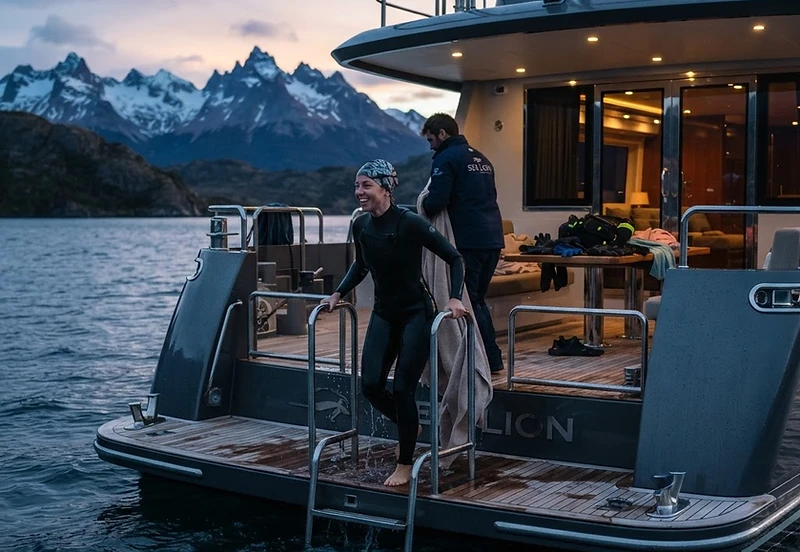
The water temperature, hovering just above the threshold of sanity, forces a sudden, vivid clarity of mind. Diving from the swim platform, the initial shock is total—a bracing, icy embrace that clears the day’s fatigue in a single heartbeat. One feels the immense weight of the southern ocean, the proximity to the ice fields, and the profound, humbling history of the sailors who navigated these straits in wooden ships centuries before us. Floating on one's back, looking up at the jagged, snow-dusted peaks, the yacht feels less like a piece of machinery and more like a necessary hearth anchored in the wilderness.
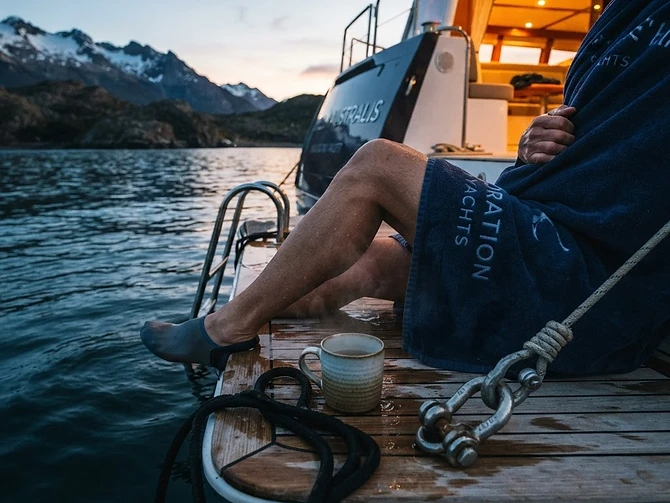
Back on board, the transition from the freezing sea to the warmth of the deck is handled with the practiced ease of a well-oiled crew. Hot towels, the hum of the deck heating, and the low, welcoming glow of the saloon lights serve as a tether to the comfort of the vessel. It is here that the day's physical exertion meets the refined rhythm of life at sea, where the cold serves only to sharpen the anticipation of what the galley has produced.
The Bounty of the Southern Fringe
Dinner on board is a study in local terroir, an exploration of the ingredients that thrive in this rugged environment. Our chef, having sourced a haul of centolla—the legendary southern king crab—from local fishermen in Puerto Williams earlier that morning, treated the catch with a restraint that highlighted its natural sweetness. The crab was served simply, shelled and gently warmed with a reduction of native calafate berries and a whisper of wild sea salt harvested from the nearby littoral.
Accompanied by crusty, hearth-baked bread and a selection of herbs foraged from the lower slopes—their pungent, earthy aroma cutting through the richness of the shellfish—the meal was a direct dialogue between the fjord and the galley. Sitting in the sheltered cockpit, watching the last sliver of violet light slip behind the mountains, we shared the table with the knowledge that this bounty was as transient as the light itself. The evening finished not with fanfare, but with the clink of silverware against ceramic and the quiet, rhythmic slapping of the tide against the hull, a final lullaby as the icebergs drifted silently past our beam in the dark.






