
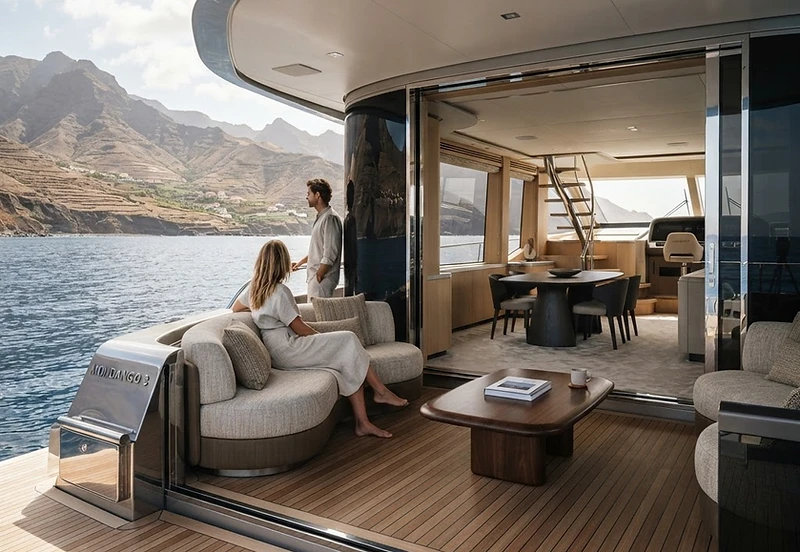
The morning light in Mindelo holds a particular, sharp quality—a mixture of Saharan dust and the relentless, clean Atlantic air. We sat in the aft cockpit of the Mondango 3, the 56-meter Alloy Yachts-built sloop cutting a long, elegant shadow across the deep indigo waters of the Porto Grande. The wind, a steady trade blow, hummed through the rigging, a low-frequency vibration that underscores every hour spent in the Cape Verde archipelago. It is a place where the landscape is stripped of pretense; the volcanic peaks of Santo Antão rise abruptly from the sea, jagged and dark, demanding a vessel that respects both the grandeur of the terrain and the fragility of a life lived between two points of anchorage.
The Geometry of the Hull and the Domestic Interior
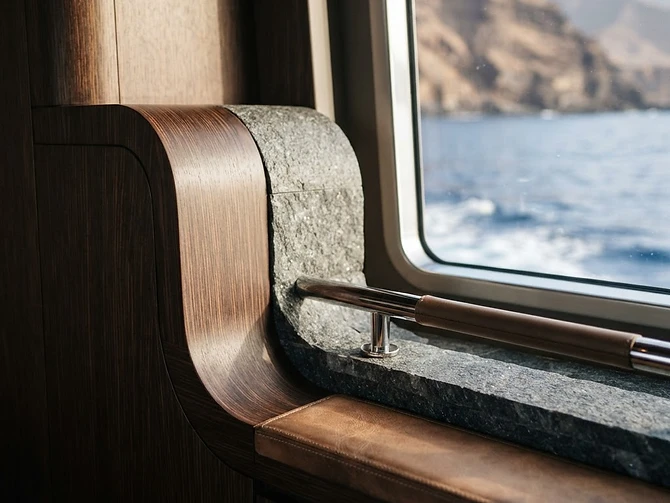
Stepping inside, the transition from the salt-sprayed deck to the interior is not a departure, but a continuation. The designer Rémi Tessier has long understood that a superyacht interior functions best when it mimics the deliberate, rooted nature of a cliffside villa. Here, the joinery does not merely decorate; it anchors. Tessier’s work aboard—utilizing bleached oak and blackened steel—mirrors the stark, elemental contrast of the volcanic islands we navigated just a day prior. There is a profound sense of structure in the way the bulkheads meet the deck, a calculated refusal to hide the engineering of the ship behind excess. The salon feels less like a gilded room and more like a high-altitude observation deck, where the movement of the swell is translated into the gentle, rhythmic shift of floorboards beneath our feet.
Anchorages and the Architecture of Arrival
Later that afternoon, the tender pushed away from the mothership, carrying us toward a small, hidden cove along the western edge of São Vicente. Arriving by water is a lesson in perspective; you see the shoreline not as a flat map, but as a series of geological thresholds. The way a yacht sits at anchor informs the architecture of its interior spaces; the orientation of the windows toward the bay creates a dialogue between the occupant and the sea. Standing on the teak decking of the tender, one understands why Tessier favors low-slung, horizontal lines. In the lee of the headland, the boat became a temporary extension of the basalt shore, a floating pavilion moored within the quiet pulse of the tide. We shared a plate of catchupa, the local slow-cooked stew of hominy and beans, at a small shack near the water’s edge, watching the yacht swing slowly on her chain, her silhouette perfectly framed by the crags of the island.
As the sun dipped behind the western mountains, casting the anchorage into a deep, bruising purple, the interior lights of the ship flickered to life. It was a soft, warm amber that seemed to anchor the boat firmly to the surface of the sea. There was no need for grand statements here, only the quiet recognition of a space designed to endure the wind and the salt, a house afloat that understands its place within the vast, restless Atlantic.






