
The Geometry of the Barents Sea
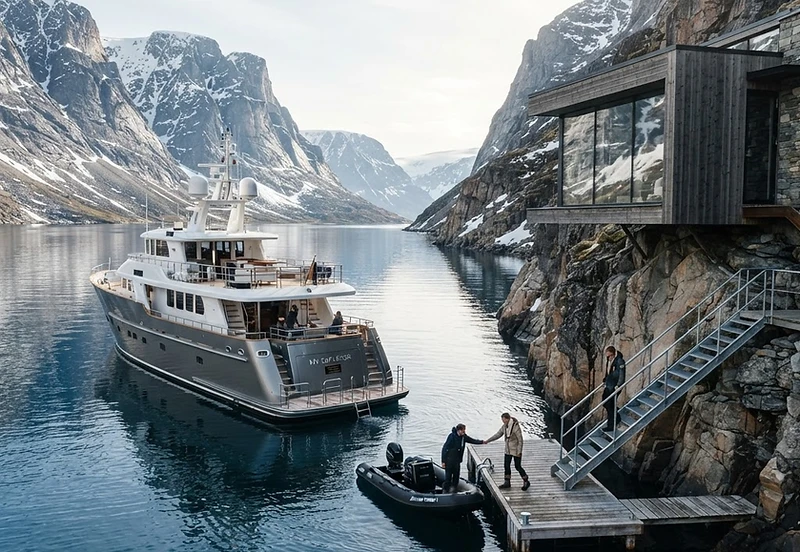
Dawn in Isfjorden does not arrive with the warmth of lower latitudes; it manifests as a sudden sharpening of the horizon, a transition from the bruised indigo of the long night to the sterile, piercing blue of an Arctic morning. We were anchored in the lee of a jagged basalt shelf, the steel hull of our 40-metre expedition yacht vibrating softly against the rhythmic slap of subarctic swells. Aboard, the smell of roasted coffee mingled with the faint, persistent scent of salt-cured gear. The distant, metallic pulse of the engine room provided the only familiar tether to the world beyond the ice. From the bridge, the captain scrutinized the barometric pressure, identifying a rare window of calm that demanded we leave the security of the main deck for the austere promise of the shoreline. To move from the vessel toward the land is to acknowledge the scale of the North; the yacht, which felt like a continent while pacing its aft deck, was rapidly reduced to a silver sliver against the looming, snow-dusted massifs.
The Tender to the Edge
Lowering the tender is a deliberate, procedural act of transition. As the rigid inflatable pulled away from the mothership, the ambient noise of the fjord—the low-frequency drone of the Barents Sea—took on a physical weight. We navigated toward a solitary structure perched precariously on a cliffside, a masterpiece of brutalist architecture that appeared to grow directly from the granite. It was designed with a reverence for the geological reality of the region; its floor-to-ceiling glazing cantilevered over the abyss, echoing the clean, uncompromising lines of the hull we had just departed. As we approached the private pontoon—an intricate feat of engineering designed to withstand the violent, volatile tides of the archipelago—the outboard motor cut, leaving only the shrill, lonely cry of an Arctic tern circling the crags above.
Refuge in the Deep North
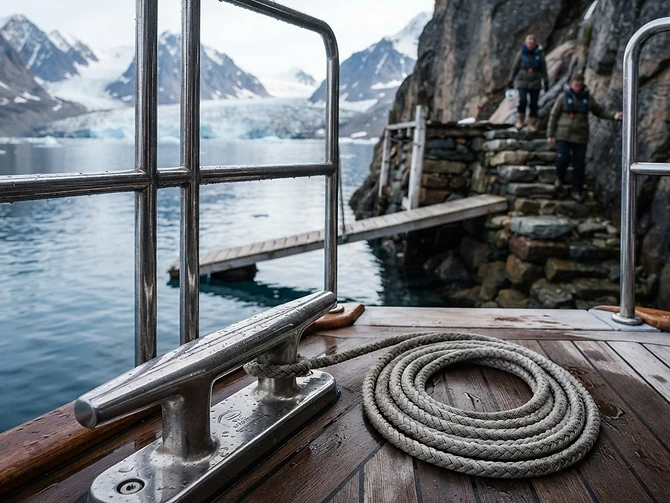
Stepping off the tender, we transitioned into a space that felt like a deliberate extension of our vessel’s own aesthetic. Inside, the villa spoke the language of a superyacht: teak decking flowed seamlessly from the exterior terrace, hidden storage was integrated into the walnut wall panels, and a monochromatic palette ensured the focus remained on the shifting, glacial light of the fjord. We spent the morning in the living area, watching a distant calving glacier through the glass, an experience remarkably similar to being at anchor on a grand scale. The architecture did not seek to impose; it merely framed the wilderness. We shared a simple, grounding meal of salted arctic char, rye crispbread, and local berries, the cold air outside acting as a sharp tonic against the warmth of the hearth. There was no pretense here; only the quiet understanding that whether on water or rock, we were guests of a much larger, colder reality. As the radio crackled with the captain’s update on the receding ice edge, we returned to the shore, the transition back to the sea feeling entirely natural. As we weighed anchor, the villa remained a solitary, illuminated lantern against the vast, darkening massif, a final reminder that in these latitudes, architecture is merely a vessel for observing the tide.






