

The Geometry of a Baltic Dawn
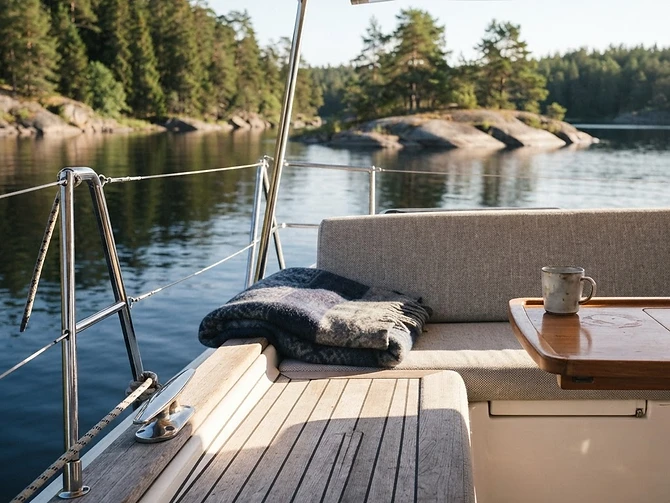
To drop the hook in the Finnish archipelago is to accept a lesson in silence. As our Nautitech 46 Open settled into the tea-colored depths off the coast of Kökar, the wind died entirely, leaving the surface of the Baltic like polished obsidian. The aft cockpit, which in the open Atlantic acts as a necessary fortress against the spray, here becomes a seamless, horizontal extension of the rugged, pine-studded shoreline. There is no frantic hum of machinery, only the soft, rhythmic slap of water against the bridgedeck and the distant, lonely cry of a white-tailed eagle circling the towering Scots pines. This is not the turquoise transparency of the tropics; it is a darker, more ancient indigo, reflective of the glacial granite that defines this geography. We sat in the profound hush of the morning, watching the light sharpen the jagged edges of the skerries, the vessel swaying only an inch as the tide breathed against the hull, anchoring us to a landscape that feels suspended in time.
The Galley and the Cold-Water Harvest
Life aboard in these northern latitudes is dictated by the brevity of the growing season and the sharp, bracing clarity of the water. By mid-morning, the tender returned from a weathered timber jetty on the main island, bringing with it the essential, unadorned bounty of the Baltic. We gathered on the aft deck, the teak feeling cool and firm underfoot, to prepare a meal that seemed to draw its spirit directly from the surrounding granite. The haul from the local Kökar fishermen included fresh Baltic herring—small, silver-skinned, and impossibly sweet—alongside chanterelles still dusted with the damp, peaty earth of the nearby spruce forests. There is a profound, quiet dignity in this simplicity, a culinary culture built upon the bedrock of preservation and precision. Our chef seasoned the fillets with nothing more than coarse sea salt and a handful of wild chives, foraged earlier from a mossy crevice in the rocks ashore. In this galley, nothing is wasted, and every ingredient is treated as a direct envoy from the rugged terrain, allowed to speak for its own distinct, cold-water terroir.
The Rituals of the Afternoon Drift
As the sun began its long, low arc toward the jagged horizon, the cockpit transformed into a sanctuary of warmth and shadow. The transition is subtle, marked by the smell of cooling stone and the sharpening of the air. We dined on dense, dark rye bread sourced from a local bakery, spread thick with cultured butter, paired with the herring we had pan-seared over the galley flame until the skin turned a delicate, shattered gold. The chef presented a bowl of cloudberries, their vibrant amber hue glowing in the waning northern light—a tart, fleeting reminder of the intensity of the brief summer. Conversation slowed until it ceased altogether, leaving only the sound of a distant buoy bell. We were observers of the transition: the grey granite of the islands deepening to a bruised violet, the water holding the last faint glow of the dusk. Below the hull, the Baltic remained utterly still, a vast, cold mirror reflecting the absolute silence of the archipelago. We sat for a long time, the only movement the gentle, measured lift of the vessel, tethered to the bedrock of a sea that felt as though it had existed, undisturbed and perfectly rhythmic, for a thousand years.
As the final sliver of sun slipped behind the treeline, the air turned crisp, demanding a thick wool sweater and a moment of complete stillness. There is a weight to the darkness here, an absence of light pollution that allows the stars to sharpen against the black vault of the sky until they mirror the phosphorescence beginning to stir in the wake. Watching the masthead light blink in rhythmic conversation with the distant lighthouse at the edge of the Skiftet channel, we felt the true measure of the archipelago. There was no need for grand gestures or complex itineraries. In the lee of the island, shielded by the ancient, wind-gnarled pines, the vessel rested—a single, quiet point of humanity held fast by a chain of iron, drifting in the gentle, eternal rotation of the northern tide.






