
The Anchor at Sottunga
The dawn air in the Finnish archipelago does not merely cool; it bites, carrying the sharp, resinous scent of spruce from the distant, granite-heavy shores of Sottunga. We had dropped the hook at four in the morning, the water around the hull as still and dark as ink, mirroring the obsidian depths of the Baltic. Standing on the aft deck of the Nautor’s Swan, the biting air forced an immediate retreat, drawing me toward the threshold of the main saloon. There is a specific physical sensation to this threshold on an expedition-ready vessel: that precise moment where the erratic, cold rhythm of the sea yields to the curated, intentional architecture of the cabin. It is a transition from the wild uncertainty of the gulf to a space of deliberate, human-wrought stability.
Designing for the High Latitude
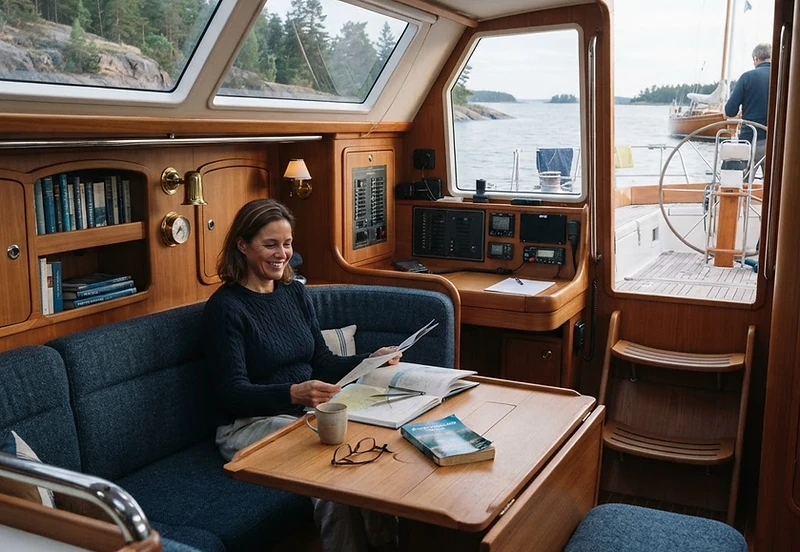
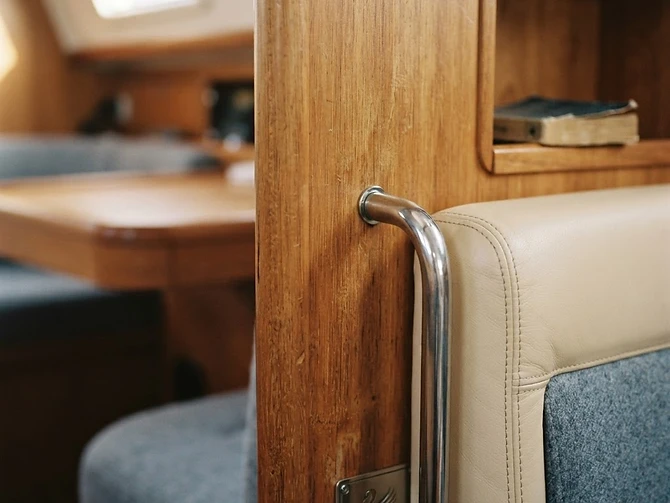
Stepping inside, the transition was not merely a change in temperature but a profound shift in structural language. The interior, meticulously crafted by the naval architects at Dykstra, eschews the common, gilded excesses of modern yachting in favour of a restrained, domestic geography. The space is organised with the same crystalline clarity one finds in a remote, cliffside villa on the island of Kökar—clean, horizontal lines of oiled white oak, muted grey wool upholstery sourced from local mills, and recessed lighting that mimics the soft, indirect glow of a low-hanging Arctic sun. It reads less like a vessel of convenience and more like a floating, seaworthy archive of comfort. Every bulkhead serves a vital dual purpose: partitioning the living space while simultaneously bracing the hull against the kinetic, unforgiving energy of the Gulf of Bothnia. Here, the interior architecture mirrors the surrounding granite skerries; it is grounded, immovable, and fundamentally protective against the elements.
The Ritual of the Hearth
By noon, the clouds had thickened, casting a flat, silver sheen over the water. We retreated to the galley, where the cook was preparing a simple pan-seared perch, pulled just hours earlier from the shallow, brackish shoals near Föglö. There is a profound, stripped-back honesty to eating well in these waters. We sat at the saloon table, the wood grain of the tabletop worn smooth by years of passage-making and thousands of nautical miles, feeling the vessel sway gently against its heavy mooring line—a constant, rhythmic reminder of the immense, cold sea just inches of hull away. In the corners of the cabin, the play of shadows reminded me of the architecture of a summer house in nearby Mariehamn, where windows are positioned with surgical precision not for views alone, but to frame the changing, melancholic moods of the Baltic light. The cabin felt entirely self-contained, a cedar-lined bunker against the infinite grey, providing a sanctuary that felt more permanent than temporary.
The Silence of the Archipelago
As the afternoon light waned, I found a seat near the navigation station, listening to the quiet, mechanical heartbeat of the yacht. The hum of the vessel’s systems was barely audible, a low-frequency pulse that merged with the rhythmic, gentle lapping of water against the transom. There is no luxury more definitive than the feeling of absolute, unwavering containment while the jagged horizon slowly shifts around you. As I watched the fog bank roll in, methodically swallowing the sharp, dark silhouettes of the outlying rocks, the interior ceased to feel like a vessel and instead became a stationary home, anchored firmly in time. The world outside remained vast, chaotic, and relentlessly cold, yet inside, the geometry of the cabin held fast—a small, warm orbit of human design held within the wild, blue silence of the archipelago.






