
The Passage from the Anchorage
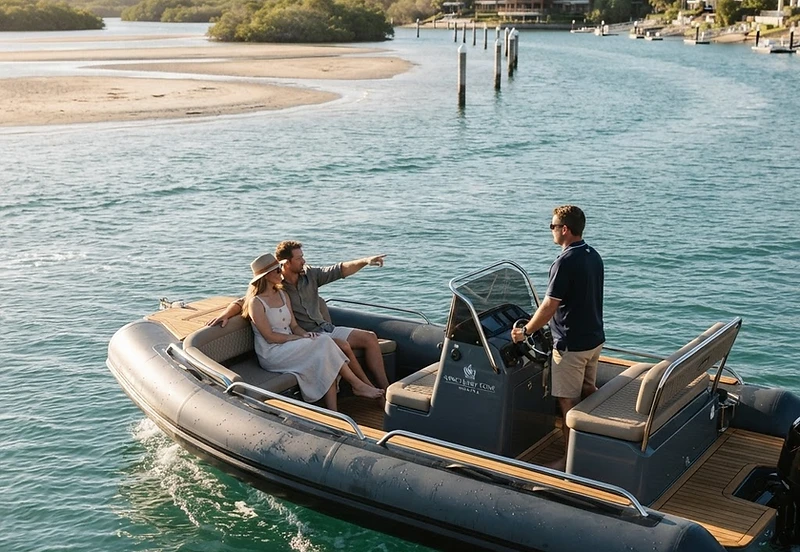
The anchorage off South Stradbroke Island often feels like the edge of the world, defined by the relentless, rhythmic pulse of the Pacific breaking against the dunes. But as the afternoon light softens into a bruised amber, the operational rhythm of the yacht shifts. We drop the tender—a custom-built RIB that carves through the short, steep chop with surgical precision—and leave our main vessel, a 40-metre motoryacht, swinging on her scope. There is a profound mechanical transition in moving from the scale of a ship to the immediate, exposed intimacy of a tender. The wind, which felt like a distant, cooling companion on the teak aft deck, now whistles directly against the skin, carrying the pungent, earthy scent of mangroves and the sharp, clean brine of the Broadwater.
Navigating the Nerang Estuary
Steering through the narrow, shifting channels toward the sanctuary of the inner cove, one develops a heightened respect for the persistence of the lead line and the digital chart. The Gold Coast is a place of perpetual sedimentary flux; the sandbars rearrange themselves with every turn of the tide, turning the navigation into a disciplined act of intuition rather than pure reliance on electronics. We thread our way past private jetties and the sleek, darkened silhouettes of cruisers moored against the bank. The water here turns glass-flat, mirroring the dense, dark greenery of the riverbanks and the distant, cooling shadows of the hinterland. It is a world of quiet precision, where the high-pitched hum of the outboard motor replaces the low-frequency thrum of the yacht’s main engines, and the horizon is no longer a vast line of open blue, but a textured, intimate tapestry of mangroves and suburban silhouettes.
The Ritual of the Table
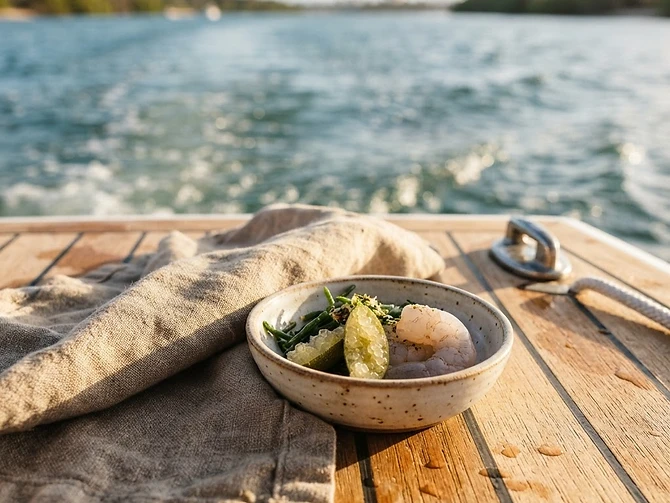
Arriving at the dock, the transition to shore is fluid. We head for the open-air dining at The Fireplace, a space that understands the necessity of an elemental connection to local provenance. The menu acts as an extension of the water we have just traversed. The focus tonight is on the local bounty: succulent Moreton Bay bugs, charred quickly over wood fire to retain their sweet, delicate texture, served with a vibrant emulsion of native finger limes. These citrus vesicles pop with a sharp acidity that cuts through the richness of the shellfish, while locally harvested macadamias provide a buttery, grounding finish. There is a quiet ritual to this—a tacit conversation between the galley of our yacht, which has been experimenting with coastal aromatics throughout the voyage, and the culinary mastery of the shore. To sit with the literal taste of the coast after a day navigating its shallow, complex margins is to ground the entire journey in something both tangible and fleeting.
A Quiet Return
The return trip in the dark is an exercise in sensory awareness. The coastal lights of the Gold Coast spill across the black surface of the water like scattered sequins, and the air turns cool and heavy with maritime moisture. We guide the tender back by the familiar markers, the bow wake throwing up plumes of bioluminescence that shimmer against the fibreglass hull. Reaching the yacht, the quiet, imposing bulk of her white paint rising out of the dark, we kill the engine. The silence that follows is absolute. There is no better way to end a day than drifting back into the fold of the ship, the lingering taste of the sea and the evening's feast suspended in the stillness, while the tide continues its slow, silent work beneath the keel.






