
The Geometry of a Remote Anchorage
The Royal Huisman schooner swung slowly on her anchor, the chain clicking rhythmically against the fairlead as the tide ebbed beneath the hull. We were tucked into a quiet, unnamed cove on the northern tip of La Digue, the water so clear that the shadow of our keel was etched against the white sand floor like a technical drawing on parchment. Here, in the Seychelles, the scale of the world feels different. The granite boulders, rounded by millennia of salt and trade winds, stand as silent sentinels over a sea that demands constant attention to the charts. On board, the rhythm of the day is dictated not by the clock, but by the movement of the light across the teak decks and the occasional, sharp report of a line adjusting under tension.
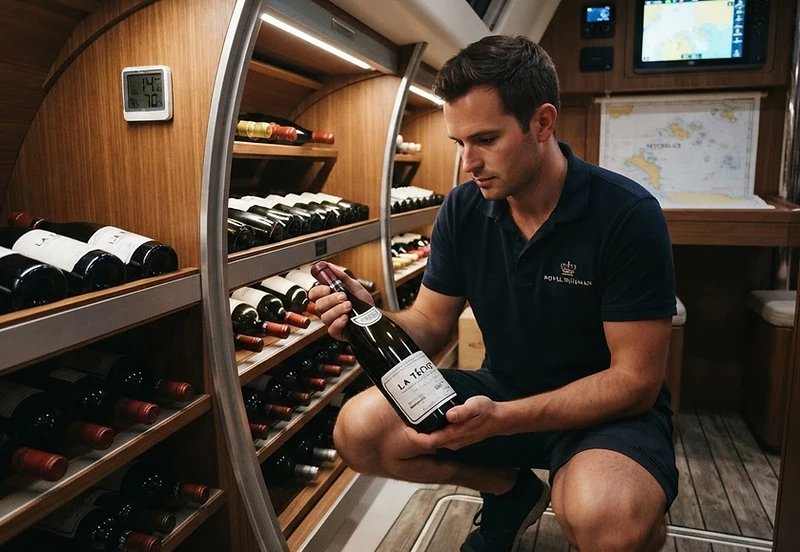
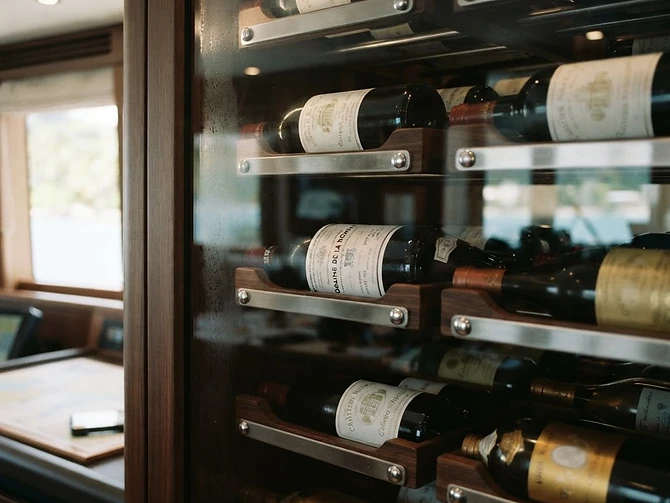
Life aboard a superyacht in these latitudes is an exercise in precise logistics. When you are three days’ sail from the main quay at Victoria on Mahé, the vessel’s internal inventory becomes a map of its own. Among the most vital components of this map is the cellar, a climate-controlled sanctuary buried deep within the ship’s architecture, far from the engine room’s sympathetic vibration and the relentless tropical heat. Managing this collection is as much a navigational challenge as piloting the yacht itself; the bottles must reflect the stillness of the anchorage and the vibrancy of the evening when the trade winds finally die down to a whisper.
The Balance of the Pour
As the sun dipped behind the jagged silhouette of Félicité, the crew began the evening ritual. There is a distinct, unhurried choreography to service on a yacht of this caliber. On the aft deck, our steward brought out a bottle of Domaine de la Romanée-Conti, a selection chosen specifically for the way its earthen, mineral notes might bridge the gap between the pervasive briny scent of the Indian Ocean and the impending stillness of the night. It is a quiet indulgence, one that requires an understanding of how the sea’s inherent salinity can sharpen the palate, making the structure of a Burgundy feel entirely different than it would in the insulated environment of a land-based tasting room.
We watched the water turn the color of hammered pewter, the distant lights of a passing fisherman’s pirogue blinking like slow pulses on the horizon. My conversation with the captain shifted from the erratic depths near the Aldabra Atoll to the nuances of cellaring in high humidity. He spoke of the insulation of the vessel’s hull, the importance of maintaining a steady temperature against the thermal load of the tropics, and the specific challenge of stocking labels that are robust enough to withstand the journey yet delicate enough to surprise a guest at the end of a long day of scouting reef lines. It is never about excess; it is about the appropriateness of the choice—a glass that honors the profound isolation of the archipelago.
The air grew heavy with the scent of frangipani drifting from the shore. We stood at the rail, the glass cool and beaded with condensation, listening to the small, rhythmic slaps of water against the transom. In that moment, the complexities of the voyage—the calculations of the anchor drop, the constant monitoring of the sea state, and the weather systems—seemed to dissolve. We were left with nothing but the immediate, quiet reality of the sea and the simple, resonant pleasure of a well-poured glass, shared as the first stars began to pierce the velvet dark above the masthead.






