
The Granite Passage
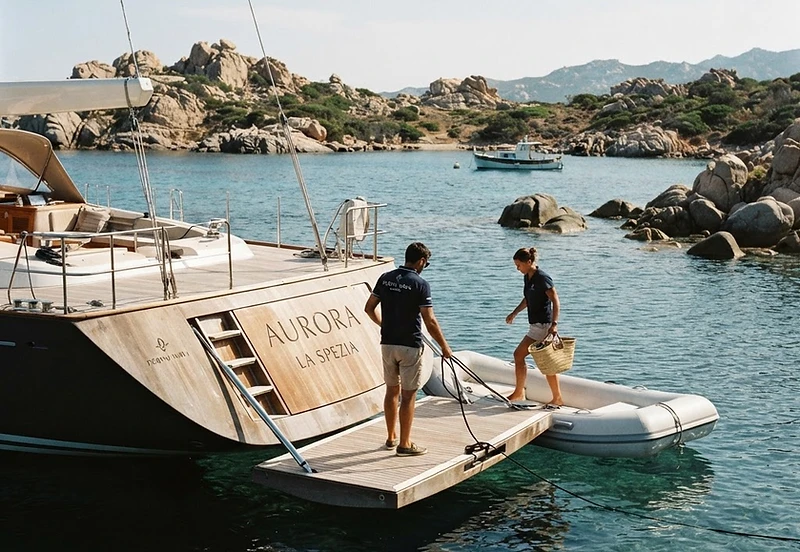
The transition from the deep, sapphire churn of the Bonifacio Strait into the sheltered, crystalline basins of the Lavezzi Islands is an exercise in nautical poise. Standing on the bridge of our Perini Navi, the depth sounder chirps a nervous, high-pitched rhythm, demanding absolute focus. Here, the sea floor rises in dramatic, rounded granite boulders—ancient sentinels that turn the water into a mosaic of turquoise and bruised indigo. The morning light strikes the white limestone of the Bonifacio cliffs to the north, casting a sharp, blinding reflection across the bow, and for a moment, the world feels entirely vertical, suspended between the towering stone and the hungry, moving deep.
Passing through the narrowest cut, the air shifts. The saline bite of the open Mediterranean is softened here by the scent of wild helichrysum and rock rose drifting off the islets. It is a place that dictates its own pace; heavy displacement vessels must yield to the reality of the currents, slipping into the anchorage with a deliberate, slow-motion grace that respects the fragile marine ecology below. The yacht sits, held by a single anchor, rocking gently as the tide pulls against the chain in a slow, rhythmic pulse.
The Galley and the Coast
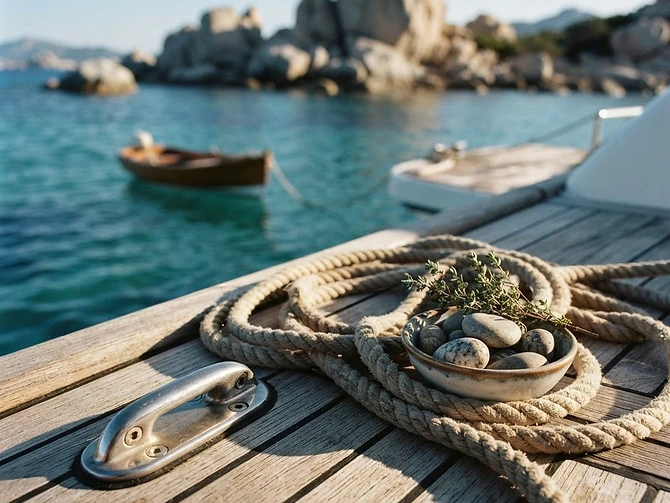
Life aboard, when anchored in these sheltered guts, centers on the intimate dialogue between the morning’s haul and the evening’s menu. By dawn, the chef has made the run to the Marché de Bonifacio, securing the day's catch from local fishermen who specialize in the dense, meaty dentex and the vibrant, red-fleshed rouget. There is no pretense in the galley; the objective is to honor the produce of the southern Corsican coast, specifically the aggressive minerality of the local sea salt and the pungent, herbaceous punch of wild thyme foraged from the nearby headlands.
We observed the crew preparing a traditional reduction, incorporating the tiny, prized shellfish endemic to these shallows. The process is tactile, rhythmic, and deeply tied to the movement of the tides, with the kitchen staff occasionally slipping into the water to harvest fresh sea urchins directly from the granite shelves flanking the tender’s path. The preparation is kept intentionally sparse, allowing the natural briny intensity of the urchin to define the dish, served simply with a crisp, local Vermentino.
Rituals of the Shore
The true essence of the archipelago is best sampled by tender. A short, wet ride across the chop brings us to the weathered timber dock at La Plage d’Argent, where the rhythm of the meal matches the slow, relentless lapping of the tide against the sand. We sit at a weathered wooden table, the surface smoothed by decades of salt-spray and heavy summer sun. The meal—simple grilled fish dressed only in the region's sharp, peppery olive oil and a squeeze of charred lemon—is a reminder that the most profound dining experiences are those tethered to their geography.
Overheard at the next table, a local captain remarked on the shifting sandbars after the previous night’s mistral, a subtle reminder that in the Lavezzi, the sea remains the ultimate arbiter of every plan. We finish our coffee, the grounds dark and bitter against the backdrop of the shimmering, shallow channel, watching a solitary ketch drag its anchor slightly before correcting, its crew moving with that familiar, silent efficiency we all share. As the sun dips behind the granite monoliths, painting the water in shades of amber and cooling violet, we slip back into the tender, the engine barely a hum against the deepening silence of the islands, returning to the sanctuary of our own hull as the first stars prick the darkening sky.






