
The Weight of History on the Chesapeake
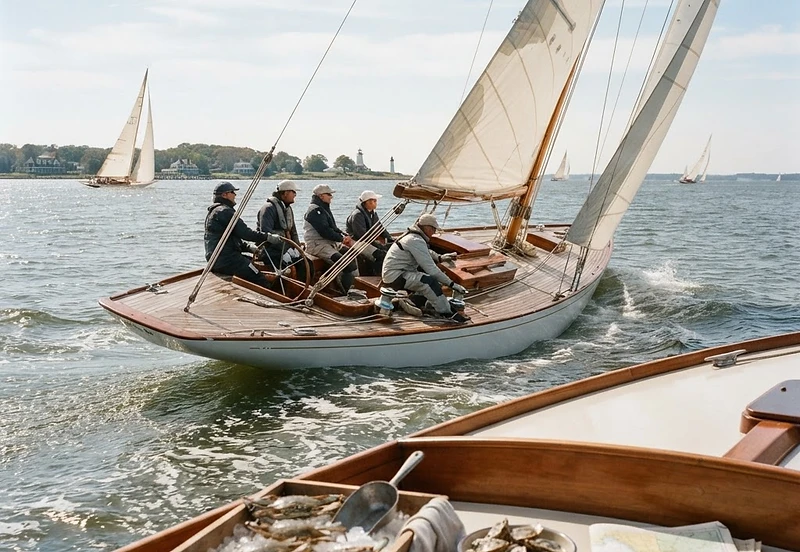
The dawn air over St. Michaels possesses a crystalline quality, biting and clear, as the sun begins its slow climb over the Miles River. Our vessel, a 1938 12-Metre restored to her original racing specifications, sits low in the water, her lead keel a silent, immovable sentinel beneath the surface. To sail a Twelve is to engage in an exercise of absolute physical and mental calibration; she is a machine of varnished mahogany and tempered steel that demands total submission to the wind. As the crew readies the massive mainsail, the rhythmic groan of the spar and the tactile friction of the sheets against the brass winches provide a sensory reminder of the boat's lineage. This is not a journey for the casual voyager, but a tactical, high-stakes engagement with the shifting, unpredictable currents of the Chesapeake Bay.
Tactical Navigation and the Morning Tide
As we clear the harbor and find the start line, the experience becomes intensely localized. Navigating these waters requires an intimate, localized knowledge of the shoals and the gusty katabatic winds that sweep off the low-lying, wooded shoreline. We move with focused intent, the vessel cutting through the short, steep chop with a grace that modern carbon-fiber composites rarely emulate. There is a singular, visceral thrill in the deep lean of the hull, the sudden surge of acceleration as the wind fills the genoa, and the steady, sensitive hand required to keep the tiller true. This is the heart of the yachting life—a constant, focused dialogue with the elements, where every infinitesimal adjustment of the trim is a matter of inches and heartbeats.
A Shoreward Bounty
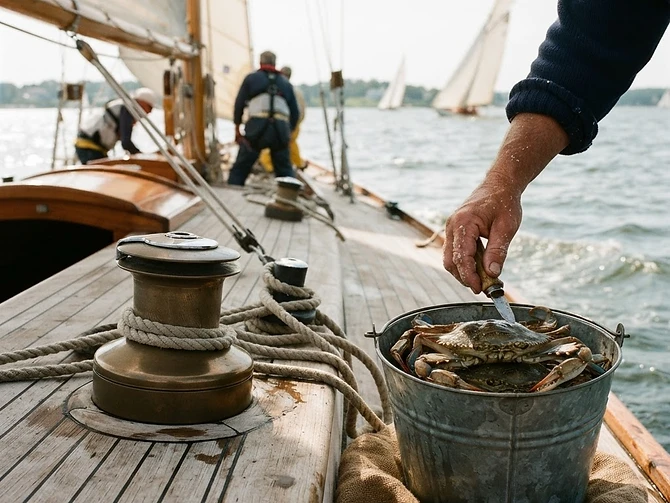
The regatta concludes as the light turns a bruised amber, casting long, fractured shadows across the marshes of Tilghman Island. We drop anchor within reach of the local docks, the day’s exertion demanding a return to the foundations of the region’s foodways. The Chesapeake is defined by its brackish gifts—most notably, the Maryland blue crab. Ashore at a small, weathered establishment near the water's edge, we find the day’s reward: a pile of steamed, heavy-weight males seasoned with a dusting of coarse sea salt and the sharp, peppered bite of traditional regional spice. The meal is primal and unadorned, a stark contrast to the intricate, mathematical complexity of the afternoon's racing. We pair the sweet, dense, flaky meat with thick slices of local heirloom tomatoes—the product of the Eastern Shore’s rich soil—and a crust of sourdough pulled from a village bakery in Easton. This is the rhythm of the Chesapeake: the technical precision of the passage balanced by the rugged, salt-forward simplicity of the kitchen.
The Quiet After the Sail
Back aboard, the boat settles into the gentle, cradle-like motion of the anchorage. The tide pulls at the mooring line with a low, rhythmic thrumming sound against the hull. As the moon rises over the Eastern Shore, we strip the sails, the canvas cool and damp with the coming night dew. There is a profound, resonant silence that follows a day of hard competition, a stillness that renders the complexity of the rigging and the lingering heat of the race into a singular, tranquil memory. We are left only with the scent of pine needles drifting from the distant shore and the vast, dark expanse of the Bay mirroring the stars above.






