
The Shallow Drift
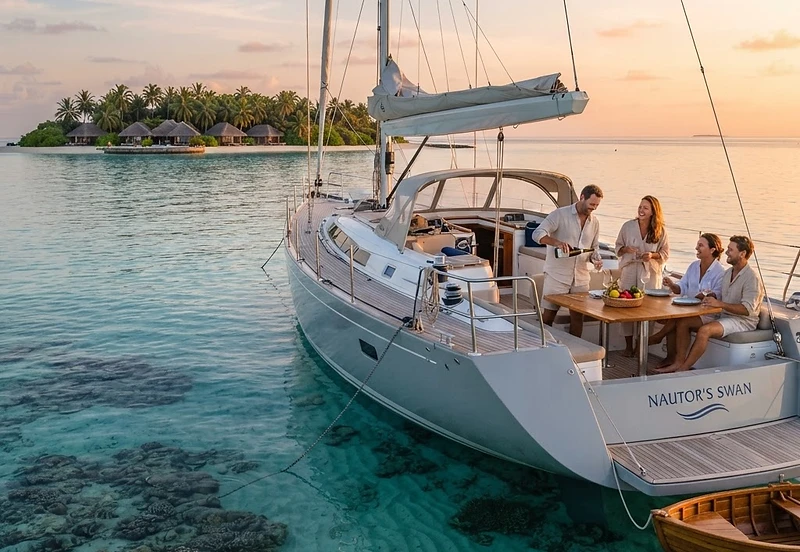
The transition from the deep, cobalt indigo of the Arabian Sea into the blinding, crystalline shallows of the Lakshadweep archipelago requires a fundamental change in temperament. Aboard the 45-meter Nautor’s Swan, the helm communicates differently here; the water is so startlingly transparent that one feels the keel is tracing the very skeleton of the coral shelf. We spent the morning navigating the narrow, treacherous channels between Agatti and Bangaram, the steady pulse of the depth sounder serving as a rhythmic, staccato reminder of our precarious proximity to the sea floor. By late afternoon, we dropped anchor off the white, windswept spit of an unnamed islet, the sun descending low enough to transform the surrounding lagoon into a sheet of hammered copper.
A Cellar Beneath the Waterline
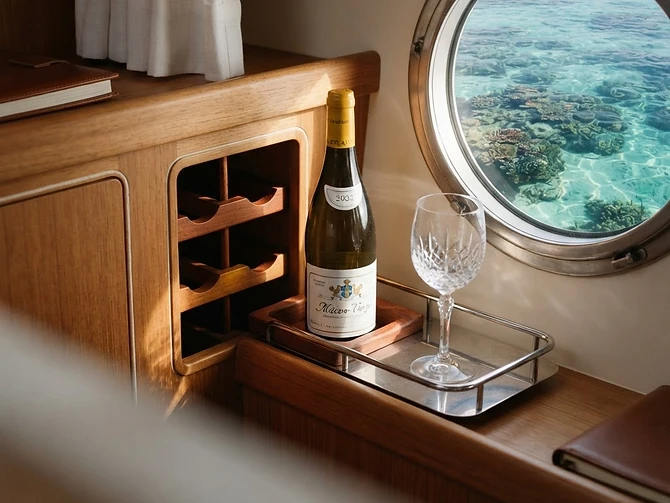
There is a singular vulnerability to being hundreds of miles from a shore with any semblance of modern industry, yet it is this very isolation that mandates a rigorous discipline in one’s provisions. While the deckhands finished the final washdown, meticulously scrubbing the encroaching salt from the teak, I descended to the climate-controlled hold where the vessel’s cellar is anchored against the ship's internal spine. It is a quiet, insulated vault, carefully shielded from the relentless tropical heat and the incessant, rhythmic roll of the Indian Ocean. Selecting a bottle is not merely a choice of vintage; it is an act of conversation with the sea, matching the weight of the wine to the humidity of the evening and the lingering, sharp taste of the day’s salt. We opted for a 2012 Domaine Leflaive Puligny-Montrachet, a choice that seemed to echo the precision of the ship’s naval architecture—composed, bright, and holding a mineral tension that stood up well to the heavy, saline air of the monsoon trade winds.
The Symmetry of Salt and Soil
Dinner was served on the aft deck, the table set with linen that stirred softly in the light evening breeze. There was no requirement for grandiosity; the Lakshadweep twilight provided the theatre. We ate a light carpaccio of local reef fish, cured in lime and a touch of sea salt collected that morning from the edge of the reef, paired with the lean, focused acidity of the Chardonnay. The conversation drifted, as it often does when the wind dies and the water turns to glass, toward the mechanical marvel of the yacht itself—the silent, hydraulic operation of the stabilizers, the intricate plumbing of the freshwater maker that kept us entirely independent from the mainland, and the sheer, focused alchemy of maintaining a delicate cellar in such a demanding, salt-heavy environment. As the wine breathed, its initial tightness softened, revealing notes of white stone and lime blossom that seemed, in that specific light, to mirror the pale, bleached sands of the island just fifty yards off our beam. We sat long after the plates were cleared, watching the Southern Cross begin to climb above the mast, the only sound the soft, rhythmic lap of the lagoon against the hull—a reminder that on a vessel of this pedigree, one is always suspended between the deliberate, earthy memory of the vineyard and the infinite, living reality of the tide.






