
The Geometry of a Morning Reflectance
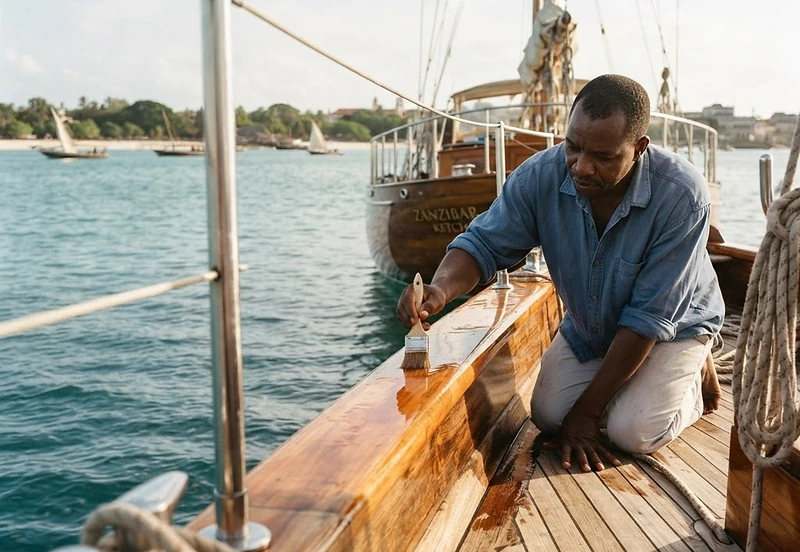
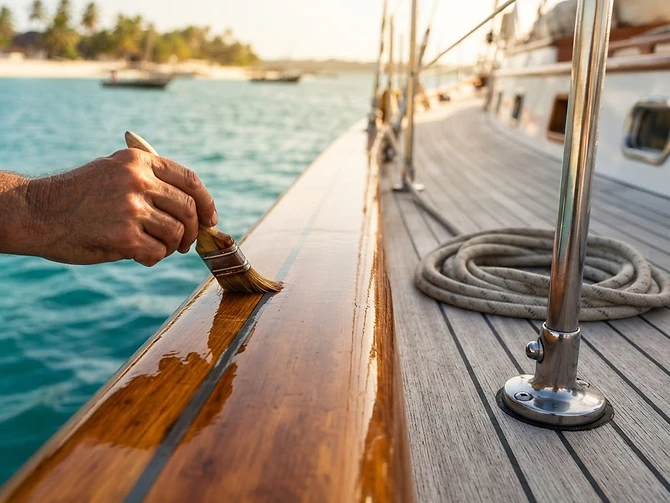
At five-thirty, the Indian Ocean off the coast of Unguja is a silent, slate-grey expanse, undisturbed by the trade winds that define the afternoon. Aboard our 85-foot ketch, the day begins long before the sun crests the horizon, initiated not by the ignition of engines but by the soft, rhythmic rasp of sandpaper against tropical timber. Maintaining the brightwork—those sweeping, hand-carved caprails, the companionway hatch, and the pedestals of our Lewmar winches—is the foundational ritual of our passage. The varnish, a deep, layered amber, acts as a protective lens; it is an act of defiance against the corrosive, salt-heavy humidity of the tropics. To witness the light of dawn catching a perfectly prepped rail is to see the wood liquefy, turning from solid teak into a liquid, golden horizon that mirrors the rising sun. It is a demanding, microscopic discipline: every coat of spar varnish applied during our stay in Zanzibar is a physical negotiation with the elements, a testament to the crew's silent patience in the face of equatorial heat and the persistent, abrasive spray of the reef-strewn channel.
The Galley and the Coastline
Our chef, Juma, returned from the Darajani Market at first light, bringing with him the visceral reality of the island's bounty. In the galley, the transition from labor to sustenance is seamless. We prepared a local kingfish, its silver skin still reflecting the dawn, alongside a relish of green mango, lime, and crushed bird's-eye chilies sourced from the interior plantations. The culinary character of these waters is defined by the islands' spice history—cloves, cardamom, and black pepper—which permeates even the air aboard the yacht, mingling with the sharp, chemical scent of curing polyurethane. As we dined on the teak-laid aft deck, we moved with a conscious, practiced grace, acutely aware of the amber-toned surfaces. The lunch was a sensory map of the archipelago: the acidic bite of the lime, the heat of the chilies, and the density of the freshly grilled fish served on white linen. This is the luxury of the seafaring life: the symbiosis of a vessel maintained to a glass-like finish and the raw, unadorned freshness of the sea, with the kitchen acting as the bridge between the two.
Reflections at Anchor
By midday, the wind freshened, pushing us south toward the Menai Bay Conservation Area. Under sail, the friction of a varnished rail under one's palm provides a tactile anchor; it is the physical evidence of hours spent by the deck crew, their dedication reflected in the depth of the grain. We passed traditional dhows off Fumba, their lateen sails cutting sharp, historic silhouettes against the horizon. Comparing their raw, weathered timber to our own protected, high-gloss surfaces, one realizes that both belong to the same lineage of the sea—one serving the utility of the coast, the other the longevity of the voyager. We dropped anchor in the lee of a remote sandbank as the sun began its descent. The water shifted from a brilliant, piercing turquoise to a bruised, deep violet. In this quiet hour, the teak brightwork captured the final embers of the day, holding the light long after the sun had dipped below the mainland. We finished the evening with a local octopus braised in coconut milk and turmeric, the warm spice lingering on the tongue as the first stars appeared. There was nothing left to do but listen to the water lapping against the hull, our surroundings held in a perfect, amber-hued equilibrium, the vessel suspended between the vast, dark ocean and the infinite sky.






