
The Geometry of the Morning Fog
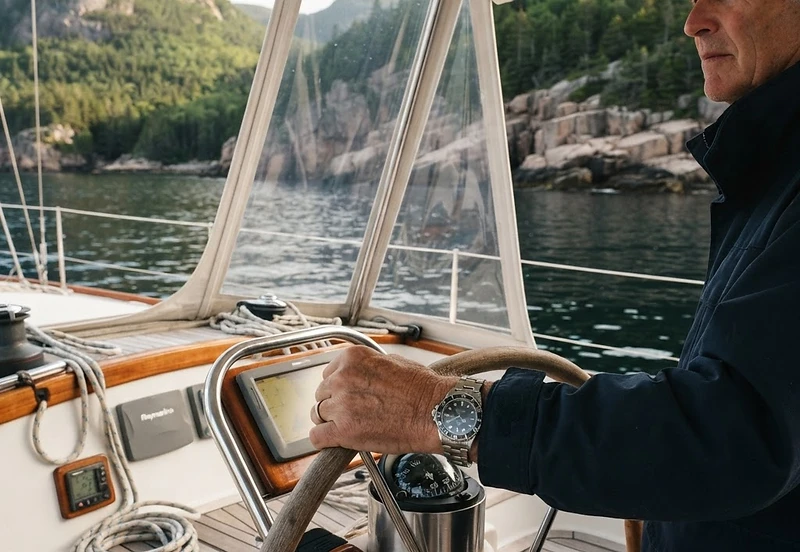
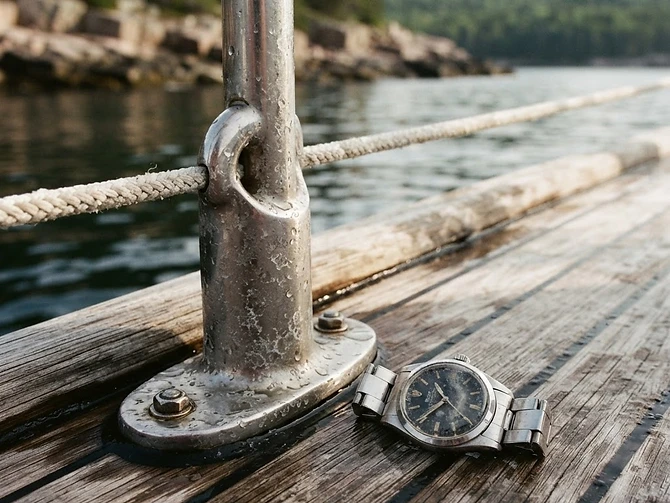
The dawn air in Somes Sound carries the specific, sharp scent of balsam fir and cold, clean granite. Standing on the teak decking of the Nautor’s Swan 60, the silence is so absolute it feels heavy, broken only by the rhythmic, hollow slap of water against the hull. I reach for the rail to check the mooring, and in that movement, the low light catches the bezel of the timepiece on my wrist—a stainless-steel diver that has been my companion for twenty years. It no longer gleams with the aggressive, showroom sharpness of its youth. Instead, the edges are softened by years of friction against rigging and halyards, the luminous markers have faded to a soft, sandy ecru, and a permanent, microscopic crust of salt has settled into the grooves of the crown. It is a chronicle of navigation, as inseparable from my passage as the vessel’s own weather-worn logbook.
A Chronicle of Hard-Won Miles
There is a specific kind of dignity in an object that has been allowed to age alongside a boat. On deck, when we are winching in the headsail off the coast of Swans Island, the watch takes its constant, generous share of the Atlantic spray. Over decades, that brine has done its slow work, dulling the brushed steel to a matte, ghost-like finish that mirrors the grey-blue horizon of the Gulf of Maine. It reminds me of the brass fittings aboard a classic Hinckley Pilot 35 we once restored in Southwest Harbor; that metal demanded a constant engagement, a willingness to appreciate the beauty in the slow, inevitable erosion caused by the sea. This watch has accompanied me through the frantic, adrenaline-fueled minutes of regatta starts off the coast of Newport and the quiet, agonizingly slow drift through the dense, white fog banks of Penobscot Bay, where time seems to expand and contract with the turning of the tide.
The Weight of the Provenance
We anchor for the night in a quiet, sheltered cove near Deer Isle, the sound of the wind rushing through the dark spruce trees the only music we require. I unbuckle the strap, the leather worn thin and supple from constant contact with salt water and skin, and set it on the mahogany chart table. Looking at the dial under the warm, steady glow of the galley lights, I realize it is no longer just a tool for measuring intervals or calculating a dead reckoning. It is a compass of experience. Just as the Swan’s hull carries the faint, tell-tale scratches of a thousand moorings and the teak brightens and greys in the cyclical glare of the northern sun, the watch has acquired a patina that cannot be replicated. It is a testament to the fact that we have actually been here, that we have occupied this physical space, and that we have allowed the sea to leave its irrevocable mark upon the objects we value most.
As the boat settles into the current, turning slowly on its anchor chain, the world outside shrinks to the dimensions of this private, watery cathedral. There is a profound, grounding comfort in owning an instrument that does not fear the salt or the sun, but rather, grows more honest and resonant with every passing season at sea. In the quiet of the cabin, the steady tick remains a heartbeat against the vast, indifferent depth of the North Atlantic.






