
The Verticality of the Slyne Head Shelf
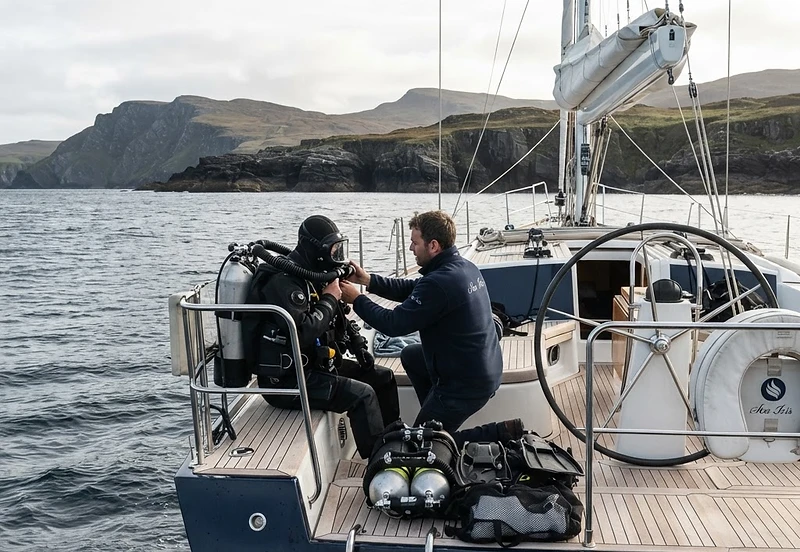
The Atlantic does not invite exploration with the gentle warmth of the tropics; it demands a conversation with the elements, one held in whispers against the roar of a relentless swell. We arrived at the edge of the Slyne Head shelf aboard Sea Iris, a custom Nautor’s Swan whose expansive teak decks seemed to vibrate with the low, rhythmic thrum of the rollers coming in from the open ocean. As the sun broke over the Twelve Bens, painting the Connemara coastline in shades of bruised purple and ochre, the stillness of the dawn was interrupted only by the methodical, tactile check of our rebreather gear. The technical silence of the closed-circuit system—the absence of the chaotic roar of bubble release—is not merely a feature of modern diving; it is the only way to truly listen to the deep, where the ocean speaks in the groan of shifting rock and the distant, rhythmic pulses of the tide.
Descending the Atlantic Cathedral
Dropping beneath the surface, the transition from the emerald light of the coastal shallows to the absolute, suffocating indigo of the deep reef was abrupt. The water here is cold and dense with life, an unexpected profusion of cold-water Lophelia pertusa corals and sea fans clinging to the jagged, submerged basalt cathedrals that define the shelf’s drop-off. As I hovered in the neutral buoyancy of the deep, the rebreather’s gas management felt like an extension of my own physiology, allowing me to linger at depth, observing the serpentine movement of dogfish weaving through the basalt crags. Looking upward, the silhouette of the Sea Iris appeared as a white, needle-thin phantom suspended against the surface light. It was a grounding beacon, a symbol of the refuge that awaited us after the cold, pressurized solitude of the descent—a reminder that even the most adventurous drift finds its eventual purpose in the return to the vessel’s calm, sheltered deck.
The Hearth at Clifden
Returning to the warmth of the yacht, the stinging bite of the Atlantic air was quickly tempered by the rhythmic, purposeful preparation of the crew. A short, spray-slicked tender run into the harbour at Clifden brought us to the threshold of Mitchell’s, an establishment where the day’s haul from local trawlers is treated with the reverence of a local rite. We sat in the quiet, salt-streaked room, the faint, persistent scent of peat smoke still clinging to our hair and gear as we broke warm, crusty bread. The chef had prepared a plate of hand-dived scallops from the nearby Killary Fjord, seared briefly in locally churned butter and scattered with sea samphire foraged from the rocks at first light. It was a meal of stark, elemental simplicity: the sweet, firm flesh of the scallops anchored by the sharp, saline punch of the coast, reflecting the very waters we had just plumbed. To dine there, knowing the boat was anchored securely in the lee of the headland, felt like closing a deliberate loop—a transition from the raw, unyielding pressure of the deep to the essential, restorative rituals of the table.
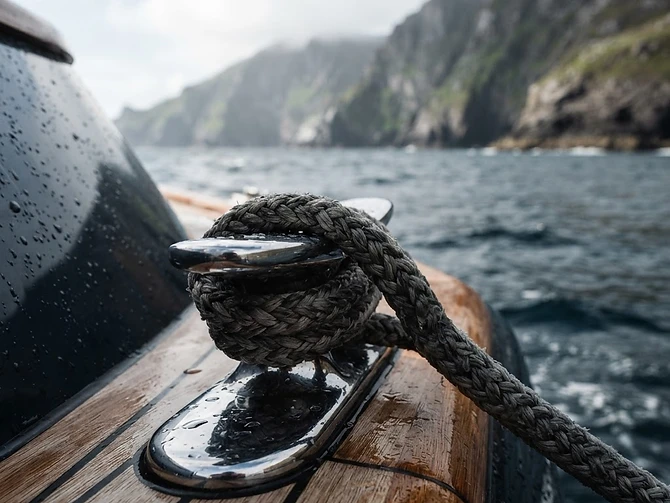
As the final, bruised light of evening faded behind the jagged silhouette of the Connemara mountains, the yacht pulled gently against her mooring lines, a rhythmic creak of timber and rope echoing against the shore. The day’s exertion in the dark, silent reef was replaced by the low, comforting murmur of the galley, where the clink of silverware signaled that tomorrow, the horizon would once again offer a new, quiet sanctuary to those who know how to listen.






