
The Geometry of the Morning Watch
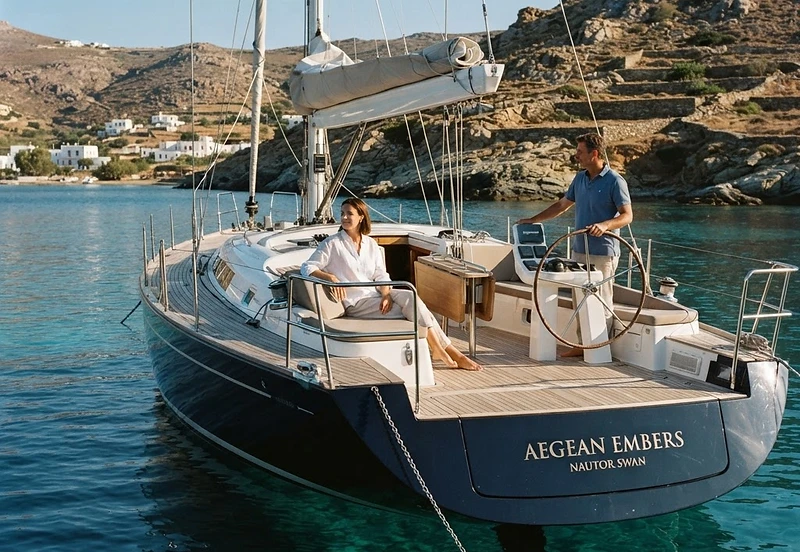
The dawn in the Cyclades arrives not with a shout, but with the sudden, sharp clarity of light striking the white-washed heights of Folegandros. Aboard our Nautor’s Swan, the deck remains cool underfoot, the teak pale and scrubbed, vibrating faintly with the low-frequency thrum of a world still waking. There is a specific silence that attends a vessel anchored in the lee of a volcanic caldera—a suspension of time where the only movement is the rhythmic, lazy rise of a buoy line and the occasional splash of a goat-fish breaking the surface of the Aegean.
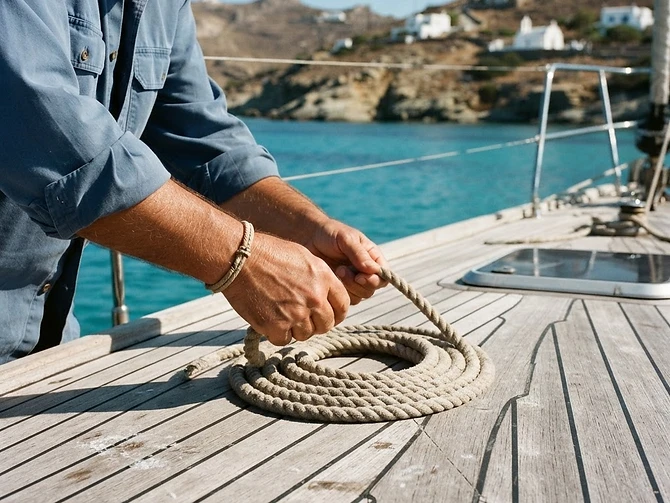
We had made the passage from Milos under a dwindling moon, the boat cutting a clean wake through the ink-black water. Now, with the anchor set in the sheltered bay of Angali, the focus shifts. This is the primary luxury of the yachting life: the ability to decouple from the mainland’s frantic pace and instead re-synchronize with the environment. I watched the stewardess ready the cockpit, not with the performative haste of a luxury hotel, but with the quiet, practiced efficiency of a sailor who understands that the vessel is a living thing, demanding its own rituals of maintenance and order.
The Shore-Bound Alchemy
By mid-morning, the tender was lowered. Navigating the shallows toward the pier of a small, unnamed landing near Karavostasis, the air grew thick with the scent of wild thyme and scorched rock. We were not heading to a resort, but to a family-run taverna tucked into the cliffs—a place reached more easily by water than by the treacherous, winding switchbacks of the island’s interior. Here, the culinary culture is not an ornament; it is a direct result of the terrain. The fava—a velvety yellow split-pea puree—is seasoned with the island’s sun-drenched capers and a local olive oil so verdant it borders on electric.
The chef had met us at the water’s edge with a crate of gouna, the sun-dried mackerel that is a staple of these waters. He spoke of the Aegean as a carpenter speaks of wood—with an innate understanding of its grain and temper. Back aboard, the galley transformed this haul into a lunch that respected the simplicity of the source. There was no pretense in the preparation; the fish was seared quickly over high heat, the skin crisping against the salt-flecked iron, served alongside a salad of cherry tomatoes still warm from the island sun and local mizithra cheese. The interplay between the yacht’s refined galley and the raw, unadorned harvest of the shore created a dialogue that defined the day. We ate on the aft deck, watching the swell pulse against the hull, our movements slowed by the sheer weight of the afternoon heat.
The Quiet Descent of the Sun
As the afternoon dissolved into a violet haze, the wind veered, shifting the boat to face the open channel toward Sikinos. The yacht became a stationary observation platform, a floating island of mahogany and stainless steel set against the ancient, unforgiving geology of the Greek archipelago. There is no urgency in these hours. One feels the transition of the day in the cooling of the metal railings, in the softening of the light on the water’s surface, and in the way the local fishermen return to their moorings, their small wooden hulls cutting soft, V-shaped ripples across the glass.
We remained in the anchorage as the first stars appeared, anchoring our collective focus on the horizon. The yacht, having carried us through the passages and protected us from the gale-force gusts of the Meltemi, now served as the perfect, steady pedestal for the evening. In the distance, the lights of the taverna began to blink, a dim, yellow pulse against the dark shoulder of the cliff. We were a mile from civilization and yet perfectly contained within it, the sea holding us in a state of suspended animation until the tide, or perhaps the wind, dictated our next move.






