
The Anatomy of an Isolated Dawn
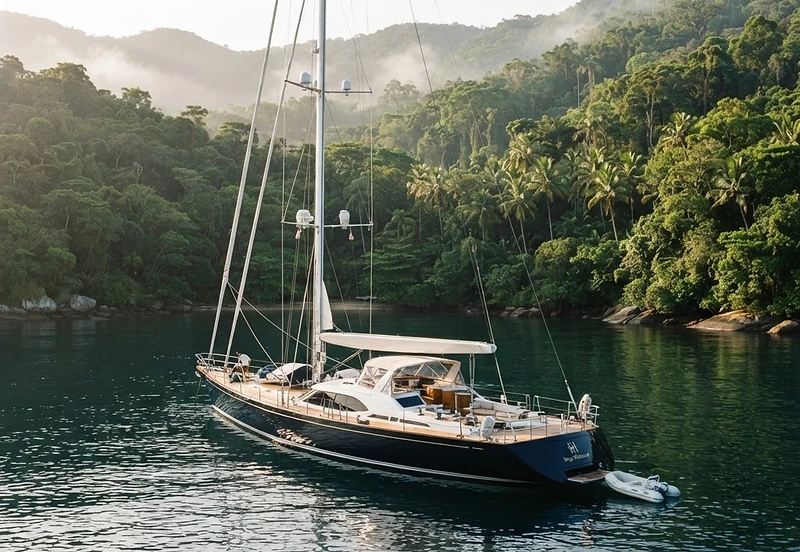
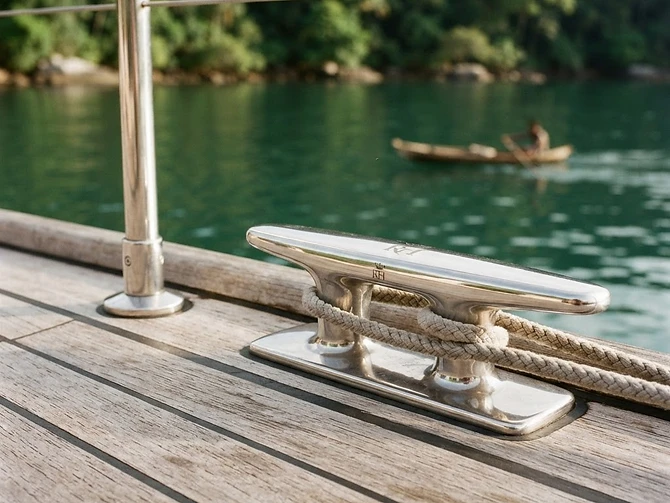
The dawn off the coast of Ilha Grande does not arrive with a fanfare of light; it filters through the dense, verdant canopy of the Atlantic Forest before settling on the water as a pale, misted glow. From the aft deck of a custom 35-meter Royal Huisman, the sensation is one of absolute suspension. We are moored in the sheltered bowl of Enseada de Araçatiba, a place where the VHF chatter of the world feels like a distant, irrelevant static. The vessel sits motionless, her teak decks cool underfoot as the humidity of the night retreats. The only sound is the rhythmic, deliberate slap of the tide against the hull and the distant, haunting cry of a toucan echoing from the mountainside—a reminder that while we occupy the water, the true authority here belongs to the granite peaks and the emerald tangle of the shore.
Culinary Cartography
Life aboard in the Costa Verde is defined by the proximity of the wilderness. By mid-morning, the tender is lowered for the short, bracing run to the beach, where the local fishermen, having set their lines long before the sun crested the peaks of the Serra do Mar, arrive with the day’s bounty. We secured a handful of tainha—mullet—and a basket of blue crabs, the latter being the true heartbeat of the local diet here. Back in the galley, the transformation is guided by an unwavering commitment to simplicity. The chef prepares the tainha by wrapping the fillets in fresh banana leaves with a splash of lime and a dusting of coarse sea salt, allowing the oily, rich character of the fish to define the meal. We finish with a side of hearts of palm sourced from a small-scale farm near Paraty, shaved thin and dressed with local olive oil. It is a dialogue between the immediate geography and the plate; there is no artifice here, only the elemental truth of ingredients pulled from the same water that cradles our anchor chain.
The Ritual of the Lagoon
The afternoon belongs to the quiet, slow-motion exploration of the inner bays. We navigate the shallow, crystalline channels toward the Parnaioca beach, the depth sounder providing a constant, reassuring pulse that dictates our speed. There is a specific, almost meditative cadence to a day lived entirely on the water: the manual adjustment of lines as the wind shifts off the land, the observation of the changing Atlantic light across the lichen-covered granite headlands, and the ritual of the sunset drink—a gin and tonic infused with a hint of jambu for its signature numbing, tingly finish—shared in the cockpit. We dine under a canopy of stars that feel unnervingly close here, untethered from the light pollution of the mainland ports like Angra dos Reis. There is a profound sense of privilege in this solitude; when the last tender has departed for the mainland and the gentle hum of the stabilizer pumps has faded into the night, the yacht ceases to be a machine and becomes the only structure of consequence in the vast, dark liquid space of the Bay. We are left with nothing but the silence, the slow, ticking contraction of the cooling hull, and the tide waiting patiently for the turn of the moon.






