
The morning mist off the coast of Paracas does not behave like the coastal fog of the Atlantic. It clings to the hull of the Swan 98 like a heavy, salted shroud, dampening the rhythmic slap of the Pacific against the carbon-fiber transom. From the cockpit, the coastline appears only as a jagged, ochre silhouette, a monochromatic desert rising abruptly from the deep blue of the Humboldt Current. There is a profound, meditative stillness here, punctuated only by the distant, staccato bark of sea lions huddled on the Ballestas Islands and the precise, metallic click of a winch as we trim the genoa to catch the lifting breeze, preparing to hunt for a deeper, more sheltered mooring in the lee of the Paracas headlands.
The Desert Harvest Beneath the Andes
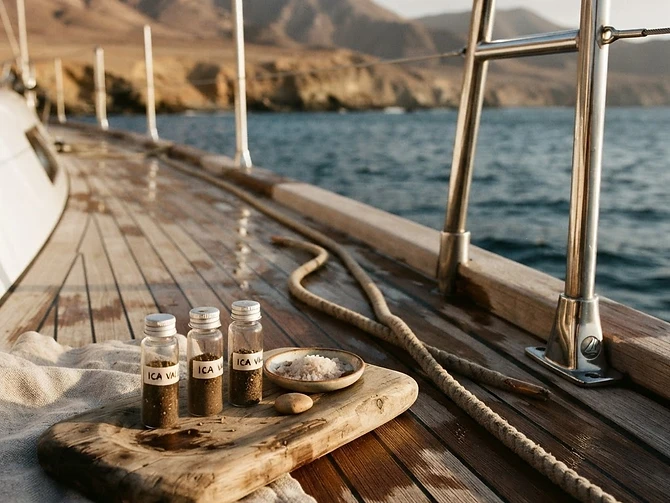
Stepping off the tender onto the soft, shifting sands of the peninsula is a study in topographical contrast. Beyond the dunes, the arid coastal expanse yields to the lush, improbable emerald veins of the Ica Valley. This is not the viticulture of sheltered, rolling hills or manicured European hedgerows; it is a precarious, ancient pursuit of water and relentless patience. We spent the afternoon at a remote, family-run bodega where the vines claw through sandy, mineral-heavy soil that seems to derive its very essence from the proximity of the Pacific. Tasting the local Quebranta and Italia varietals, one detects a distinct, bracing salinity that mirrors the air at our anchorage—a sharp edge that cuts through the weighted, dry heat of the Andean afternoon. The vintner spoke of the terroir as an extension of the sea, a philosophy that resonates with crystalline clarity once you return to the yacht and uncork a bottle of refined, Ica-grown Torontel as the sun begins to bleed behind the desert horizon.
Anchored in the Humboldt Current
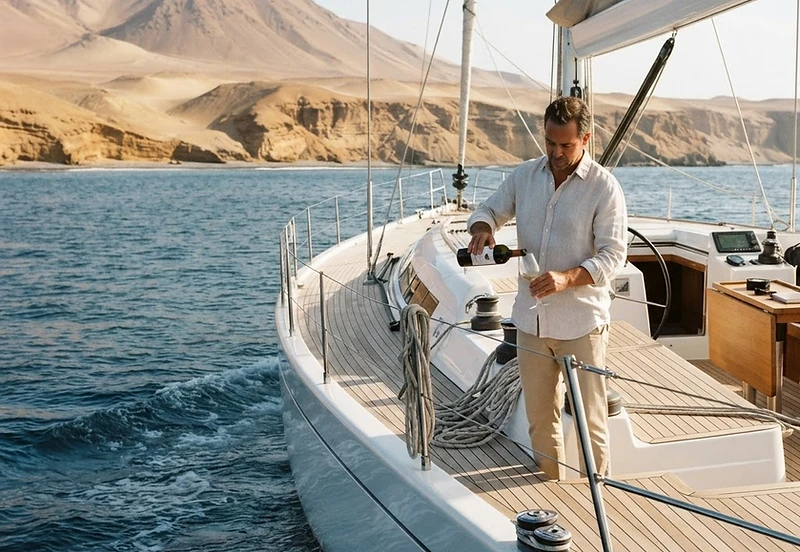
Returning to the yacht is always a sensory recalibration. On deck, the crew has already readied the aft deck, where the teak, bleached silver by the sun, offers a cool, tactile relief from the day’s exploration. The air has shifted, turning sharp and metallic, and the faint, briny scent of ozone from the distant surf carries across the water. We pour a glass of the Torontel; its bright, floral, and lychee-forward notes offer a startling counterpoint to the brooding, dark expanse of the bay. There is an intellectual joy in pairing the product of such an inhospitable, sun-scorched landscape with the utter, liquid mobility of a Nautor's Swan. As the anchor chain settles into the silt of the seafloor, we talk not of the wine's pedigree, but of its endurance. We watch the lights of the tiny Paracas fishing village flicker on, mirrored in the black, glassy surface of the bay, each vessel in the fleet swaying in a slow, hypnotic, and silent unison.
Later that night, the wind dies completely, leaving the yacht suspended in a vacuum of stars and reflected light. There is no engine noise, no conversation, only the occasional, soft, rhythmic creak of a hull settling under the pressure of the cooling air. The bottle is empty, the glass is drained, but the resonance of the day remains—the taste of the desert, the persistent pull of the current, and the quiet, steady anchor holding us deep in the heart of the Pacific expanse.






