
The Anatomy of a Resurrection
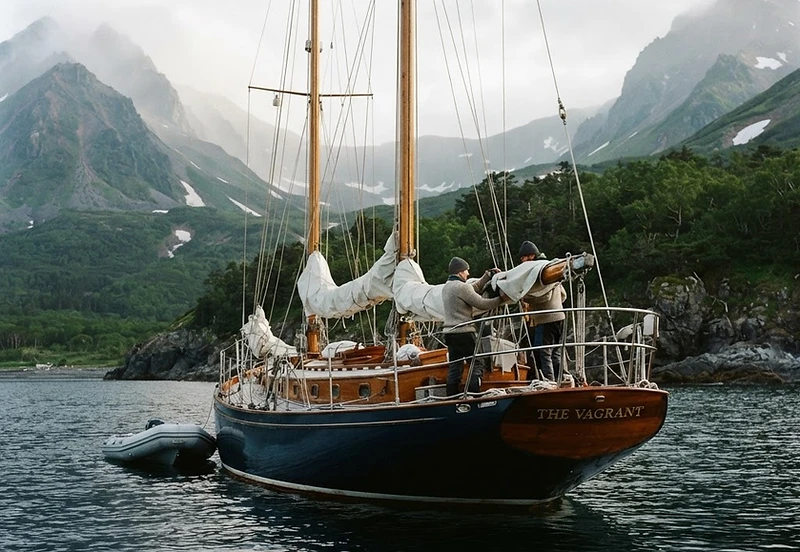
The Vagrant, a 1930s racing cutter of varnished teak and bronze, does not so much float as suspend herself within the iron-grey waters of the Sea of Okhotsk. Her restoration was a four-year dialogue with history, stripping back decades of neglect to reveal the elegant, narrow lines that once defined the golden age of offshore competition. Standing at the helm off the coast of Iturup Island, the tiller vibrates with a tactile intelligence no modern hydraulic system can mimic. There is a profound, weighted silence here that demands a vessel of this pedigree; when the wind catches the gaff-rigged mainsail, the ship heels with a grace that feels like a conversation with the ghosts of designers long departed.
The Hearth Beneath the Volcano
Life aboard the Vagrant is defined by the proximity of the wilderness. As we anchor in the sheltered bays of the Kuril chain, the proximity of the volcanic peaks is mirrored in the intensity of our galley work. There is no refrigeration capable of replicating the morning’s trade, so we lean heavily into the local rhythms of the Kamchatka shelf. We favor the deep-water Sakhalin scallop, prized for its natural sweetness, which we sear quickly on a heavy cast-iron skillet over a flame, finished only with a splash of soy and a dusting of wild sea kale foraged from the intertidal rocks at dawn.
Dining on the aft deck, wrapped in heavy wool against the relentless mist, is a ritual of elemental contrast. We seek out the kamchatsky krab—the famed King Crab of the region—sourcing it directly from the local fishermen who navigate these treacherous channels in flat-bottomed skiffs. The meat is chilled, sweet, and firm, served simply with an emulsion of local cloudberry, a bright, tart antidote to the grey dampness of the Pacific air. There is no artifice here; when you are eating the harvest of a sea that demands constant vigilance, the meal becomes an act of gratitude.
Anchored in the Ash
Reaching the remote coastal outposts near Kurilsk requires a navigation of instinct, relying on chart plotters tempered by the constant reality of drifting volcanic debris. In port, the social rhythm is sparse and quiet. We find ourselves drawn to the local tea houses and small, unpretentious dining rooms that serve the seasonal bounty of the tundra and tide. Here, the focus remains on the integrity of ingredients: wild fern shoots sautéed in butter, or the dense, dark rye bread served alongside bowls of hearty, steaming fish soup made from the day's catch of local whitefish. It is the food of survival, elevated by the sheer scarcity and purity of the environment.
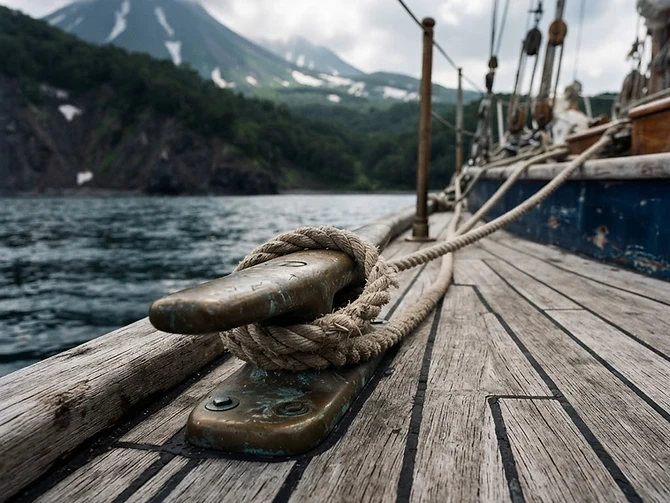
As the anchor chain rattles through the hawsepipe in the final light of a long, northern day, the water around the hull turns to the color of poured obsidian. The Vagrant settles into the swell, her rigging singing a low, mournful tune against the mast. We are far from the crowded marinas of the south, cradled by the volcanic spine of the world, where the only marker of time is the shifting of the tide against the ancient, polished timber of the hull.






