
The Transom as a Pivot
There is a specific, low-frequency cadence to waking up off the western edge of Tilghman Island. The Chesapeake Bay at dawn is not merely a body of water, but a vast, shifting mosaic of pearlescent mist and tidal silt, where the call of an osprey provides the only true interruption to the stillness of our catamaran. As we actuate the hydraulic swim platform, the mechanical hum is muffled by the gentle, repetitive slap of bay water against the GRP hulls. When the deck finally kisses the surface, the yacht ceases to be a machine and transforms into a base camp. From this vantage point, the scale of the world changes. We slide a pair of carbon-fiber stand-up paddleboards into the shallows, the water here carrying the faint, earthy tang of river runoff and Atlantic salt. We are not traversing the bay; we are drifting within it, navigating the grass beds where the light refracts into brilliant, oscillating shards against the white sand bottom.
Midday Harvests and the Saline Ritual
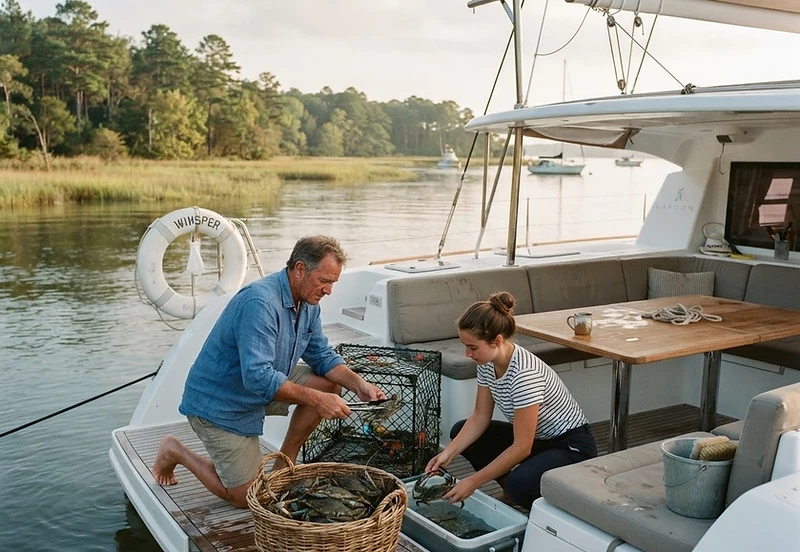
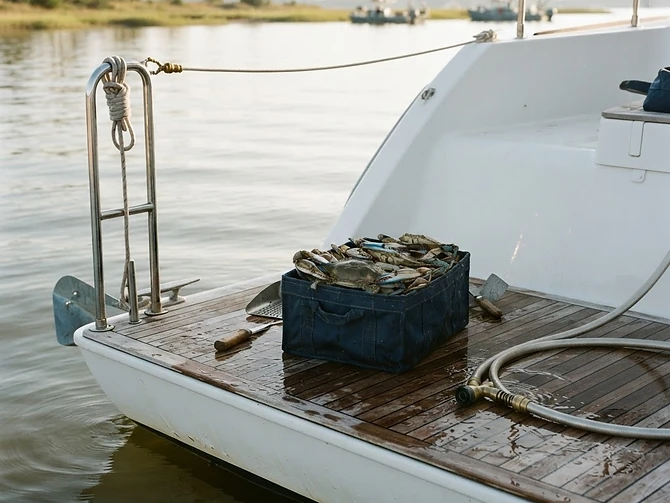
By noon, the heavy humidity begins to dissipate, replaced by the persistent, cooling southeasterly that makes the Eastern Shore such a storied cruising ground for those who prefer sail over staccato engine noise. Our chef has spent the morning navigating the narrow creeks by tender, returning from the docks with a haul that defines the local terroir: a bushel of prime blue crab and crates of heavy, sun-warmed heirloom tomatoes sourced from a farmstead just outside St. Michaels. The culinary rhythm aboard is dictated entirely by this proximity to the coast; the galley is not merely a workspace but a vital extension of the shoreline. We break from the water for a lunch of jumbo lump crab meat, lightly dressed with high-acid lemon zest, micro-cilantro, and a dusting of coarse sea salt, served on the aft deck while the tender sits expectant against the fenders. The taste is profoundly specific—the sweet, briny reality of the Chesapeake, untarnished by anything more than the midday heat and the satisfying, clean snap of the local crustacean. It is a meal that demands nothing more than a chilled glass and a view of the shifting reeds.
The Evening Drift
As the afternoon wanes, the water toys are stowed with the practiced, silent efficiency that defines the life of an experienced crew—a quiet respect for the vessel’s geometry and the sanctity of the deck. We weigh anchor, the chain rising with a rattle that echoes briefly across the quiet expanse, and move north, letting the current guide us toward the deeper water at the mouth of the Choptank River. The wind shifts, catching the leech of the mainsail and transforming the catamaran from a platform for recreation back into a proper, elegant cruiser. We gather on the flybridge, the last of the day’s heat radiating from the teak decking, watching the horizon dissolve into the deep, bruised purple of a Maryland twilight. It is a profound realization that the most sophisticated luxury aboard is not the craft itself or the breadth of the technology, but the ability to inhabit these waters with such deliberate intent. We are temporary guests in a landscape that has remained largely indifferent to the passing of centuries, leaving the bay exactly as we found it, save for the fleeting, silver wake trailing behind us into the dark.






