
The Anatomy of a Southern Reach
Rounding the Sentinel at the entrance to Hout Bay, the contrast between the turbulent Atlantic and the sheltered basin is absolute. For much of the day, our 45-meter expedition yacht had been dancing with the swell, tracking the steep, craggy cliffs that define the Cape Peninsula’s western edge. There is a specific intensity to these waters; the Benguela Current brings a cold, nutrient-rich life to the surface that turns the sea a deep, bruised indigo. Standing on the aft deck, watching the wake dissipate against the backdrop of Table Mountain, one feels the sheer scale of the Southern Ocean pressing against the hull. The wind, which had been whipping the tops of the swells into white spray all afternoon, finally began to pull back, leaving the water with that glassy, muscular tension unique to this coast.
From The Galley to The Jetty
As we dropped anchor, the conversation shifted from the technicalities of the passage to the evening’s anticipation. Yachting in the Cape is defined by this rhythm: the demanding navigation of the headlands followed by the quiet return to the shoreline’s specific culinary language. We lowered the tender, navigating the harbor’s mouth as the light bled from the sky. Onboard, our chef had been preparing a haul of West Coast rock lobster—the prized kreef—procured from a local fisherman just off the Noordhoek beach earlier that morning. These crustaceans, with their firm, sweet meat, are a testament to the cold-water bounty of the Atlantic shelf, possessing a salinity that only these deep, nutrient-rich waters can impart. The preparation remains minimal, honoring the sea's work rather than masking it.
The Harbour Ritual
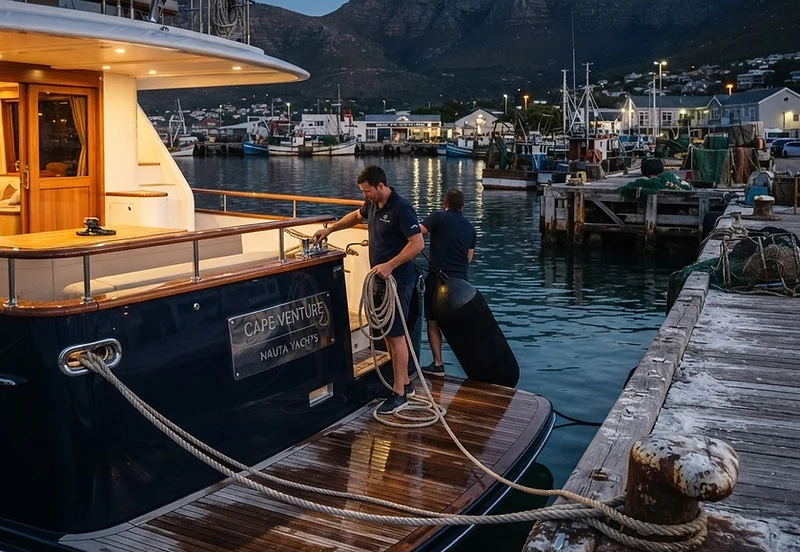
We tied up at the Hout Bay wharf, where the air held the distinct, briny scent of wet timber, kelp, and woodsmoke. Walking toward the waterfront, the town revealed itself not as a transit point, but as a place where the sea dictates the tempo of the table. We sought out a small, salt-weathered spot near the slipways, where the menu is written in chalk and updated daily based on what the boats bring in. Sitting at a rough-hewn table, we ordered the catch simply grilled over an open flame, brushed with a local olive oil pressed in the nearby Paarl valley and finished with a pinch of coarse sea salt harvested from the pans of the West Coast. There is a profound honesty in eating fish that was navigating the deep swell beneath your keel only hours before. We shared plates of scorched yellowtail and bowls of mussels, accompanied by the bright, flinty acidity of a regional dry white. It was a meal stripped of pretense, grounded entirely in the geography of the Cape—a reflection of the rugged, unforgiving, yet utterly beautiful environment we had spent the day traversing. As the last of the evening heat faded, leaving only the soft, rhythmic clatter of halyards against masts and the low murmur of the harbor, the true luxury of the voyage crystallized: it is not the vessel itself, but the seamless connection it provides between the vast, chaotic ocean and the quiet, flickering warmth of a shore-bound hearth.






