
The Shift Toward the Blue Horizon
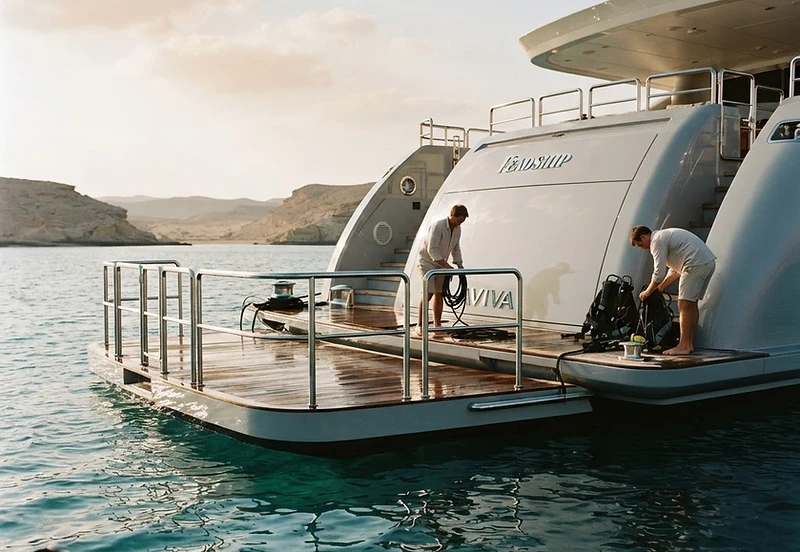
The transition from the frenetic energy of Yas Marina to the open expanse of the Arabian Gulf is measured not in miles, but in the slow, deliberate reduction of ambient noise. As our Feadship clears the breakwater, the chaotic, metallic hum of the city is swiftly replaced by the rhythmic, percussive slap of swells against the steel hull. There is a specific, grounding sobriety that takes hold when the coast recedes; the water here, often dismissed by transiting commercial traffic as mere transit, possesses a profound and deceptive depth. We are pushing toward the deeper, cooler channels off the northern coast of Sir Bani Yas, where the thermal layers shift and the sea transforms into a vast, undulating stage for the giants that migrate through these arid, sun-bleached peripheries.
The Anatomy of an Expedition
Life aboard an explorer during an expeditionary charter is defined by the constant, elegant tension between uncompromising comfort and absolute readiness. The bridge, a sanctum of hushed commands and glass-cased navigational arrays, becomes the focal point of our movement. We spent the early hours standing on the Portuguese bridge, eyes scanning the glass-smooth surface for the tell-tale plume of a blow—a mist of condensation that shatters the monotony of the horizon. When the lookout finally signaled a pod of False Killer Whales breaching the surface, the yacht’s active fin stabilization systems allowed us to pivot with remarkable grace. We maintained a respectful, steady distance, prioritizing the animals’ ancient migratory path over our own curiosity. It is in these rare moments of observation—where the immense, unhurried scale of a marine mammal meets the polished teak and engineered, absolute precision of a vessel built for global transit—that the true nature of yachting reveals itself not as luxury, but as a privileged window into the wild.
The Galley and the Coast’s Bounty
Returning to our anchorage as the sun begins to bleed behind the desert dunes, the internal rhythm of the day shifts from the intensity of the watch to the ritual of the table. Our chef, having secured a catch of fresh hamour and local spiny lobsters from an artisanal fisherman near Delma Island at first light, crafts a menu that mirrors the character of the sea we have just traversed. The hamour is prepared with a clean, light hand, seasoned with the sharp, acidic bite of preserved lime and the lingering, resinous earthiness of Omani frankincense-smoked salt. We dine on the aft deck, the teak table set with heavy linens as the scent of the dry, cooling sea breeze mingles with the aromatic intensity of saffron-infused basmati. This is the essential ritual of the cruise: acknowledging the landscape not through the grand, performative gestures of port-side dining, but through the honesty and provenance of the ingredients the Gulf provides, served against the backdrop of a darkening, mirror-still anchorage where the silhouettes of the islands blur into the evening haze.
As the final light fades, the Gulf shifts into a deep, bruised indigo, the water losing its definition against the sky. The vessel hums with the soft, mechanical vibration of the generators, a steady and reassuring heartbeat in the quiet dark. We lean against the taffrail, watching the bioluminescence trace flickering, ghostly patterns in the wake of the tide, the vastness of the water reminding us that we are merely transient guests in a world that operates on a much older, deeper clock than our own.






