
The Awakening of Timber and Tension
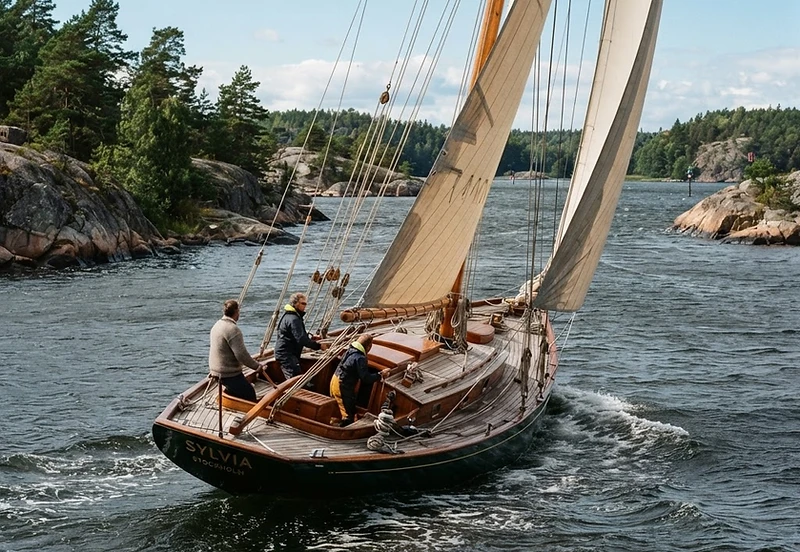
The dawn air in the Stockholm archipelago carries a peculiar, crystalline sharpness that bites through the stillness of the Dalarö roadstead. We stood on the foredeck of a 1928 Baltic-built gaff-rigger, her hull a dark, varnished mirror reflecting the pale, northern light of a mid-June morning. To witness her return to competitive racing was less a display of modern performance than a slow, deliberate act of historical reclamation. As we cleared the sheltered sound, the breeze began to fetch up over the exposed Baltic, stiffening the rigging and humming with a low-frequency vibration through the ash blocks. The yacht, a slender sliver of mahogany and spruce, leaned into the swell with a fluid grace that modern carbon composites struggle to replicate. She did not merely sail; she negotiated the granite teeth of the coastline, her crew moving with the practiced, almost silent efficiency born of decades spent navigating these specific, cold-water currents. Every tension of the backstay, every slight adjustment to the gaff, was a dialogue between the vessel and the wind.
The Rhythm of the Skerries and the Table
Racing in the Baltic is as much an exercise in precise pilotage as it is in sail trim. We skirted the outer islands, the navigation markers appearing as rusted, weather-beaten sentinels against the backdrop of dark, brooding pines. By midday, with the wind settling into a manageable pulse, the focus shifted from the winches to the galley. Life aboard a classic of this pedigree demands a profound connection to the surrounding geography. Our chef had spent the dawn hours at the Östermalm Saluhall in Stockholm before departure, securing hand-dived scallops and the very first of the season’s tart cloudberries. Back on deck, the transformation was elemental. We sat low in the cockpit, dining on pan-seared scallops harvested from the cold, deep reaches off the coast of Gotland, dressed only in a light, foaming emulsion of fresh dill, sea-salt, and fermented butter. There is a specific, bracing clarity to the food here—the sharp, iodine-rich salt of the sea paired with the earthy sweetness of the forest’s yield. It is a ritual of the table that anchors the wandering spirit of the sailor, a necessary reminder that we are merely guests in this vast, wild, and incredibly beautiful northern garden.
The Quiet Return to the Quay
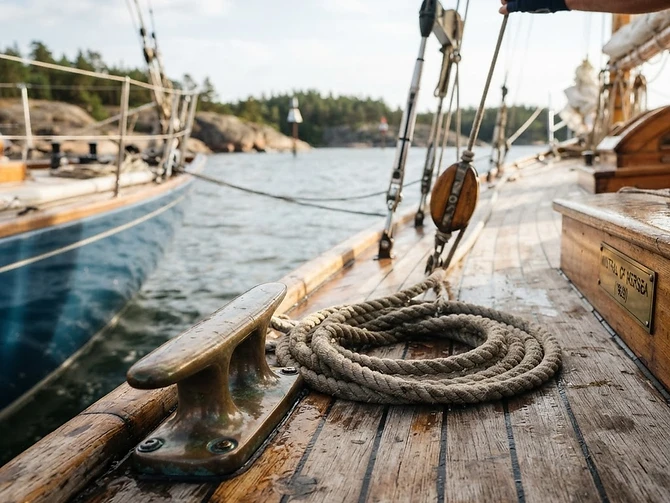
As the afternoon light began to stretch, casting long, bruised shadows of pine across the glass-still water, we made our approach to the small, bustling harbour of Sandhamn. The rigorous tension of the race melted into the rhythmic, comforting creak of the hull against the weathered timber of the dock. We left the boat secured, her lines taut and humming in the evening breeze, to find a small table at the edge of the water at Seglarrestaurangen. We finished the day with simple, dense dark rye bread and salt-cured whitefish, watching the reflection of the mast flicker in the darkening water. There was no need for the excess of the outside world; the atmosphere was defined by the scent of salt air and toasted pine. In the profound, cool silence that settles over the archipelago at night, the yacht lay perfectly at peace, a vessel built for the sea, finally finding her rest in the quiet heart of the north.






