
The Verticality of the Deep Atlantic
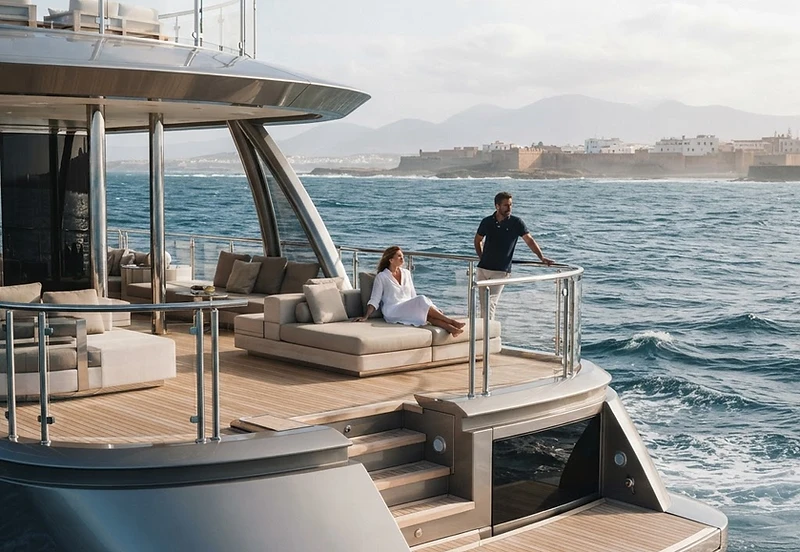
The morning light hits the Atlantic off the coast of Essaouira with a peculiar, silvered intensity, distinct from the golden warmth of the Mediterranean. Standing on the aft deck of a 60-meter Feadship, one does not merely occupy a space; one inhabits a sequence. The yacht is laid out in a series of cascading tiers, each terrace designed not as an accessory to the vessel, but as a primary living room that happens to be suspended over the swell. As the anchor chain settles into the sandy bed of the Mogador archipelago, the transition from the main deck to the swim platform feels less like descending a staircase and more like walking through the levels of a floating villa, where the architecture of the ship mimics the stacked, whitewashed geometry of the medina visible in the distance.
The Architecture of the Open Sea
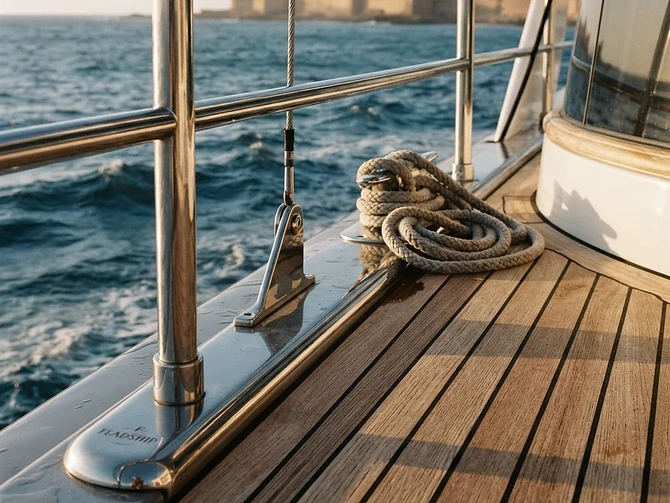
To view a yacht of this caliber through the lens of land-based architecture is to understand why the aft deck has become the true heart of life aboard. Modern naval architects, echoing the principles of refined residential design, have moved away from cramped, sheltered sterns in favor of expansive, open-plan terraces. These spaces—cantilevered overhangs providing natural shade and glass-balustraded perimeters—function as a bridge between the vessel's engineering and the surrounding coastline. During our passage from Tangier, I recalled discussions with designers about the importance of 'erasing the horizon.' On a vessel with such cascading geometry, you are never truly indoors. A book left on the cedar table of the bridge deck feels as much a part of the sea as the foam trailing behind the transom. The structural rhythm—steel beams supporting sweeping teak expanses—creates an environment that feels as sturdy as a clifftop residence, yet remains infinitely more transient.
Tactile Quietude at the Waterline
By dusk, the wind off the Atlantic coast had dropped, leaving the water as glass. I sat on the lowest terrace, just feet above the waterline, while the crew prepared a dinner of line-caught sea bass, seasoned simply with local argan oil and sea salt. There is a profound, meditative stillness found only at this specific altitude on a yacht—a sensory intersection where the smell of cold brine meets the faint, warm scent of teak oil and charcoal. We watched the lights of a small fishing dhow flicker near the harbor entrance, a reminder of the ancient maritime history that defines this coast. The terrace, in this moment, ceased to be a deck or a feature of luxury; it became a quiet, private observatory. It was a space defined by its relation to the tide, an architectural testament to the joy of remaining stationary in a place that has been moving for centuries.
As the stars emerged, blotting out the silhouette of the coastline, the cascading tiers of the yacht seemed to dissolve into the dark water. We retreated upward, layer by layer, until we reached the highest point of the sun deck, feeling the cool, salt-heavy draft of the Moroccan night against the cooling steel of the radar mast. The yacht remained a singular, peaceful node in the vast, churning Atlantic—a house of wood and light, waiting for the tide to turn.






