
The Geometry of the Outer Reef
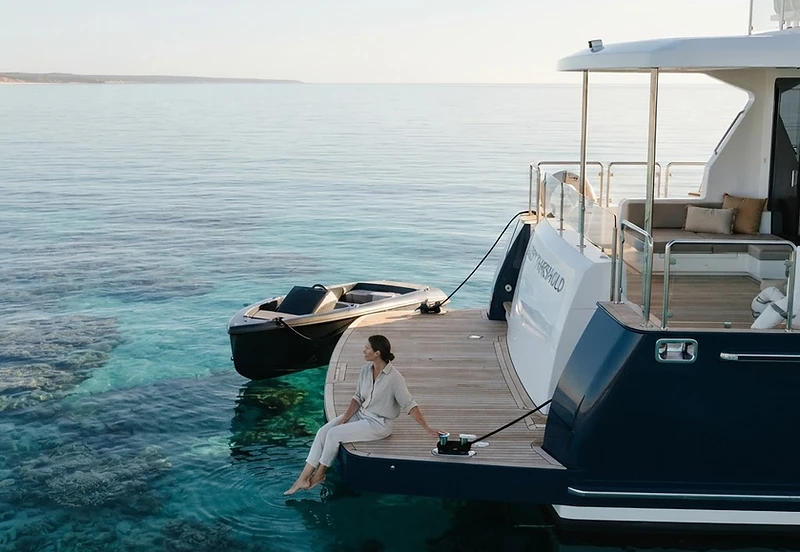
The transition from the deep, cobalt churn of the Indian Ocean into the protected lagoons of the Ningaloo Reef is defined less by a change in topography than by a sudden, violent shift in the acoustics of the water. As our 45-metre expedition yacht slipped behind the sheltering spine of the Muiron Islands, the rhythmic, heavy pulse of the hull against the oceanic swell softened into an eerie, glass-like stillness. There were no lights on the horizon, no hum of distant VHF traffic—only the low-frequency thrum of the vessel’s generators and the occasional, sharp slap of a juvenile reef shark breaking the surface near the swim platform. To exist in this state of total seclusion is to acknowledge the yacht not merely as a machine for passage, but as a mobile, self-sustaining sanctuary in a world that has largely forgotten the true weight of silence.
The Morning Haul and the Galley Dialectic
The rhythm of life aboard is dictated by the tide and the precise, cold-storage inventory of the galley. At first light, the chef and I dropped the tender into the water, navigating toward a series of shallow banks where the Ningaloo currents churn up nutrients from the deep continental shelf. We met a local fisherman operating out of the Exmouth boat harbour, a man who navigates the reef’s shifting, volatile channels with an intimacy usually reserved for a lifelong pilot. His catch that morning was exceptional: two spiny West Australian rock lobsters and a handful of silver-scaled blue-spotted emperor. Returning to the galley, the transformation became a dialogue between the raw, saline reality of the reef and the measured, sophisticated techniques of the stove. The chef prepared the emperor with a light infusion of Geraldton wax flower—a native aromatic that imparts a subtle citrus-pine quality, perfectly balancing the richness of the firm, white flesh. We consumed the meal on the sun-drenched aft deck, seated under a sky that felt so close it could be touched, with nothing but the boundless, empty expanse of the Indian Ocean as our silent witness.
A Ritual of Isolation
Life in the Ningaloo reaches its zenith when the sun dips below the horizon and the water assumes a deep, bruised violet hue. There is a specific, tactile quality to these evenings; the teak decks, still holding the residual heat of the Australian sun, provide a grounding, warm contrast to the cooling evening breeze coming off the desert. We spent the final hours of our stay in the cockpit, reading and watching the Southern Cross sharpen against the dark, infinite vault of the southern sky. There is no vanity in this kind of travel, only the quiet, profound understanding that the vessel—its engines cut, its anchor dug deep into the white sandy substrate—is the only bridge between the human world and the absolute, beautiful indifference of the tide. As we prepped the deck to weigh anchor the following morning, the silence of the lagoon felt less like a simple absence of sound and more like a heavy, velvet presence, a reminder that the most sophisticated luxury is simply the grace to exist entirely outside the reach of the world.






